Quick show of hands: who has a bottle of melatonin gummies in the nightstand drawer? 🙋 If you nodded — or just felt a little seen — you're in excellent company. Melatonin has quietly become one of the most popular sleep aids in America: adult use in the U.S. quintupled between 1999 and 2018, climbing from 0.4% to 2.1% of the population.² And with the clocks "falling back" on November 1st, plenty of us are eyeing that bottle a little more seriously this month.
But here's the plot twist nobody prints on the label: melatonin is not actually a sleeping pill. It's a hormone. And a growing pile of research — including studies that literally took gummies into the lab — suggests the thing in your drawer might not be exactly what the wrapper promises. 😳
Don't panic. By the end of this article you'll know precisely what melatonin is, what the science says it can (and can't) do, and how to use it smartly — zero fear-mongering, zero jargon. Let's go. 💤
🧠 Section 1: Melatonin Isn't a Sedative — It's Your Brain's "Sunset Signal"
Here's the science in plain English: melatonin is a hormone your brain releases in response to darkness.¹ Its real job isn't to knock you out — it's to tell every cell in your body what time it is. It's the "sun's down, shifting systems to night mode" signal that helps govern your circadian rhythm, your internal 24-hour clock.¹
That's also why bright light at night — yes, including your phone — can block melatonin production and scramble the whole schedule.¹ Your brain is being told "it's noon!" at 11 p.m.
So think of melatonin less like a hammer that forces sleep and more like the opening notes of your body's nightly lullaby. It sets the mood; it doesn't sing you all the way to sleep.
And sometimes, that gentle signal is exactly what you need. The evidence is genuinely encouraging for a few specific situations¹:
✈️ Jet lag: melatonin may ease symptoms, especially after eastward flights.
🌙 Delayed sleep-wake phase disorder (when your body clock runs stubbornly late): in a 4-week trial of 307 people, taking melatonin an hour before the desired bedtime — combined with a fixed schedule — helped participants fall asleep an average of 34 minutes earlier.¹
🧩 Some children's sleep disorders: in a review of 18 studies covering 1,021 kids, children with autism fell asleep 37 minutes earlier and slept 48 minutes longer; children with ADHD fell asleep 20 minutes earlier.¹ (With one big asterisk: this is a pediatrician-conversation territory — more on that below.)
Key takeaway: Melatonin is a timing hormone, not a knockout drop. It shines when your internal clock needs a nudge — travel, shifted schedules — not as a general-purpose sleeping pill.
🍬 Section 2: The Plot Twist — Your Gummy Might Not Match Its Label
Now for the part that made me sit up straighter than a triple espresso. ☕
In the United States, melatonin is regulated as a dietary supplement, which means it gets far less regulatory scrutiny than prescription or over-the-counter drugs — even though in several other countries it's available only by prescription.¹ That quality-control gap has real consequences:
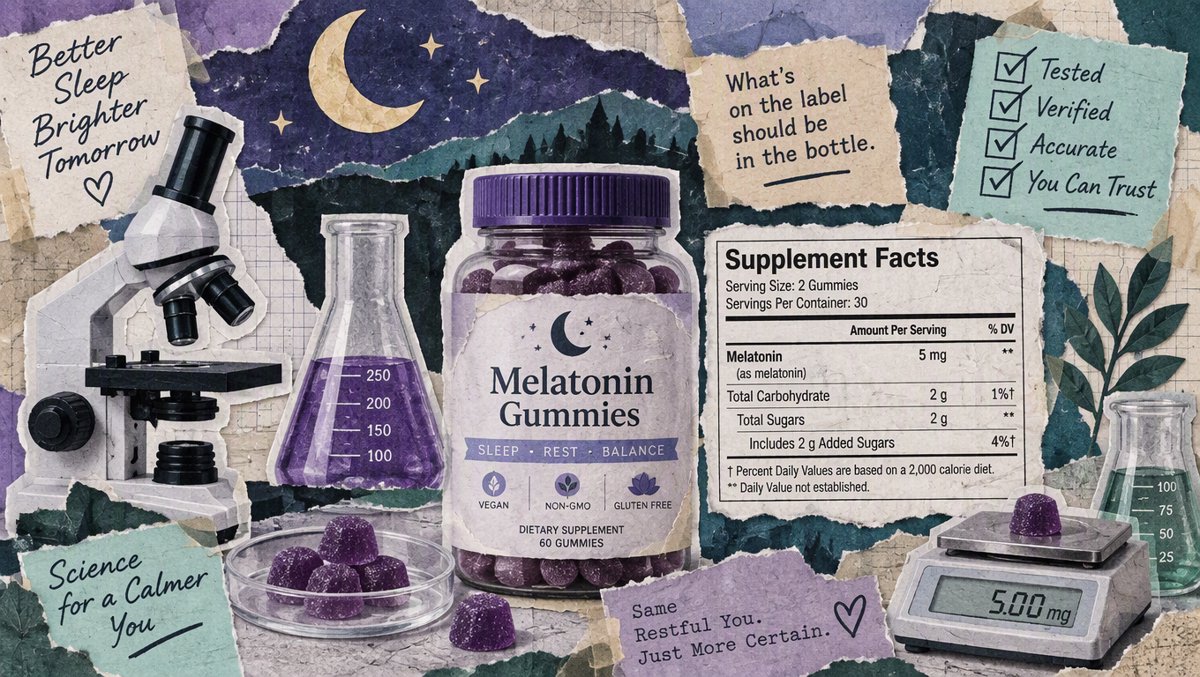
A 2017 lab analysis of 31 melatonin supplements found that most didn't contain the amount listed on the label — and 26% were contaminated with serotonin, a substance that can cause harm even at relatively low levels.¹
A 2023 study in JAMA tested 25 brands of melatonin gummies and found 22 were inaccurately labeled. Measured melatonin ranged from 74% to 347% of the labeled amount — one product delivered almost 3.5× more than advertised, and one contained no detectable melatonin at all.³
In a newer analysis of 110 melatonin products marketed for children, doses varied from 0% to 667% of what the label stated.⁴
Let that sink in: two "identical" gummies from different bottles could deliver wildly different doses. And because melatonin is a hormone — not candy — dose actually matters. More isn't better; it can just mean more grogginess, headaches, dizziness, or next-day fog.⁸
Key takeaway: The supplement aisle has a label-accuracy problem. If you use melatonin, favor brands with third-party verification (look for USP or NSF marks) and treat every label as a rough estimate, not a promise.
🚸 Section 3: The Candy Problem — Gummies, Kids, and a 530% Surge
Gummies taste like candy. Kids assume gummies are candy. You can see where this is going. 🫣
Between 2012 and 2021, U.S. poison control centers recorded 260,435 pediatric melatonin ingestions — a 530% increase over the decade. By 2021, melatonin accounted for nearly 5% of all poison-center reports about children, up from 0.6% in 2012 — and hospitalizations and more serious outcomes rose along with it.⁵ Most cases turned out mild, but that's still a mountain of panicked phone calls and ER visits over something preventable. A 2024 CDC follow-up found the pattern persisted, with emergency department visits for unsupervised ingestions continuing through 2022.²
Two simple, evidence-backed fixes:
🧸 Store it like medicine, not snacks — up high, out of sight, ideally locked. If gummies are your format, this matters double.
🩺 Never give children melatonin without a pediatrician's okay. It can genuinely help kids with certain conditions — but it's a hormone, and researchers still have open questions about long-term effects on development, including puberty.¹
Key takeaway: Melatonin gummies deserve the same respect as any medication in a house with kids — stored away, carefully dosed, and pediatrician-approved.
🧭 Section 4: The Smart-Sleeper's Playbook (If You're Going to Take It)
Say you're a healthy adult dealing with jet lag, a run of rough sleep, or a stubbornly shifted schedule. Here's how the experts suggest doing it right:
Start low. Really low. Counterintuitive but true: most guidance says begin with 0.5–1 mg — a fraction of the 5–10 mg mega-doses lining store shelves — because research suggests small doses are often just as effective as big ones.⁷ The Cleveland Clinic specifically recommends starting at 1 mg.⁶
Mind the clock. Take it about 30–60 minutes before your target bedtime, and keep the timing consistent.⁷ Popping it as you climb into bed may be too late for the "sunset signal" to do its timing work.
**Keep the total under 10 mg per night.**⁷ If a low dose isn't helping, the answer isn't more melatonin — it's a conversation with your doctor.
Don't mix it with nightcaps or espresso. Alcohol disrupts both sleep quality and your natural melatonin, and caffeine can blunt melatonin's effects.⁷
Know when it's not the tool. For chronic insomnia, clinical guidelines from the American Academy of Sleep Medicine and the American College of Physicians don't recommend melatonin — they strongly recommend CBT-I (cognitive behavioral therapy for insomnia) as the first-line treatment instead.¹ That's not a diss; retraining sleep beats supplementing it.
Key takeaway: Low dose (0.5–1 mg to start), early-evening timing, short-term use, real sleep hygiene underneath — that's the evidence-aligned formula.
⚠️ Section 5: Who Should Hit Pause and Talk to a Doctor First
Short-term melatonin looks safe for most adults, but long-term safety data is still lacking¹ — and for several groups, expert guidance comes first:
🤰 Pregnant or breastfeeding: safety hasn't been well studied.¹
💊 Blood thinners or epilepsy medication: melatonin can interact — medical supervision is a must.¹
🛡️ Autoimmune conditions: melatonin may stimulate the immune system.⁷
🧓 Adults 65+, and anyone with dementia: melatonin may stay active longer in older bodies, causing daytime drowsiness, and sleep-medicine guidelines recommend against it for people with dementia.¹
🎗️ During cancer treatment: the evidence is small and mixed — loop in your care team before adding anything.¹
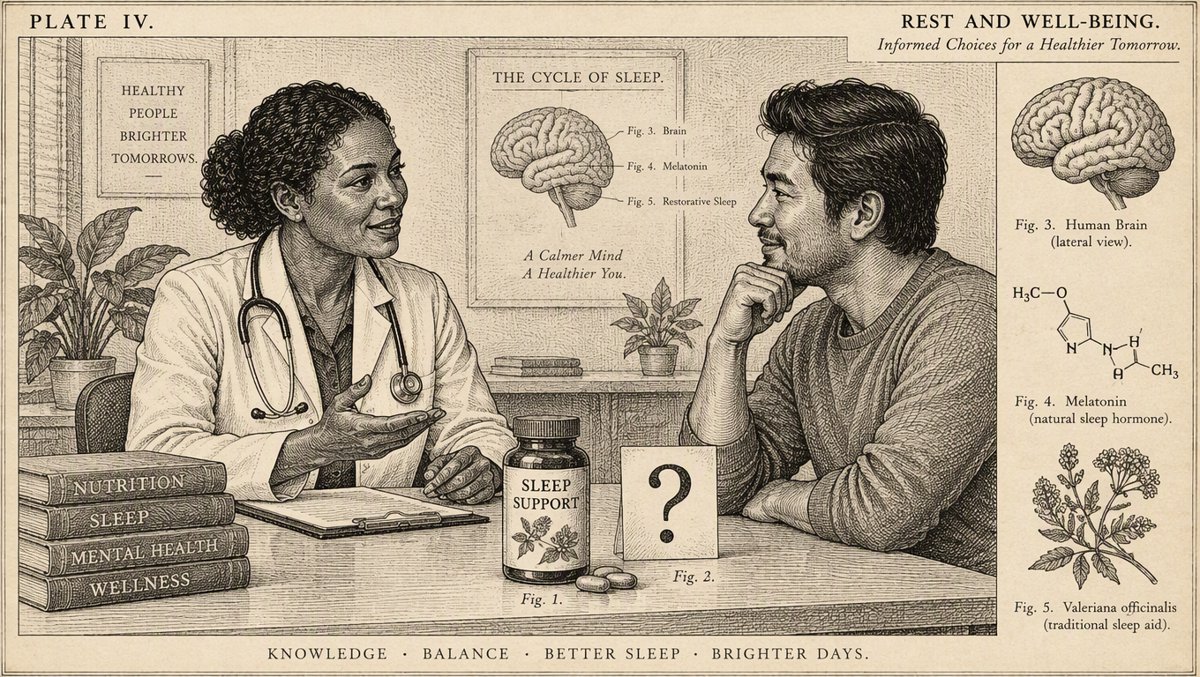
When in doubt? That's what doctors are for. A two-minute question beats a two-week groggy guess.
Key takeaway: "Natural" doesn't automatically mean "no-risk." Melatonin is a hormone with real interactions — personalize it with a professional.
🎯 Key Takeaways
Melatonin is your brain's darkness-triggered "sunset signal" — a timing hormone, not a sleeping pill. It works best for clock problems like jet lag or delayed sleep phase, not as a general sedative.
Label accuracy is shaky: lab tests found 22 of 25 melatonin gummies mislabeled (74–347% of the stated dose), so choose third-party-verified brands and start low — around 0.5–1 mg.
Store gummies like medicine: pediatric melatonin ingestions jumped 530% in a decade, mostly from kids treating them as candy.
Timing beats dose: take it 30–60 minutes before bed, consistently, staying under 10 mg total, and skip the alcohol and late caffeine.
For chronic insomnia, guidelines recommend CBT-I therapy first — and kids, pregnancy, blood thinners, autoimmune conditions, and dementia all call for a doctor's input before starting.
🎧 Key Takeaways — Listen (2 min)
📚 Verified Sources
NIH National Center for Complementary and Integrative Health (NCCIH) — "Melatonin: What You Need To Know." Government fact sheet covering melatonin's mechanisms, evidence for jet lag / DSWPD / pediatric sleep disorders, the AASM & ACP chronic-insomnia guideline positions, safety cautions, and the 2017 label-accuracy findings. https://www.nccih.nih.gov/health/melatonin-what-you-need-to-know
CDC, Morbidity and Mortality Weekly Report (2024) — "Notes from the Field: Emergency Department Visits for Unsupervised Pediatric Melatonin Ingestion — United States, 2019–2022." Documents the continued pediatric trend and the quintupling of adult melatonin use (0.4% → 2.1%). https://www.cdc.gov/mmwr/volumes/73/wr/mm7309a5.htm
JAMA (2023) — "Quantity of Melatonin and CBD in Melatonin Gummies Sold in the US." Lab analysis finding 22 of 25 gummy products inaccurately labeled, with melatonin content from 74% to 347% of declared amounts (one product with none detected). https://jamanetwork.com/journals/jama/fullarticle/2804077
The BMJ (2025) — "Sixty seconds on . . . melatonin gummies." Notes an FDA analysis of 110 melatonin products marketed at children, with doses varying from 0% to 667% of the stated amount. https://www.bmj.com/content/390/bmj.r1384
CDC, Morbidity and Mortality Weekly Report (2022) — "Pediatric Melatonin Ingestions — United States, 2012–2021." The 530% surge, 260,435 total ingestions, and rising hospitalizations. https://www.cdc.gov/mmwr/volumes/71/wr/mm7122a1.htm
All claims fact-checked against Gold-tier (CDC/NIH/WHO/PubMed/Nature/The Lancet) and Silver-tier (Mayo Clinic/Harvard Health/Cleveland Clinic) authoritative sources. Last verified: October 10, 2026.
Here's to falling back gently on November 1st — and to gummies that contain exactly what they promise. Sleep well, friend. 🌙✨
 x/health ·