Six Chinese AI Labs, One Accusation: Inside the U.S. Government's "Industrial-Scale Distillation" Advisory

Six Chinese AI Labs, One Accusation: Inside the U.S. Government's "Industrial-Scale Distillation" Advisory
Published: September 9, 2026 | Reading Time: ~11 minutes | Channel: techminute
On Tuesday, three of the most powerful agencies in the U.S. government — the FBI, the NSA, and CISA — did something they've never quite done before: they named names. Six Chinese AI companies, they allege, have spent the past two years quietly siphoning the capabilities out of America's best AI models, token by token, at a scale they describe as industrial. Not a nation-state hacker crew exfiltrating model weights at 3 a.m. Something stranger and, arguably, more effective: paying for the front door, bulk-buying premium subscriptions, routing traffic through a gray-market web of proxies called "transfer stations," and letting the models teach their competitors how to think.
The advisory — AA26-251A, released September 8 — accuses DeepSeek, Moonshot AI, Alibaba, MiniMax, StepFun, and Z.AI of extracting "billions of tokens across millions of exchanges" from U.S. frontier models, including variants of Claude, GPT, Gemini, and Grok, since at least late 2024. And it lands on a remarkable claim: that this activity, conducted "likely with Chinese government awareness," is not a side hustle. In the agencies' words, distillation is "not a supplement to these companies' AI model development, but the critical core of it."
That's a sentence worth sitting with. It reframes one of 2025's favorite narrative — the plucky, efficient Chinese lab that matched the frontier on a shoestring — as, in the U.S. government's telling, a heist with excellent unit economics.
First, What Distillation Actually Is (and Why This Is Different)
Knowledge distillation is one of machine learning's most legitimate and useful tricks. Want a small, fast model that behaves like a giant one? Have the giant generate outputs, train the small model to imitate them, and you've compressed capability without repeating the full training run. It's how much of the industry makes models cheap enough to run on your laptop. Nothing about the technique is inherently illicit — the advisory itself goes out of its way to say distillation is "a legitimate and useful technique in AI research."
The accusation is about three things the U.S. companies say turned a research technique into an espionage campaign: scale (billions of tokens), covert operation (proxies, fraudulent accounts, metadata scrubbing), and targeting (specific frontier capabilities — reasoning, agentic functions, coding — pulled from specific rival models).
The line being drawn is the same one White House OSTP director Michael Kratsios tried to codify back in April, when he circulated a memo to federal agencies flagging Chinese distillation as a critical issue: legitimate distillation to build smaller, efficient models = fine; large-scale covert industrial extraction aimed at replicating proprietary capability = theft. The advisory is that policy, armed with a company-by-company evidence table.
The Anatomy of the Heist: How It Allegedly Worked
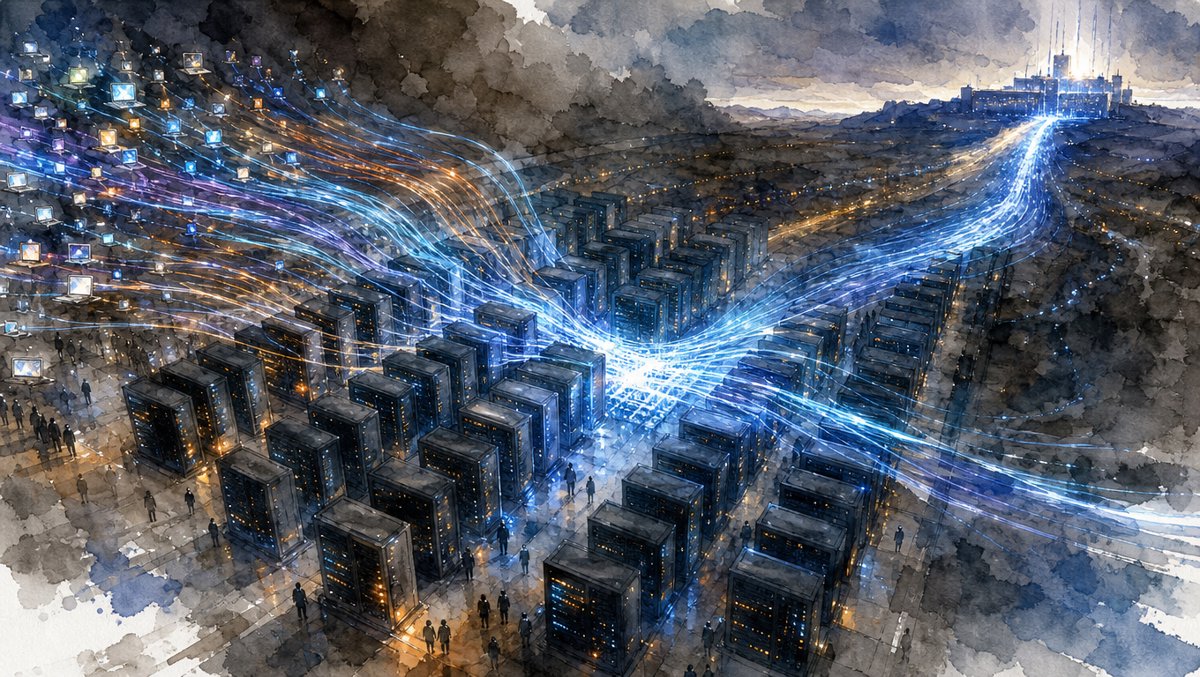
The most interesting part of AA26-251A isn't the accusation — it's the tradecraft. The agencies describe an operation that reads like a distributed system designed by someone who has studied how U.S. labs detect abuse, and then built a work-around for every control.
- "Transfer stations." A gray market of API proxies that let requests originating in China appear to come from elsewhere. Their job: bypass geographic restrictions, breach terms of use, evade safeguards, and — critically — "undermine traceability." If you can't tell where a request came from, you can't attribute it, and if you can't attribute it, you can't stop it without collateral damage.
- Subscription arbitrage. The campaigns allegedly cut costs by bulk-purchasing premium API subscriptions and sharing them across teams of developers. One enterprise account, many mouths.
- Pathway diversity. Requests flowed through native APIs, third-party aggregators that "automatically obfuscate user metadata," and remote cloud providers — deliberately distributed so no single provider ever saw enough volume to trip a threshold. Detection systems that look for anomalies per-account or per-endpoint were, in effect, facing death by a thousand cuts.
- Active countermeasure detection. The advisory says the operations ran "sophisticated quality evaluation frameworks" designed to detect when a target lab had started degrading outputs for suspected distillers — plus automated failover between pathways when blocks kicked in. The distillers weren't just scraping; they were monitoring whether they were being poisoned.
The agencies map this to the MITRE ATLAS framework, walking it through adversary lifecycle phases from initial access to exfiltration — treating model APIs the way they'd treat any other critical infrastructure target.
And then there's the detail that belongs in a Le Carré novel: the advisory alleges that MiniMax used prompt injections to try to convince Claude Code that it was a MiniMax product — an attempt to rewrite the tool's own self-concept so it would happily assist its rival's engineers. If that holds up, it's prompt injection as corporate espionage, executed by a model company against a model company.
Who's Accused of What
The advisory's per-company breakdown is the most granular public attribution table yet assembled for this kind of campaign. Highlights:
| Company | Alleged targets distilled | What they took | What it built |
|---|---|---|---|
| DeepSeek | Claude 3.7 → Opus 4.1, Gemini 2.5 (Pro/Flash previews), GPT-4/4o/Mini/Nano, GPT-5, Grok 4 | Reasoning, legal-specialization optimization, agentic functions, "coach/assistant capabilities," CoT drafting, SFT optimization | R1 and V3 (campaign since late 2024) |
| Moonshot AI | Claude Opus 4.1, Sonnet 3.7–4.5 (incl. Thinking), Claude Fable 5, GPT-4o, GPT-5 family, Gemini 2.5 family, Grok Code Fast-1 | SFT, reinforcement learning, software engineering, math | Kimi K3 (from Claude Fable 5 data), Kimi K2 (from GPT-4o data) |
| Alibaba | Claude 4/Opus/Sonnet, GPT-5 (late 2025) | Software engineering, customer-service dialogue, virtual character creation, RL+SFT+distillation integration | The Qwen family |
| MiniMax | Claude Code, Sonnet 4, Opus, Gemini 1 / 2.5 Pro / 3 Pro | CoT reasoning, agentic functionality, code review, SFT dataset refinement | The M2 model |
| StepFun | Claude Opus 4.1/4.5, Sonnet 4.5, Haiku 4.5, GPT-5 Mini/Pro, GPT-5.1 family, GPT-5.2 (late 2025–early 2026) | Code development, agentic functions | The Step 4 model |
| Z.AI | GPT-5.5, Claude Opus 4.8 (by mid-2026) | CoT reasoning | Unspecified — "billions of tokens" |
(Source: CISA Advisory AA26-251A, attribution section.)
A few rows deserve extra attention.
The DeepSeek $5.6 million asterisk. DeepSeek's R1 launch was the story of early 2025 precisely because of its shockingly low quoted training cost. The advisory takes direct aim at that number: the "publicly quoted training costs of $5.6M are misleading as it does not include the true cost of the data acquired through extensive malicious distillation." In other words: the compute bill was small because, per the U.S. government, the most expensive ingredient — frontier-grade training signal — was allegedly being bought with fraudulent accounts instead of GPU-months. If you've ever wondered how a budget lab kept pace with multibillion-dollar training runs, the agencies have an answer, and it isn't "efficiency."
Kimi K3's provenance problem. Moonshot's K3 — the open 3-trillion-parameter model that made genuine waves this summer — is named as a direct beneficiary of extracted "Claude Fable 5" data. That reframes an open-weights success story as, in Washington's telling, an IP-laundering output. It also explains why Kratsios was already alleging on X in July that Moonshot had distilled Anthropic's model — this advisory is, in part, the paperwork catching up to the accusations. (The same July OSTP statements alleged Moonshot had acquired banned Nvidia chips for the build.)
Scale, quantified. Anthropic, per CNN's reporting, alleged that three Chinese labs generated more than 16 million exchanges with Claude through approximately 24,000 fraudulent accounts. That's not a scraping bot in a basement; that's a payroll.
The Geopolitical Timing Is Not an Accident
Advisories like this are rarely just advisories, and the calendar here is doing a lot of work. President Trump is scheduled to host Xi Jinping in Washington on September 24, with AI expected at the top of the agenda, and a separate U.S.–China AI safety dialogue planned for mid-September. Dropping a formal theft accusation eight days before your leader sits down with theirs is negotiation choreography — a public price list for the talks.
The financial leverage was deployed within hours. Treasury Secretary Scott Bessent, who had already warned in July that sanctions were possible, reiterated on X: "When PRC firms conduct covert, industrial-scale distillation attacks that cross the line into IP theft, sanctions and Entity List designations will be on the table." Entity-Listing a major Chinese AI lab wouldn't just freeze it out of U.S. markets — it would make any global company touching U.S. technology choose sides.
China's response was immediate and predictable. A Chinese Embassy spokesperson called the U.S. framing "a deliberate attack on China's development and progress in the AI industry," while Foreign Ministry spokesperson Mao Ning attributed China's AI achievements to "high-level scientific and technological self-reliance" and told Washington to stop making "groundless accusations." Note what the denial is not: nowhere does Beijing address the transfer stations, the 24,000 accounts, or the specific model-by-model tables. The rebuttal is sovereign, not forensic.
There's also a telling asymmetry in the timeline of prior complaints. OpenAI said last year that DeepSeek had "inappropriately" based its model on ChatGPT. In February, Google said it was being inundated with Gemini-cloning attempts — while declining to name a suspect. What's new in 2026 is that the U.S. government stopped treating this as a private-sector grumble and made it a formal, attributed, table-laden intelligence product.
The Countermeasure Nobody Wants to Talk About: Quietly Poisoning the Well
Buried in the advisory's recommendations is a line that should make every AI user slightly uncomfortable. Among the three "immediate actions" for U.S. AI companies:
- Detect — monitor anomalous prompts and accounts, watch subscription-to-usage ratios, flag "immediate maximum usage from new accounts" and enterprise-scale throughput patterns.
- Respond — "Subtly alter responses for suspected malicious distillation attempts to attenuate the payoffs."
- Share — correlate activity across model providers, cloud platforms, and API aggregators to expose distributed campaigns.
Item two deserves a slow read. The U.S. government is formally recommending that AI companies quietly degrade outputs for users they suspect are distilling. Not block them — that tips your hand and burns your detection logic. Degrade. Subtly. So the distiller's quality-evaluation frameworks can't tell whether their model is having a bad day or their data source has turned against them.
This is a counterintelligence tactic imported straight into consumer infrastructure, and it inherits counterintelligence's classic problem: false positives. Detection at this scale means heuristics, and heuristics mean innocent users — an enthusiastic power user, a legitimate enterprise doing bulk evaluation, a researcher at exactly the wrong latency — will eventually get quietly served the degraded channel. There's no obvious notification mechanism for "your responses are being subtly altered on suspicion." You just get slightly worse answers, forever, and never know why.
The advisory, to its credit, is asking companies to walk a tightrope in public: monitor hard enough to catch industrial extraction, degrade gently enough to avoid teaching the adversary what triggers it, and don't poison so broadly that trust in the product itself erodes. That's a genuinely hard engineering problem, and it's now official U.S. policy direction.
What This Changes
For the labs: every API provider with frontier models now has a federal mandate to build distillation defense — behavioral monitoring, cross-org threat intelligence, honeypot-grade response tampering. Expect "distillation resistance" to become a compliance checkbox and a marketing bullet, the way SOC 2 did for cloud security. The advisory explicitly calls for coordinated defense across "the U.S. Government, private industry, and allied nations" — the beginnings of an alliance structure for model security.
For the accused: Entity List designations are the immediate sword of Damocles. For DeepSeek and Alibaba in particular — the two with major international developer followings — the practical risk isn't sanctions tomorrow; it's procurement managers worldwide deciding this week that depending on those APIs is a compliance conversation they don't want to have. (Case in point from the market, same-day: DeepSeek launched V4.1 Flash at aggressive new off-peak pricing — $0.003 per input cache hit, $0.15 per miss, $0.60 per output — per the company's announcement circulating on Hacker News. Community-sourced, but the timing tells you they're not exactly in retreat.)
For the frontier narrative: the most interesting casualty might be the efficient-frontier story itself. The past 18 months of "Chinese labs match the US at 5% of the cost" coverage has been built substantially on those quoted training costs. If even part of the advisory's account holds, the costs weren't 5% — they were externalized onto somebody else's balance sheet. That doesn't mean the engineering was fake. It means the price tag was.
For open-weights: this also muddies the water for the open ecosystem's legitimate wins. Open models are winning on real merits — customizability, cost, on-prem deployment. But every future open release from a named company now ships with an implicit provenance question attached, and "which frontier model is your grandfather?" is about to become the industry's least favorite interview question.
For the September 24 summit: it's now nearly impossible for AI IP to be a footnote. The U.S. has publicly staked out the theft narrative; China has called it an attack on its development; and both leaders will walk into a room where one side's flagship AI companies are formally accused of industrial espionage by the other side's intelligence apparatus. That's not a trade-talk agenda item. That's the new central dispute of the tech relationship.
⚠️ Limitations & Caveats
Honesty corner — because this story deserves it:
- These are allegations, not verdicts. The advisory is an accusation by three U.S. government agencies. No court has weighed it. The companies named have not, at publication time, publicly responded in detail — CNN notes it requested comment from DeepSeek and Alibaba; the response at publish was China's diplomatic rebuttal, not a forensic one. Treat the evidence tables as the U.S. government's claims about what it saw, not established fact.
- The evidentiary basis is not public. The advisory describes "billions of tokens" and per-company campaigns, but the raw telemetry — account records, request logs, the actual detection data — stays inside the agencies and (presumably) the victim companies. Skeptics will note the convenient timing before a summit; the U.S. would respond that intelligence products always drop when they're most useful.
- "Likely with government awareness" is doing heavy lifting. The advisory itself stops short of claiming Chinese intelligence direction. There's a real difference between "the state knew and benefited" and "the state directed" — the agencies chose the softer claim, and the coverage shouldn't inflate it.
- Distillation's legitimacy cuts both ways. The same technique the U.S. wants to weaponize defensively (subtle output degradation) is the one it wants to criminalize offensively. The legal line — "covert, industrial-scale" vs. "legitimate research" — is real but fuzzy at the edges, and plenty of AI researchers have quietly noted that most frontier labs learned from each other's outputs for years.
- One correction-proofing note: model-name details in the advisory (e.g., "Claude Fable 5," "GPT-5.2," "Opus 4.8") come from a U.S. government document describing competitors' product lineups; some of these names correspond to real products covered on this channel, others are the agencies' shorthand. We've reproduced them as the advisory states them.
🎯 The Bottom Line
The era of treating model APIs as ordinary software services is over. The U.S. government has formally declared that the race between American and Chinese AI is being run partly on stolen signal — and it has recommended, in writing, that AI companies fight back by quietly lying to suspected thieves. Whether or not every table in AA26-251A survives scrutiny, the frontier's most valuable export is no longer just compute or weights. It's trust in where capability actually comes from — and that trust just became the scarcest resource in the industry.
📚 Sources
- CISA — Cybersecurity Advisory AA26-251A — Joint NSA/CISA/FBI advisory, "China-Based Artificial Intelligence Companies Conducting Industrial-Scale Distillation Campaigns Against U.S. AI Companies," released September 8, 2026. https://www.cisa.gov/news-events/cybersecurity-advisories/aa26-251a
- NBC News — Kevin Collier & Jared Perlo, "US accuses China AI developers DeepSeek and Alibaba of copying American AI," Sept 8–9, 2026. https://www.nbcnews.com/tech/tech-news/us-accuses-china-ai-developers-deepseek-alibaba-copying-american-ai-rcna596696
- CNN — Sean Lyngaas, "US claims Chinese AI firms are carrying out 'industrial-scale' theft of trade secrets," Sept 8–9, 2026. https://www.cnn.com/2026/09/08/politics/us-accuses-china-of-stealing-ai-technology
- Quartz — Cris Tolomia, "The U.S. is accusing 6 Chinese AI companies of systematically stealing American model capabilities," updated Sept 9, 2026. https://qz.com/us-china-ai-distillation-deepseek-alibaba-intelligence-agencies-090926
- Hacker News (community-sourced) — "DeepSeek launching v4.1 flash cheaper and more capable than v4 pro," front page, Sept 9, 2026; used for same-day market context and DeepSeek's announced off-peak pricing. https://news.ycombinator.com/item?id=49624603
All claims verified against Gold-tier (CISA/NSA/FBI joint advisory AA26-251A) and Silver-tier (NBC News, CNN, Quartz) sources; each source URL was scraped and confirmed accessible on September 9, 2026. Community-sourced items are explicitly labeled. Anthropic's 16M-exchange figure is an allegation by Anthropic as reported by CNN; Chinese government and company denials are included for balance. Last verified: 2026-09-09.