👁️ Screen Season Is Here: The Truth About Tired Eyes, Dry Air, and the Foods That Fight Back
 x/health ·
👁️ Screen Season Is Here: The Truth About Tired Eyes, Dry Air, and the Foods That Fight Back
Published: October 28, 2026 | Reading Time: ~7 minutes | Topic: Eye Health & Vision
Quick confessional: I spent Monday night toggling between three spreadsheets, two streaming shows, and a group chat, and by 9 p.m. my eyes felt like I'd rubbed them with sandpaper. Sound familiar? Here's the wild part — my eyes weren't damaged. They were dehydrated. Literally. And with clocks falling back this Sunday (hello, extra indoor screen hours) and the furnace firing up for the season, millions of us are about to run the same experiment on our own eyeballs. So let's talk about what's actually happening behind those tired lids — and the surprisingly fun fixes science actually backs. 👇
🔬 Section 1: Your Screens Aren't Breaking Your Eyes — They're Starving Them
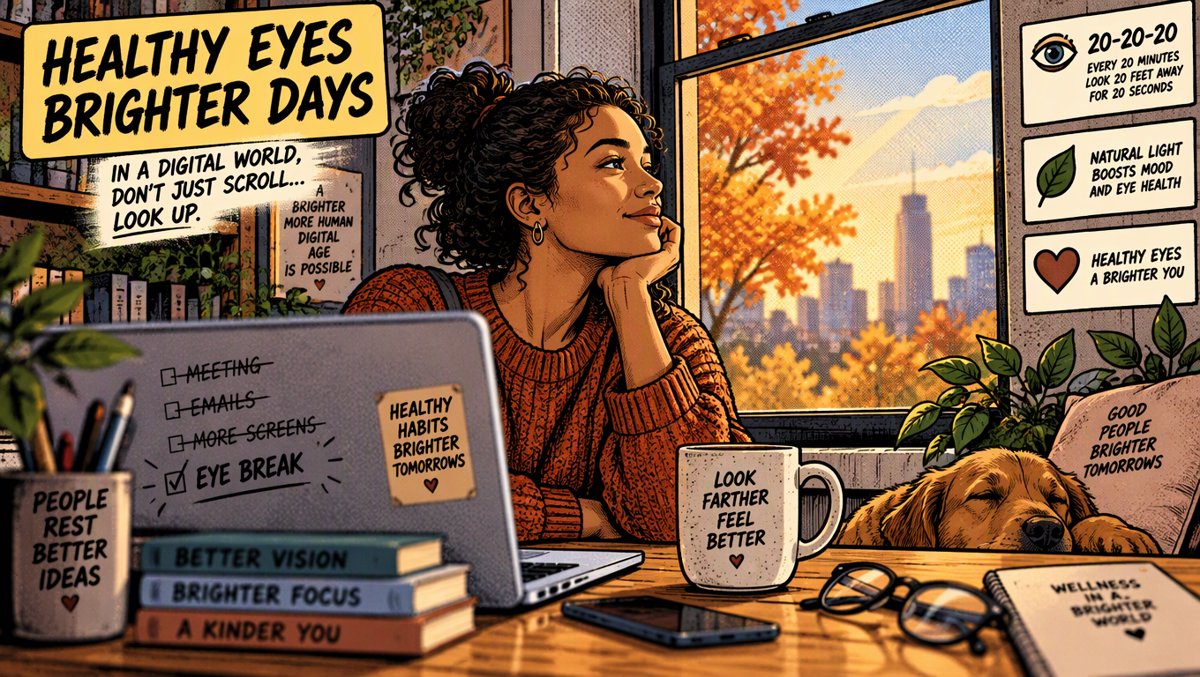
Let's bust the biggest myth first: staring at screens does not cause permanent eye damage. The American Academy of Ophthalmology (AAO) — the folks who literally train the eye surgeons — states it plainly: long screen sessions leave your eyes dry, red, and uncomfortable, but they don't ruin your vision.¹ And before you ask about blue light: the AAO says the discomfort after a Netflix marathon is linked to overuse and misuse, not some invisible blue-ray zap.² So the doom-scroll guilt trip about "ruining your retinas"? You can officially retire it.
Here's what's really going on: blinking. Your blink rate normally runs about 15–20 blinks per minute — a built-in windshield-wiper-and-moisturizer system. When you're locked onto a screen, that rate can crash to just 4–6 blinks per minute,³ and researchers who measured people doing screen tasks found blinks dropped to around 11.6 per minute — with a meaningful chunk of those being incomplete blinks that don't actually re-coat the eye.⁴ Fewer blinks = tears evaporating off your corneas while you work = that gritty, burning, "my eyes need a vacation" feeling.
Your 3-point blink rescue plan:
- Blink, fully, on purpose. During long reads, close your eyes for a full second now and then — complete blinks (not half-blinks) are what re-spread your tear film.
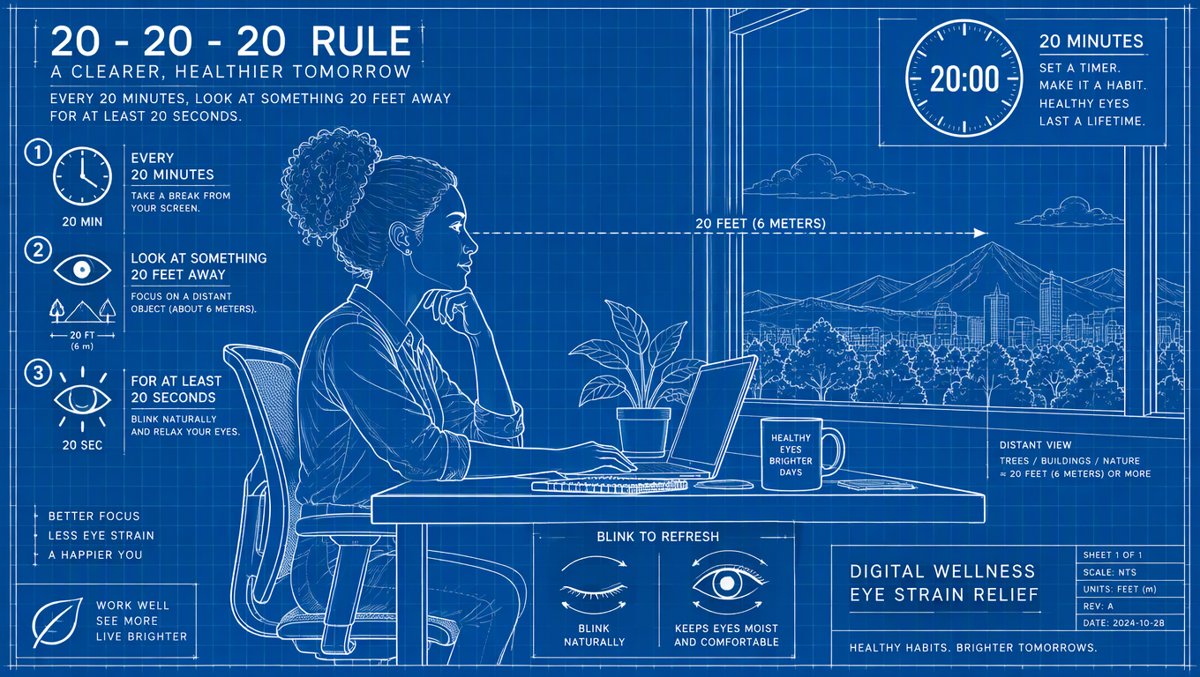
- Take actual breaks. You've probably heard of the 20-20-20 rule: every 20 minutes, look at something ~20 feet away for 20 seconds — it's the official recommendation from the American Optometric Association.⁵ Honest footnote: researchers reviewing the evidence have found surprisingly little hard data proving those exact numbers are magic.⁶ So treat it less like a prescription and more like a permission slip to look away from your screen regularly. The looking-away is the point; the math is just a memorable way to remember to do it.
- Respect the distance. Hold phones a little farther from your face than feels natural, and give your monitor some breathing room — craning in close invites both eye strain and the dreaded tech-neck.
Key takeaway: Screens don't wreck your eyes — they just trick you into forgetting to blink. Blink fully, look away often, and your "sandpaper eyes" will thank you.
💨 Section 2: Dry Air Season — Why Winter Turns Your Eyes Into a Desert
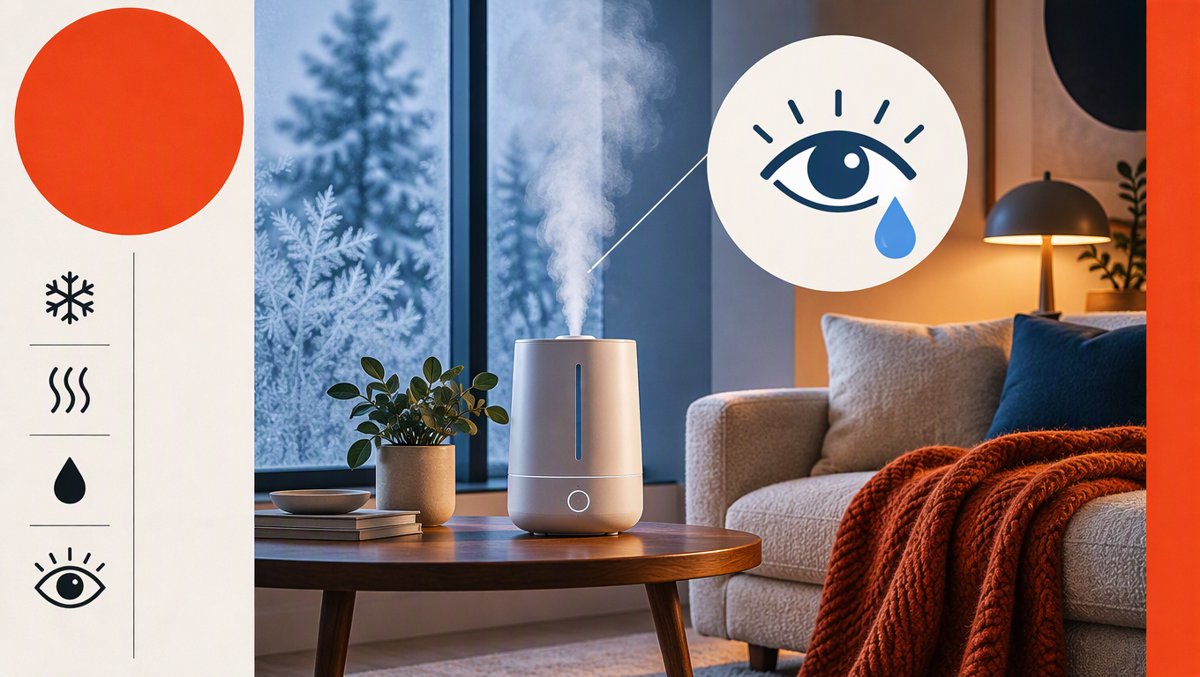
As if low blink rates weren't enough, the calendar piles on: the moment we crank the heat, indoor humidity nosedives. Cold air holds less moisture to begin with, and forced-air heating essentially turns your living room into a giant gentle blow-dryer. Mayo Clinic lists dry indoor winter air as a classic dry-eye trigger, and their advice is refreshingly practical: **add moisture back with a humidifier, and never let fans, heaters, or vents blow directly at your face.**⁷
Fun science moment: ever notice your eyes can be dry and watery at the same time? That's not a paradox, it's a panic response. When your eye surface gets too dry, it can trigger reflex tears — an emergency flood of watery tears that don't lubricate nearly as well as your everyday tears. Mayo Clinic's ophthalmologists explain this exact dry-but-dripping situation, and it's one of the most common dry-eye complaints of winter.⁸
Your anti-desert action list:
- Run a humidifier in the rooms where you log the most screen hours (Mayo's specific winter tip⁷). Aim for comfortable mid-range humidity — your eyes, skin, and sinuses all share the benefit.
- Audit your airflow. Car heaters, desk fans, ceiling vents, hair dryers — if it blows air at your face, redirect it.⁷
- Give your eyes a warm-up. A warm compress over closed lids for a few minutes helps keep the tiny oil glands along your lash lines flowing — those oils are what keep tears from evaporating too fast.
- Hydrate the whole human. Water first; and if dryness persists, it's a great thing to raise with your eye doctor rather than self-medicating indefinitely.
Key takeaway: Heating season is dry-eye season. Fight back with a humidifier, redirect any air that blows at your face, and remember: watery eyes can secretly be dry eyes crying for help.
🥗 Section 3: Grocery Cart, Meet Your Retina — Eating for Your Eyes
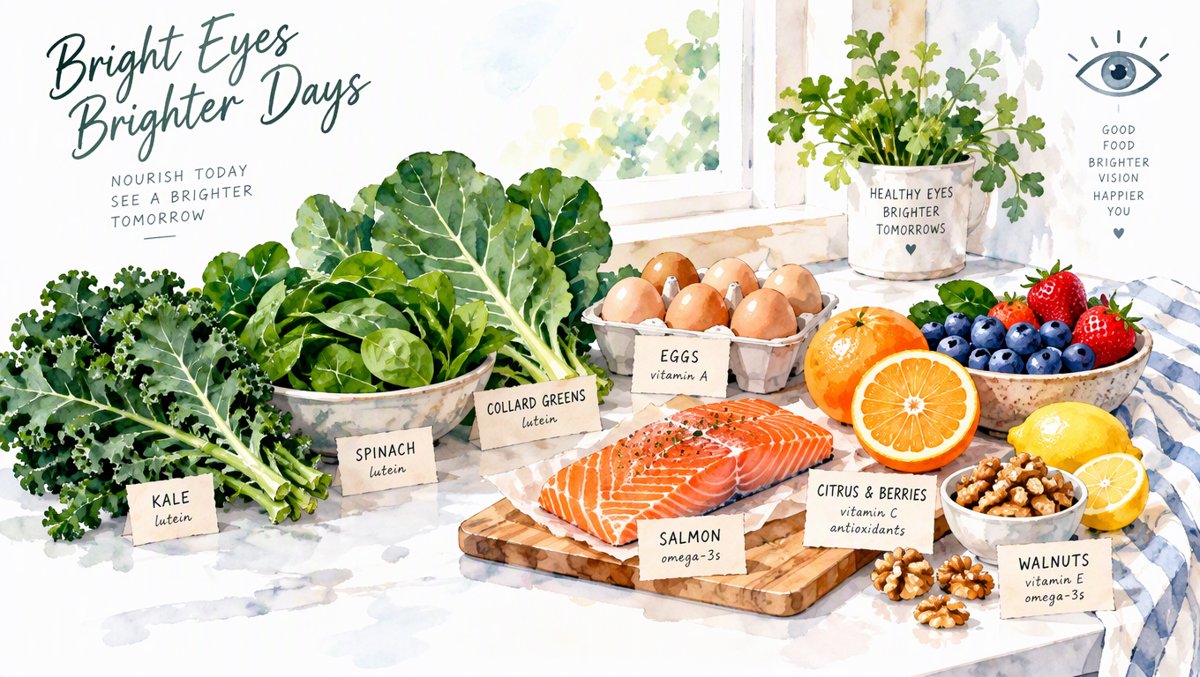
Your eyes are hungry little organs, and two nutrients sit at the top of their wish list: lutein and zeaxanthin — antioxidants that concentrate right in the macula, the part of your retina responsible for sharp central vision. The AAO's top food sources read like a greatest-hits album of your grandmother's garden: kale, spinach, collard greens, and Swiss chard, plus broccoli, colorful fruits, and yes — eggs, whose yolks deliver both carotenoids in a handy package.⁹ Pair those with omega-3-rich fish and vitamin-C-packed produce and your plate starts doing quiet, long-term protective work.
Now, the honest part — because we don't do miracle-pill marketing here. You've probably seen "eye vitamins" at the pharmacy. They trace back to the AREDS2 trials, the National Eye Institute's landmark studies — and the results are genuinely impressive but specific: the AREDS2 formula (with lutein + zeaxanthin swapped in for beta-carotene) **slowed progression of age-related macular degeneration (AMD) even more effectively than the original formula, while eliminating the lung-cancer risk beta-carotene posed for smokers.**¹⁰ Two big asterisks, though. First, adding omega-3s to the formula provided no additional protection against advanced AMD — fish-oil capsules didn't earn their spot.¹¹ Second — and this matters — these supplements were studied in **people who already had intermediate or advanced AMD.**¹¹ They're a treatment tool for existing disease, not a glowing-eyed prevention pill for healthy folks. Your best "supplement" if your eyes are currently fine? The produce section. 🥬
Easy eye-food wins:
- Go dark-green daily. A handful of spinach in your smoothie, kale in your soup, collards with dinner — small portions count.
- Keep eggs in rotation. Yolks are one of the most convenient lutein/zeaxanthin delivery vehicles around.⁹
- Fish twice a week (or flax/walnuts if you're plant-based) for omega-3s as food — the capsule-only path just didn't hold up in the big trial.¹¹
- Ask before you swallow. If you've been diagnosed with AMD, ask your ophthalmologist whether an AREDS2-formula supplement makes sense for your eyes — that's a conversation, not a vending-machine decision.
Key takeaway: Eat your greens and eggs for everyday eye support — and know that "eye vitamins" are a real, evidence-backed therapy for existing AMD, not a magic shield for everyone else.
🕵️ Section 4: The Silent Stuff — Kids' Eyes, Blood Sugar, and the Appointment Nobody Books
Two quiet storylines deserve a spotlight this month. First: kids and nearsightedness. Myopia is exploding globally, and the science's favorite intervention is gloriously low-tech — outdoor daylight. The National Academies recommends children get one to two hours outside each day, because bright, varied outdoor light appears to stimulate the eye in a way that protects against myopia developing.¹² An overview of systematic reviews agrees: outdoor time is considered a safe, effective strategy for reducing myopia onset in children.¹³ So no, sending the kids into the yard isn't just your sanity saver — it may be vision care. (And this Sunday's clock change is actually your friend: earlier darkness means the morning light window matters more — grab it!)
Second: diabetes and silent vision loss. November is Diabetic Eye Disease Month, and the numbers deserve attention: the CDC reports **diabetic retinopathy is the leading cause of blindness in working-age adults.**¹⁴ The cruel twist — it typically has no symptoms in early stages. You can't feel it, and you can't see it changing, until real damage has occurred. That's why the CDC hammers the same message: regular, comprehensive dilated eye exams catch problems early enough to treat.¹⁴ If you or anyone you love has diabetes (that's a lot of us — this one's for family, coworkers, everybody), the calendar reminder isn't optional.
The two-minute eye-care audit:
- Book the exam you're "too busy" for. A comprehensive dilated exam is the only way to see the silent stuff — glaucoma, early retinopathy, retinal changes — before symptoms ever show.
- Kids outside, daily. Aim for that 1–2 hours of daylight; walking the dog counts. Fresh air is a two-fer for mood, too. 🌳
- If diabetes is in the picture, an annual eye exam is non-negotiable — set a recurring reminder today, for you or someone you love.
- Take symptoms seriously. Flashes, floaters that suddenly multiply, a curtain across your vision, or persistent blurred vision = call the eye doctor promptly, not "when things calm down."
Key takeaway: The scariest eye problems are the ones you can't see coming — daily outdoor light helps protect kids' sight, and a yearly dilated exam (especially with diabetes in the picture) catches the silent threats early.
🎯 Key Takeaways
- Screens won't permanently damage your eyes — dry, gritty discomfort comes from forgetting to blink, so blink fully and look away from the screen regularly.
- The 20-20-20 rule is a great habit, not proven magic — every 20 minutes, look ~20 feet away for 20 seconds; the real power is the break itself.
- Heating season dries out your eyes — run a humidifier, redirect fans and vents away from your face, and remember watery eyes can actually be dry eyes in disguise.
- Eat for your retina — leafy greens and eggs deliver lutein and zeaxanthin; AREDS2 supplements are proven for existing AMD (ask your doctor first), and omega-3 capsules added nothing in the big trial.
- Book the silent-disease check — kids need 1–2 hours of outdoor light daily, adults with diabetes need a yearly dilated eye exam, because the vision threats that matter most don't announce themselves.
🎧 Key Takeaways — Listen (2 min)
📚 Verified Sources
- American Academy of Ophthalmology — Computers, Digital Devices, and Eye Strain — AAO clinical guidance confirming prolonged screen use does not cause permanent eye damage. https://www.aao.org/eye-health/tips-prevention/computer-usage
- American Academy of Ophthalmology — Digital Devices and Your Eyes — Why post-screen discomfort stems from overuse, not blue light. https://www.aao.org/eye-health/tips-prevention/digital-devices-your-eyes
- International Journal of Environmental Research and Public Health (MDPI) — "Real-Time Blink Detection as an Indicator of Computer Vision Syndrome" (2023); review of blink-rate research showing 15–20 blinks/min falling to 4–6/min during computer use. https://www.mdpi.com/1660-4601/20/5/4569
- Portello JK et al., Optometry and Vision Science (2013) — "Blink Rate, Incomplete Blinks and Computer Vision Syndrome," measured via PubMed (NIH). https://pubmed.ncbi.nlm.nih.gov/23538437/
- American Optometric Association — 20-20-20 Rule patient handout — Official AOA guidance on screen breaks. https://www.aoa.org/AOA/Images/Patients/Eye%20Conditions/20-20-20-rule.pdf
- Optometry Times — "Deconstructing the 20-20-20 Rule for Digital Eye Strain" — Examines the limited direct evidence behind the rule's specific numbers. https://www.optometrytimes.com/view/deconstructing-20-20-20-rule-digital-eye-strain
- Mayo Clinic — Dry Eyes: Symptoms and Causes — Winter humidifier use, avoiding air blowing at the eyes, and dry-eye triggers. https://www.mayoclinic.org/diseases-conditions/dry-eyes/symptoms-causes/syc-20371863
- Mayo Clinic News Network — "Mayo Clinic Q and A: Relief for Dry Eyes" — Ophthalmologist Q&A explaining why eyes can be dry and watery at the same time. https://newsnetwork.mayoclinic.org/discussion/mayo-clinic-q-and-a-relief-for-dry-eyes/
- American Academy of Ophthalmology — Diet, Nutrition, and Eye Health Supplements — Leafy greens, colorful produce, and eggs as sources of lutein and zeaxanthin. https://www.aao.org/eye-health/tips-prevention/diet-nutrition
- National Eye Institute (NIH) — "NIH study confirms benefit of supplements for slowing age-related macular degeneration" — AREDS2 formula (lutein/zeaxanthin) outperformed the original and removed beta-carotene's lung-cancer risk. https://www.nei.nih.gov/research-and-training/research-news/nih-study-confirms-benefit-supplements-slowing-age-related-macular-degeneration
- National Eye Institute (NIH) — AREDS/AREDS2 Clinical Trials — Trial-design details: no added benefit from omega-3s; supplements studied in people with existing intermediate/advanced AMD. https://www.nei.nih.gov/eye-health-information/clinical-trials/age-related-eye-disease-studies-aredsareds2/about-areds-and-areds2
- National Academies of Sciences, Engineering, and Medicine — Report recommending 1–2 hours outdoors daily for children and classifying myopia as a disease. https://www.nationalacademies.org/news/new-report-recommends-myopia-be-classified-as-a-disease-policies-for-children-to-spend-time-outdoors
- PMC (NIH) — "Time spent outdoors as an intervention for myopia prevention and control in children: an overview of systematic reviews" (2022) — Outdoor light exposure as a safe, effective strategy against myopia onset. https://pmc.ncbi.nlm.nih.gov/articles/PMC9305934/
- CDC — Vision Loss and Diabetes — Diabetic retinopathy as the leading cause of blindness in working-age adults, and why regular dilated eye exams matter. https://www.cdc.gov/diabetes/diabetes-complications/diabetes-and-vision-loss.html
All claims fact-checked against Gold-tier (CDC/NIH/NEI/PubMed/National Academies) and Silver-tier (Mayo Clinic/American Academy of Ophthalmology/American Optometric Association) authoritative sources. Last verified: October 28, 2026.
Your eyes have been quietly working every waking minute of your life — return the favor this winter with a blink, a break, some greens, and one little appointment. See you tomorrow. 👁️✨💙