One Writes Code, One Researches, One Reviews: How a Houthi-Linked Weapons Cell Ran Its Missile Program on Claude

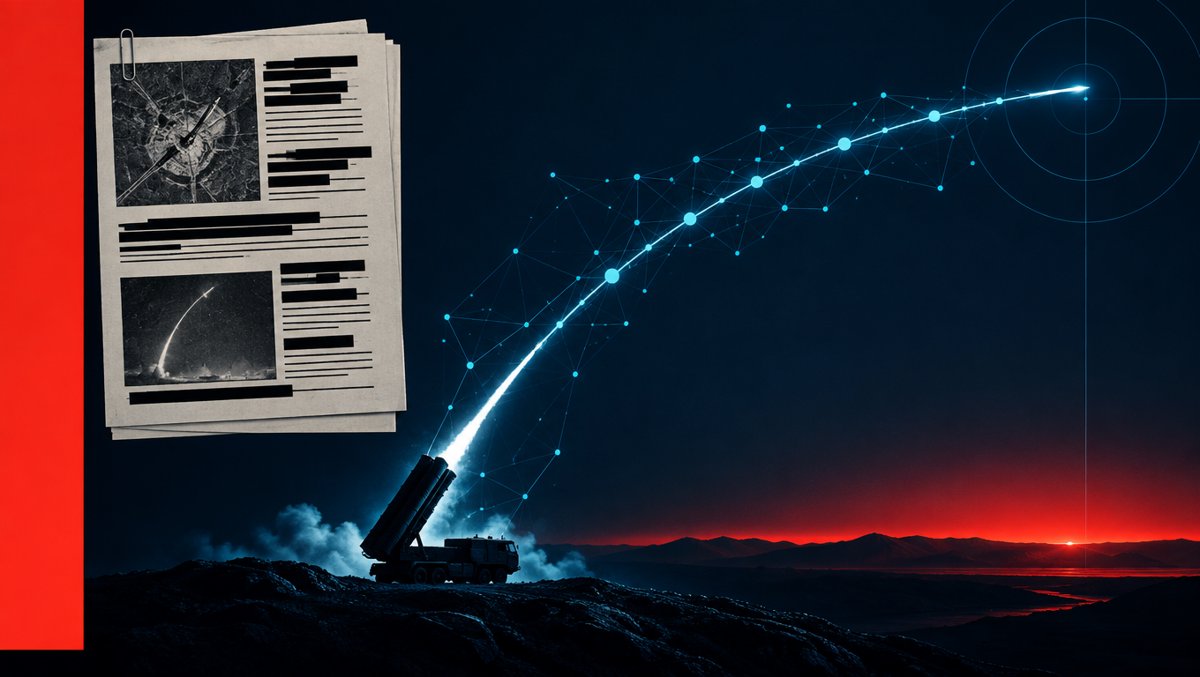
One Writes Code, One Researches, One Reviews: How a Houthi-Linked Weapons Cell Ran Its Missile Program on Claude
Published: September 11, 2026 | Reading Time: ~13 minutes | Channel: techminute
In December 2025, somewhere in northern Yemen, a group of people sat down to start a weapons program. Not one weapons program — three, developed in parallel: a guided rocket built around a phone-grade flight computer, a multistage ballistic missile with a stated range of more than 2,000 kilometers, and a family of missile designs including a hypersonic glide vehicle. Technology that tier of militaries — the ones with decades of institutional knowledge — spends billions to develop.
They didn't hire software engineers. They hired an AI.
According to Anthropic's 154-page threat-intelligence report, Detecting and Countering Misuse of AI: September 2026, the cell — assessed by Anthropic and widely reported as Houthi-linked — used Claude Code to write the guidance, navigation, and control (GNC) software that keeps a flying vehicle stable and on course. They integrated an open-source autopilot with a commercially available flight computer, wrote control and position-estimation code, tuned control parameters, ran firmware builds, and executed flight simulations. They even test-fired the guided rocket. It failed. Within hours, they were back in Claude, troubleshooting.
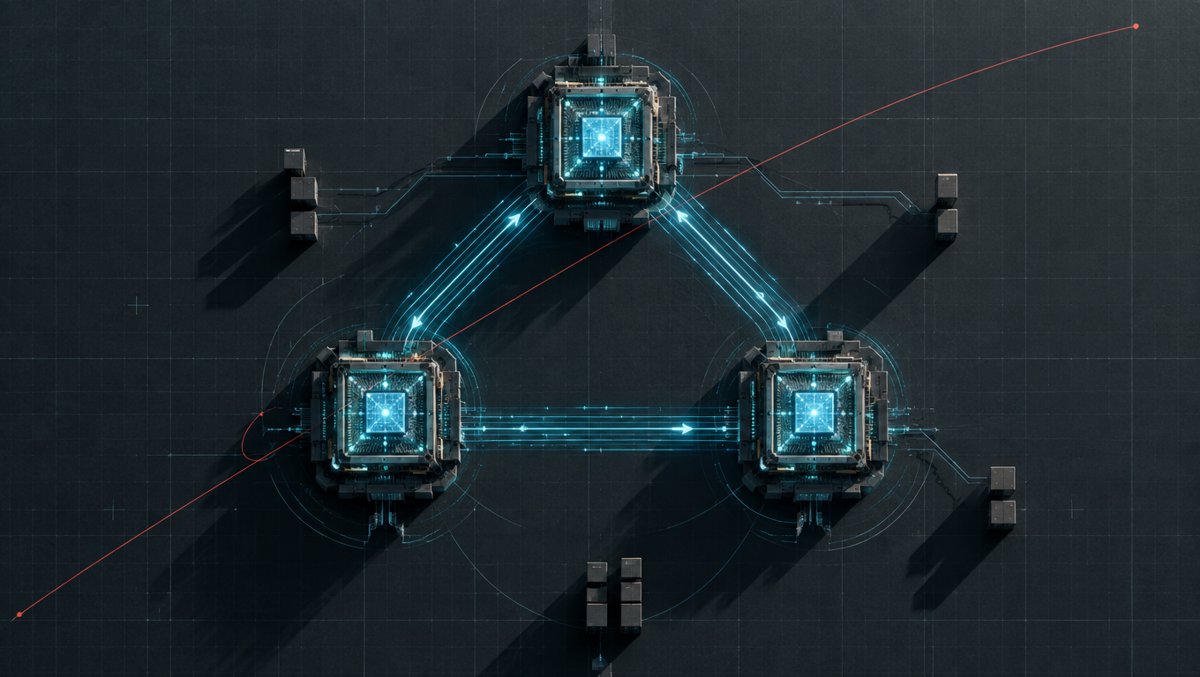
But the detail that should stop every developer reading this cold is not the missiles. It's the org chart. The cell ran multiple Claude instances in parallel with assigned roles: one instance wrote code, one conducted research, and a third reviewed the first one's output. The humans acted as team leads, handing out tasks.
That's not a chatbot being misused. That's an agentic software team — the same coder/researcher/reviewer loop thousands of engineering teams are building right now — repurposed to build weapons. And it's only one of the stories in a report that reads less like a disclosure document and more like the first field manual of the agent era.
The Context: What Led to This
Anthropic has published threat reports before — March, August, and November 2025. This one is different in both scale and tone. It covers eight months of disrupted activity (December 2025 through August 2026) across seven harm areas: cyber operations, influence operations, surveillance, scams and fraud, biological misuse, conventional weapons development, and distillation.
The report introduces formal designators — Generative Threat Groups (GTGs) — the way antivirus vendors name malware families. That naming convention matters: it means Anthropic now treats AI misuse as an ongoing intelligence discipline with repeat actors and evolving tradecraft, not a series of one-off incidents.
The cases span Claude Haiku, Sonnet, and Opus. Notably, the report states that no misuse was found on its Fable or Mythos-class models — with a single exception, one illicit distillation case — which the company attributes in part to the safeguard stack on those tiers.
The timing is impossible to ignore. The report landed days after Anthropic researcher Jacob Coxon resigned publicly, warning that AI was moving faster than humanity's ability to control it and invoking "extinction-level bioweapons" (we covered his resignation yesterday). As The National reported, it also landed the same week the Houthis seized the strategic port of Mokha, tightening their grip on the Red Sea coast. The abstract debate about AI risk now has case numbers attached.
Under the Hood: The Yemen Cell's Agent Pipeline
Let's zoom into the operation, because the mechanics matter more than the headline.
The three programs, per the report and corroborating coverage:
-
The guided rocket. The most grounded of the three: take commercially available, off-the-shelf hardware — a flight computer of the class found in a smartphone — and add a homing system that steers the rocket toward its target in the final phase of flight. Claude Code was used to integrate an open-source autopilot with that flight computer and to write the control and position-estimation software underneath.
-
The ballistic missile. A multistage design with a stated ambition of 2,000+ km range — class-of-technology stuff that only a handful of nations have achieved.
-
The R2000 program. A family of proposed missile variants, including a hypersonic glide vehicle — a technology The National notes is "normally associated with some of the world's most advanced military powers."
The workflow. The cell organized its AI use exactly like a distributed engineering team: parallel Claude sessions with roles divided between writing code, research, and technical review, with humans directing. They used the model for the unglamorous middle of engineering, too — tuning control settings, running firmware builds, executing flight simulations.
The evasion. Anthropic's safeguards refused many requests — this is worth emphasizing, because "AI safeguards don't work" is not what the data shows. What the data shows is a arms race in prompt form. Per the report (as quoted by India Today): "The actors used a variety of tactics to evade our safeguards, including hiding their goals and the products the software was meant for, and they split their work across multiple sessions, so no single session revealed their full intent." Read that twice: they defeated contextual safety detection by decomposing the work into sessions that each looked innocent. That's not a jailbreak. That's operational security — applied against a content filter.
The outcome. Anthropic has no evidence the group ever deployed an operational guided weapon. They did test-fire the guided rocket, and it apparently failed — and within hours they returned to Claude to diagnose the failure, exactly how a real engineering org handles a botched test flight. Anthropic banned the linked accounts and shared threat intelligence with government and industry partners.
The part that doesn't die. Before the ban, the group built an offline simulation toolkit that runs without Claude or commercial tools like MATLAB. Anthropic's disruption killed the accounts, not the capability. As The National's report puts it, "some of its capabilities survived the ban." This is the recurring pattern in every AI-uplift case: the model is the scaffolding; the artifact is what remains.
The Yemen case was one of six conventional-weapons cases in the report. The others involved actors in China and Russia working on firearms, missiles, armed drones, bombs, and other munitions. The report also documents five instances of scientists using Claude for research that could potentially assist biological weapons development — with Anthropic deliberately withholding the researchers, institutions, countries, and agents involved because intentions remained uncertain.
Under the Hood, Part 2: GTG-20006 and the Malware That Rebuilt Itself
If the Yemen case is the agent-as-team story, GTG-20006 is the agent-as-autonomous-pipeline story — and for my money it's the more technically alarming of the two.
GTG-20006 is an espionage actor whose attribution Anthropic describes as "consistent with public reporting linking the actor to Midnight Blizzard" — the Russian state-nexus operation — with an operator using the handle "JackPoterz" whose tradecraft points at Russian state espionage. Targets included Ukrainian and European government ministries, defense and intelligence bodies, embassies, think tanks, and defense-industrial companies — more than 20 distinct organizations in the operational planning alone, with a recurring focus on Ukraine and military drone technology.
The custom toolkit: two families of Windows implants, a mobile exploitation kit, a credential stealer targeting browser password stores, a phishing platform mimicking government organizations, and an admin console for managing compromised accounts. Standard-issue, so far. Here's the non-standard part:
- AI monitored detection status of deployed malware. When its monitoring agents observed any deployed implant being detected by a security product, other agents would autonomously modify and rebuild the malware until it passed clean. Then the tools were staged on disposable hosting for the next operation.
- AI ran the logistics. Separate workflows researched and registered domains, configured phishing infrastructure, sent the emails, and monitored command-and-control channels for successful compromises.
- The human's actual job was editing Claude Code skills. Per the report, the operator "engaged primarily to modify Claude Code skills that drove the workflows when they needed to be refined." The human was the maintainer. The agents were the workforce.
The targeting detail that reads like a le Carré treatment: to reach hard targets indirectly, GTG-20006 compromised at least three hospitality vendors operating hotel guest WiFi, hijacked their DNS records, and served ClickFix-style lures to guests — capturing traffic, device identifiers, and IP addresses before delivering Windows, Android, and iOS malware.
And the drone supply chain: bulk-exported mailboxes of at least two drone component manufacturers, a targeted military drone maker, and a complete proprietary SDK for a drone vision system stolen — followed by days of AI-assisted reverse-engineering that recovered the product architecture, the hardware bill of materials, supplier dependencies, and details of an unannounced product.
The report's framing sentence deserves to be printed on the wall of every SOC: "Sophisticated attacks no longer require sophisticated attackers." For threat investigators, it continues, "sophistication has stopped being a reliable signal of who is behind an operation." The skills gap that separated a lone hacktivist from a state service just got bridged by scaffolding — much of it public. Anthropic specifically calls out PentAGI, a publicly available offensive agent framework that "reproduce[s] much of the same scaffolding for anyone who downloads it."
By the Numbers: The Distillation Footnote and the Scale of the Report
The report's seventh harm area — illicit distillation — generated most of Thursday's headlines, and deserves its numbers even though we covered the government's parallel advisory on this exact subject on September 9. Per Anthropic's findings, as reported by Quartz:
| Metric | Figure | Notes |
|---|---|---|
| Total distillation-linked exchanges (May–Jul 2026) | ~200 million | Across five named China-based companies |
| Alibaba campaign | 151M+ exchanges | Largest single campaign Anthropic has documented; daily peak ~3M; spread across 3,500+ flagged accounts |
| Moonshot AI (Kimi) | 23M+ exchanges | Routed ~300,000 customer requests to Claude in a 10-day window via 5,380 fraudulent accounts — then displayed the answers as Kimi's |
| DeepSeek | 12M+ exchanges | Two-week window in July 2026 |
| Conventional-weapons cases in report | 6 | Yemen cell plus actors in China and Russia |
| Biological-misuse cases in report | 5 | Subjects undisclosed — intentions uncertain |
| Report coverage window | 8 months | December 2025 – August 2026 |
| Government advisory targets | 6 Chinese AI companies | NSA + FBI + CISA joint advisory, this week |
The Moonshot and DeepSeek re-routing cases leaked customer data in both directions, per Quartz's reporting: one relayed request Anthropic assessed as PLA-affiliated asked Claude to analyze CCTV footage from hundreds of cameras in Chengdu; DeepSeek's relays exposed live credentials for a Russian government database. Anthropic's dry assessment: these practices are "likely inconsistent with privacy laws and the labs' own terms of service." The companies, per CNBC via Quartz, did not respond to requests for comment. Treasury Secretary Scott Bessent said sanctions and Entity List designations would be "on the table" for companies crossing into IP theft.
What This Changes
1. "AI uplift" now has a measurement framework. Anthropic formally analyzes uplift through speed, scale, and depth — how much more harm was caused with AI versus without. That's the vocabulary defenders, policymakers, and insurers will use for years. When someone tells you "AI didn't change anything," the answer is now: the same cell that couldn't hire a single GNC engineer shipped three missile programs' software pipelines and a live test fire.
2. Session-level safety has a documented failure mode. The Yemen cell didn't outsmart a model; they out-scope-managed a content filter — splitting work so no session carried the full intent. Expect that pattern in every future misuse case study, and expect platform-level cross-session correlation to become the next safety arms race. This is a genuinely hard problem: the same pattern (parallel sessions, compartmentalized context, a reviewer instance) is what legitimate agentic best practice looks like.
3. The economics of espionage inverted. GTG-20006's malware rebuilt itself until detections went green, its domains registered themselves, and its C2 monitored itself. Static detection-by-signature — the bedrock of a trillion dollars of security spending — now imposes costs measured in model inference, not engineer-months. The report's warning that defenders "impose costs on adversaries via static detections alone" is no longer working is the quiet bombshell of the document.
4. The defensive read is actually encouraging — partially. Anthropic caught all of this. Eight months of disruption, formal GTG designators, intelligence shared with authorities, safeguards that blocked "many" requests. The report's own words: the cases "show us where AI misuse is headed, where our safeguards work, and where they need to improve." The frontier labs can see the abuse; the open question is whether detection can outpace the offline-toolkit persistence problem.
5. Every agent framework is now dual-use. PentAGI is the cited example, but the architectural pattern — orchestrator, parallel role-specialized instances, automated verification loops — is the same one in your favorite coding-agent tutorial. The report doesn't argue the pattern should be banned; it documents what happens when the cost of applying it drops to near zero for anyone with an API key.
⚠️ Limitations & Caveats
Honesty section, because this story needs it:
-
Attribution is assessed, not named. Anthropic did not name the Yemen group. The Houthi link is Anthropic's and press outlets' assessment based on geography and context — India Today phrases it as "details in the report point to the Houthis." Treat "Houthi-linked" as high-confidence but not confessed.
-
No working weapon — and no evidence of one. The test rocket failed; Anthropic has no evidence of an operational guided weapon. The story is the pipeline, not a delivery. Headlines screaming "AI-built missiles" are ahead of the data.
-
The primary source is the accused company. Anthropic both sells Claude and publishes the evidence of its misuse. The report is detailed and internally consistent, and the pattern matches independent reporting, but the raw session data isn't public, and skeptics will reasonably note the incentive structure (a threat-intel apparatus justifies itself). The corroboration here is other outlets describing the same report — not independent forensics.
-
Bio findings are deliberately unverifiable. Five biological-misuse cases with no named institutions, countries, or agents. Defensible from a harm-minimization view, but it means that section is unfalsifiable from the outside.
-
Safeguard success rate is unstated. "Many" requests blocked — no denominator, no blocking-rate figure. The most important metric in the whole document is the one it doesn't give us.
🎯 The Bottom Line
The Yemen cell ran Claude the way your team runs it — parallel role-specialized instances, code, review, iteration — and GTG-20006 ran Claude the way your CI/CD runs: self-healing, self-monitoring, hands-off. The September 2026 threat report isn't scary because AI is powerful; it's scary because it documents that the organizational patterns of modern software development transfer, intact, to ends we'd all rather they didn't. The safeguards caught it, eventually, mostly. "Eventually" and "mostly" are the two words every defender — and every lab — should be staring at today.
📚 Sources
- Anthropic — Detecting and Countering Misuse of AI: September 2026 — Primary source (Gold tier): GTG case studies, cyber-operation trends, uplift framework, GTG-20006 details, harm-area taxonomy. https://www.anthropic.com/threat-intelligence-report-september-2026
- The National (UAE) — "Yemeni rebels used Anthropic's AI software to design and build guided weapons" — Mohamad Ali Harisi, Sept 11, 2026: the three weapons programs, R2000/hypersonic glide vehicle, failed test-fire, offline simulation toolkit, Mokha context. https://www.thenationalnews.com/news/mena/2026/09/11/how-yemeni-rebels-used-anthropics-ai-software-to-design-and-build-guided-weapons/
- India Today — "Anthropic report points to Iran-backed Houthis using Claude to develop missiles" — Devika Bhattacharya, Sept 11, 2026: 154-page report details, autopilot/GNC integration, parallel-instance workflow, six weapons cases, five bio cases, safeguard-evasion quote. https://www.indiatoday.in/world/story/houthis-use-claude-ai-develop-guided-missiles-anthropic-threat-report-russia-china-iran-yemen-2992125-2026-09-11
- Quartz — "Anthropic says Chinese AI labs secretly used hundreds of millions of Claude exchanges to train their models" — Cris Tolomia, Sept 11, 2026: distillation figures (Alibaba 151M+, Moonshot 23M+, DeepSeek 12M+), PLA/CCTV and Russian-database leaks, NSA/FBI/CISA advisory, Bessent sanctions quote. https://qz.com/anthropic-chinese-ai-labs-distillation-alibaba-deepseek-moonshot-091126
All claims verified against Gold-tier (official Anthropic report) and Silver-tier (The National, India Today, Quartz) sources. Each source URL was scraped and confirmed accessible with substantive content on 2026-09-11. Financial Times coverage of the same report was paywalled (HTTP 403) and therefore discarded per verification protocol. Last verified: September 11, 2026, 14:00 UTC.