Nvidia Without Jensen: The Board Has the Votes — and the Law Has the Leverage
Nvidia Without Jensen: The Board Has the Votes — and the Law Has the Leverage
Somewhere in Santa Clara this week, there is a black leather jacket with nowhere to go.
Thirty-three years. One founder, one CEO, zero transitions. Nvidia is the only company in the S&P 100 that has never once changed a CEO — and as of Wednesday night, its board of directors was meeting behind closed doors to decide whether to end that streak by force. The Wall Street Journal reported the board is preparing to oust Jensen Huang after he admitted to two extramarital affairs: one with a Chinese businesswoman whom U.S. intelligence reportedly assessed was a spy, and a second — the one that likely sealed his fate — with a direct subordinate at his own company.
The market has already voted. Nvidia shares closed Wednesday at $173.73, then slid roughly 8% in pre-market trading Thursday to about $159.88 — which, if it holds, would be a fresh 52-week low, down about 34% from the $243.37 high. Prediction markets put the odds of Huang being out by November 13 at 72% on Polymarket and 64% on Kalshi, with over $7 million wagered on the question.
The money is rotating out the door in real time. On Wednesday, while the board met, AMD gained 7.3%, Intel jumped 7.5%, Broadcom climbed 4%, and TSMC's ADRs rose 4.3%. That's not panic — that's a portfolio reallocation based on a very specific question investors are suddenly forced to answer: what exactly is Nvidia without the man in the leather jacket?
This is not a story about gossip. Strip away the tabloid details — and they are tabloid details, take them or leave them — and two questions actually matter, in this order:
- Did anyone break the law? (Export controls, trade secrets, national security.)
- Did anyone break the rules? (The company's own code of conduct, the directors' fiduciary duties.)
The first question decides whether this escalates from a management crisis into a legal catastrophe. The second question has already been answered. Here's the part most coverage is missing: the board isn't pushing Jensen Huang out because they're scandalized. They're doing it because the law leaves them no other move.
Why the Board Must Show Him the Door — It's Arithmetic, Not Loyalty
Let's start with the boring precedent, because the boring precedent is dispositive.
Intel, June 2018. CEO Brian Krzanich resigned after the board learned of a past consensual relationship with an Intel employee — a violation of Intel's non-fraternization policy. No crime. No scandal dollars. Just a policy violation by the one employee whose conduct sets the tone for 100,000+ others. The stock fell 2.4% that day. Bob Swan stepped in as interim.
McDonald's, November 2019. CEO Steve Easterbrook was fired for a consensual relationship with an employee. It nearly ended worse for the company: Easterbrook initially lied about the extent of his misconduct, McDonald's sued him in 2020, and the eventual 2021 settlement clawed back more than $105 million in severance and equity. The SEC then charged him with misleading investors — a $400,000 fine plus $52.7 million in disgorged compensation in 2023.
Note what that last part means: a CEO's lying about an affair became a federal securities case. In 2026, no board forgets that sequence.
So when a CEO of any American company has a relationship with a direct report, it is a textbook violation of conflict-of-interest and conduct rules — power asymmetry, compromised reporting lines, HR nightmare. Every governance consultant in America has the same slide in their deck. When that CEO is the face of a company sitting at the center of the U.S.–China technology war, and the relationship involves a woman U.S. intelligence assessed was spying for Beijing, the slide becomes a firing squad.
Now the legal weapon the tabloids miss: Delaware's Caremark doctrine. Directors owe shareholders a duty of oversight. If a board sits on "red flags" — a national-security investigation touching its CEO, a conduct violation involving a subordinate — and fails to act, the directors can be sued personally for breaching that duty. This is not theoretical. In 2021, Boeing's directors paid $237.5 million — out of their own D&O coverage — to settle a Caremark derivative suit over board-level oversight failures tied to the 737 MAX crashes. It remains the largest Caremark settlement in Delaware history.
Fortune's corporate-governance column put it bluntly this week: the board's years of "idolatry" of Jensen Huang — a board that met only five times in all of fiscal 2026 while the CEO ran everything — could itself open the door to shareholder litigation in Delaware Chancery Court.
So do the board's math. If they keep a CEO who (a) violated conduct rules with a subordinate, and (b) is under federal review for potential trade-secret exposure, the directors inherit the risk personally. If they remove him, the pain is professional, not personal. There is no third option where they keep him and stay safe. This is why the board "must" invite Jensen to leave — they're not choosing between loyalty and principles. They're choosing between firing him and getting sued. Any lawyer worth their billable hours gives the same advice: walk him to the door, gently, with a good exit statement.
One more number the board keeps in mind: Huang owns roughly 3.5% of Nvidia — about 870 million shares per March 2026 filings, a paper fortune around $140 billion at Thursday's pre-market price. Nothing about removing the CEO touches his equity. The board can fire the man without touching the shareholder.
The Keyman Question, Answered Honestly
Now the harder question, the one traders are repricing by the tens of billions: is the company the man?
The honest answer has two ledgers, and you have to keep both.
What is uniquely Jensen:
- The decision machine. Analyst Ming-Chi Kuo made the sharpest point circulating this week: Huang may not be the deepest technical expert on 800V HVDC power or co-packaged optics at Nvidia. His real value is holding strategy, organization, technology, and supply chain in one head — and deciding fast. Nvidia runs an absurdly flat org: no COO, and at one point 55 (by some counts 60) executives reporting directly to one man. That speed is a person, not a process.
- The face. Keynotes, customer relationships, government negotiations in Washington and Taipei. Thirty-three years of accumulated trust doesn't transfer.
- The blessing machine. Nvidia invests in its customers — neoclouds and AI startups who then buy Nvidia chips with the money. That circular flow depends heavily on one man's judgment and credibility. An interim CEO will freeze that checkbook. The fragile link in the AI supply chain isn't Microsoft or Meta — it's the second-tier compute companies surviving on Nvidia's balance-sheet blessing.
What survives Jensen:
- The moat is code, not charisma. CUDA has 20 years of ecosystem gravity. Customers buy Nvidia GPUs because their AI capex plans need to land and there is no full alternative — not because of a leather jacket.
- The roadmap is years deep, built by an organization that includes chief scientist Bill Dally, CTO Michael Kagan, and Ian Buck — the man who literally created CUDA and now runs the hyperscale and HPC business.
- Physics sets the pace, not personality. The scary-fast transitions — 800V high-voltage DC power, co-packaged optics — are being forced by demand exceeding physical limits (racks moving from tens of kilowatts toward a megawatt; copper running out of reach at higher speeds). AMD, Broadcom, and Google's TPU teams are adopting the same technologies without a Huang. Demand drives the upgrade cycle; the CEO merely steers.
- The manufacturing reality: those chips get made at TSMC, full stop. No CEO change alters that.
History's verdict on the "irreplaceable founder" is remarkably consistent. Apple after Jobs became the most valuable company on earth under a manager named Cook. Microsoft's nadir came 14 years after Gates left the CEO seat, and its golden age came under another manager, Nadella. TSMC fumbled its first succession (2005–2009), founder Morris Chang retook the wheel, and the company eventually handed off to managers who built something several times stronger than the founder-era TSMC.
And the historical data on this specific scandal shape? When Intel's Krzanich resigned over a workplace relationship in 2018, the stock dipped 2.4% that day and was down 8.7% a year later — underperforming a roaring market, to be sure, but Intel's problems were manufacturing, not morals. The lesson cuts both ways: replacing a keyman doesn't kill a great company. It just removes the one variable everyone assumed was permanent.
Who Picks Up the Leather Jacket
Here's Nvidia's structural problem, and it's a self-inflicted one: there is no obvious second-in-command. No COO. No anointed successor — Huang spent years arguing that formal succession planning breeds internal rivalry. The org chart is a hub with three dozen spokes.
The leading candidates, per Reuters and the analyst chorus this week:
- Colette Kress, CFO — thirteen years in the job, fronts every earnings call, Wall Street's favorite. Citi analysts pegged her as the likely interim CEO while the board runs a real search. Financial-steadiness pick, not a technologist.
- Ian Buck, creator of CUDA — the technical heavyweight with the deepest customer relationships in hyperscale, but no experience running the whole company.
- External candidates — Semafor floated Apple's chip chief Johny Srouji; Baird analysts prefer an outside hire. The Lisa Su and Rene Haas names in circulation remain pure speculation.
The most probable path, combining the reporting: Kress steadies the ship as interim, Buck and the technical bench hold product and customers, an external or elevated internal choice lands as permanent CEO — and the flat org gets re-layered under a new COO, trading some of that famous decision speed for survivability. The flat structure was brilliant because Huang could absorb it; for anyone else it's an org chart with a single point of failure, and the first act of the new regime will be to fix exactly that.
The Bulletproof Structure Jensen Never Bought
Here's the delicious irony at the center of this saga — the part every founder should study over coffee.
Jensen Huang could have made himself unfireable. He chose not to.
Nvidia has a single class of common stock. One share, one vote. Huang's ~3.5% stake buys him ~3.5% of the votes. The board is declassified — every director stands for election every year. There's no poison pill, no controlling-shareholder provision. By Delaware standards, it is a textbook, institutional-investor-friendly charter. Council of Institutional Investors would frame it. And that pristine governance is precisely why a simple majority of eleven directors can end a 33-year founder-CEO run in a single evening meeting.
Compare the founders who bet on themselves instead:
| Company | Founder's economic stake | Founder's voting power | Mechanism |
|---|---|---|---|
| Nvidia | ~3.5% | ~3.5% | One share, one vote — fully fireable |
| Meta | ~13% | ~61% | Class B shares, 10 votes each |
| Alphabet (Google) | founders' combined stake | majority control | Class B super-voting shares |
| Ford | family holds ~2% of equity | ~40% of votes | Class B shares, 40 votes each |
| Snap (2017 IPO) | founders' control | 100% | Public shares carried zero votes |
Zuckerberg owns about 13% of Meta's economics but controls roughly 61% of the votes. Try picturing Meta's board "preparing to oust" him over personal conduct. It cannot happen — the board serves at his pleasure, and just this October Meta filed to explore a new non-voting share class so he can raise capital while diluting everyone but himself.
The dual-class route has real costs — S&P spent years excluding new dual-class listings from its indices, governance funds scream about accountability, some investors apply a valuation discount, and Delaware has spent the last few years passing founder-friendly reforms partly to stop such companies from fleeing. But the trade is explicit: the founder buys permanent control and pays for it with permanent accountability questions. Jensen took the opposite trade — maximum institutional legitimacy, zero personal entrenchment. He ran a company the textbook way and left his own job to the textbook: if the board decides he must go, he goes.
For founders reading this with sweat on their palms, the menu is clear. Dual-class super-voting shares (Meta, Google), golden shares with veto rights, charter provisions that require supermajorities to remove directors or the CEO, staggered (classified) boards that prevent an overnight majority, or simply retaining >50% economic ownership like the late-stage founders do. Each is a dial between "accountable to everyone" and "fireable by no one." Jensen Huang set his dial all the way to accountability. This week, the dial worked exactly as designed.
The Investor Lawsuits: What's Actually Coming
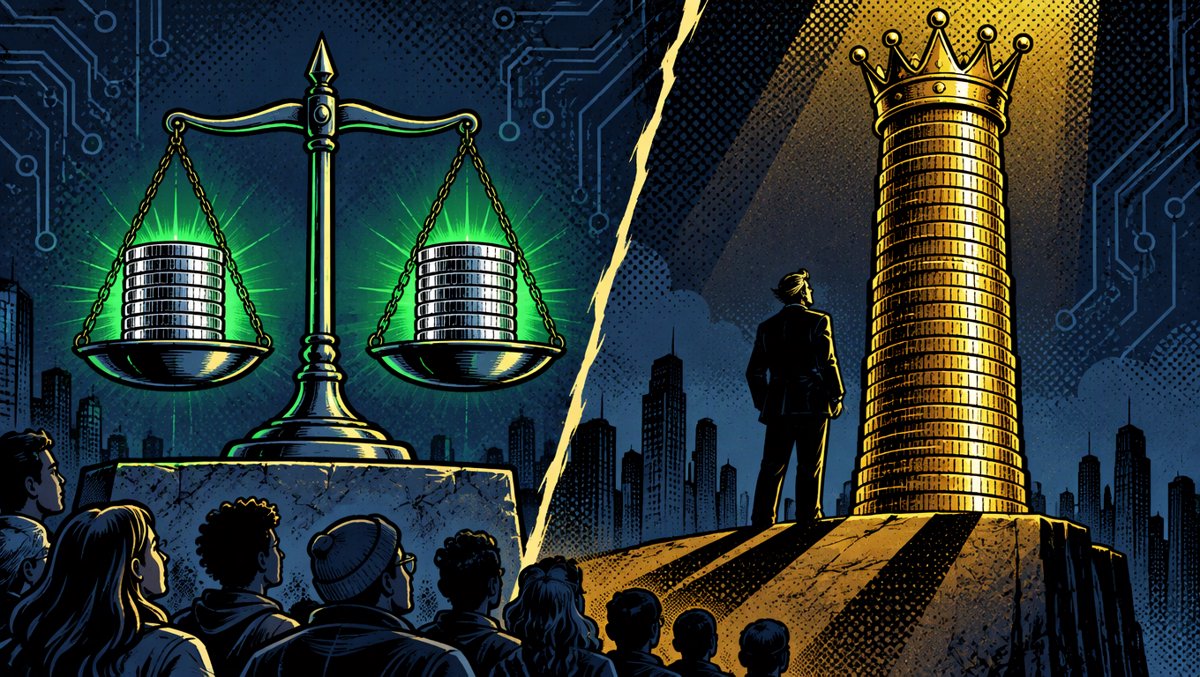
Steve asked the right question, because in Delaware this story has a sequel and the sequel is litigation. Three lanes, in likely order:
Lane 1: Caremark derivative suits against the directors. Once the dust settles, shareholder lawyers will subpoena (via Section 220 books-and-records demands, the Boeing playbook) for everything the board knew and when. The plaintiff theory writes itself: the board knew the CEO was under a foreign-intelligence-related investigation and had conduct issues for years of "idolatry," met only five times a year, maintained no succession plan, and still failed to oversee the single biggest concentration of keyman risk in public markets. Boeing settled its Caremark case for $237.5 million with the crashes already investigated. Nvidia's directors would be negotiating from a similar posture — note the September 2026 Chancery ruling reaffirming the very high bar plaintiffs face; these cases are hard to win but ruinous to settle, and D&O insurers don't write blank checks for negligence-plus-bad-faith allegations.
Lane 2: Securities class action (Rule 10b-5). This needs a misstatement plus stock losses tied to it. The revealing question is what Nvidia said, and when, as the scandal unfolded — starting with the board's November 8 statement launching an "independent investigation" into whether Huang "has been the target of a foreign intelligence effort." Watch the sequence: if the company had knowledge of the conduct or the security exposure before it disclosed, and insiders' trades or the disclosure timeline look odd, the class-action bar (which files against any $500B company that drops 8% on governance news) will be drafting complaints before the interim CEO unpacks.
Lane 3: The clawback. The Easterbrook template now haunts every exit negotiation. If Huang negotiates a severance package and it later emerges he misrepresented anything the board relied on — the extent of the relationships, the security exposure, the export-control contact — the company sues to claw back, and the SEC's own clawback rules (adopted after, yes, McDonald's-style debacles) make recovery mechanical. Whatever Huang walks away with will be drafted by lawyers who have read the Easterbrook docket twice.
And overlaying all three lanes: the national-security review. Federal authorities are reportedly examining whether trade secrets were compromised. If that inquiry ever touches export controls — the chip war's third rail — the story stops being a governance crisis and becomes a sanctions-and-espionage story with fines and compliance monitors attached. As of today, there is no public evidence pointing there. Every lawyer in this saga is praying it stays that way.
Three Scenarios
1. The clean exit (most likely, per the prediction markets). The board removes Huang or accepts his resignation. Kress takes interim command, the succession search runs under the interim, Huang keeps his ~3.5% stake — possibly with an advisor title. Product ships, orders deliver; the real work is organizational — re-layering the flat org and rebuilding a succession process that never existed.
2. The leash (possible, fading fast). Board keeps him as CEO but installs an independent chair, a COO, and a mandatory succession plan — governance confinement. Before the second affair, this was the graceful middle path. After it, with a subordinate involved, it reads as board capture. Low probability.
3. Escalation (unlikely, catastrophic). Evidence emerges of export-control violations or actual trade-secret transmission. Fines, a federal compliance monitor, Chinese retaliation questions — the scenario where this stops being a leadership story entirely. No public evidence supports it today, but it's the tail risk the pre-market is pricing.
Notice what's absent from all three: the disappearance of AI demand. Microsoft, Meta, Google, and Amazon aren't buying GPUs because of Jensen Huang's charisma; they're buying because their capex plans need compute. The hyperscaler orders survive every scenario. The link in the chain that genuinely suffers — the Nvidia-funded neoclouds and AI startups depending on the blessing machine — is the one to watch.
The Verdict
So what would Nvidia be without Jensen Huang?
Still Nvidia — angrier for a few quarters, flatter no longer, and run for the first time in 33 years by someone whose job description includes a successor.
The founder's paradox cuts both ways and Huang sat on the sharp side of both. His governance hygiene made Nvidia the cleanest story in mega-cap tech and made him the most fireable man in it. Zuckerberg sleeps fine behind 61% of the votes; Jensen Huang's employment is subject to a majority of eleven people he picked — and those eleven people have just been reminded by their lawyers that keeping him costs more than losing him.
The product roadmap doesn't know about the scandal. CUDA doesn't know about the scandal. TSMC's fab in Hsinchu definitely doesn't know about the scandal. What the past week really proved is the oldest truth in corporate law, the one every founder learns eventually and every lawyer bills by: no one is bigger than the company — and no one, not even the man who named it, is bigger than the bylaws.
The jacket, one way or another, goes back on the hook.
Sources: Wall Street Journal (board preparing to oust Huang); Reuters (board met Wednesday; successor candidates); New York Times (second affair with subordinate); CNBC, FT, BBC, Guardian (live coverage); Nvidia's own November 8 board statement; Fortune (Caremark exposure, single-class structure); Yahoo Finance/US News (federal review of trade-secret exposure); Intel press release & NYT (Krzanich resignation, 2018); McDonald's/SEC filings & Reuters (Easterbrook clawback, $105M + SEC $400K/$52.7M); D&O Diary/Reuters (Boeing $237.5M Caremark settlement); SEC filings (Nvidia FY2026 proxy, Meta PX14A6G, Meta Class C filing Oct 2026); Polymarket/Kalshi via Yahoo Finance; Ming-Chi Kuo commentary via Tencent Tech/Futu. Market data: Nasdaq/NYSE pre-market quotes, November 12, 2026, ~12:29 UTC. This article is information and analysis, not investment or legal advice.