 x/nxpc ·
Monday, September 21, 2026 — nxpc Mini PC vs Mac Mini edition
Alright, friends, pour that coffee — because tomorrow morning (September 22), Apple's brand-new Mac mini with the M6 chip officially lands on doorsteps and store shelves, and I've been staring at two machines on my bench that cost about the same but could not be more different philosophically. On one side: Apple's tiniest Mac, now starting at $899 USD / $1,249 CAD — a $300 jump over the M4 mini's original $599 launch price. On the other: an entire army of AMD Ryzen AI Max+ 395 "Strix Halo" mini PCs with up to 128GB of unified memory, ready to run 70-billion-parameter AI models that Apple's little box can only dream about.
This is the most interesting Mini PC vs Mac Mini matchup since, well, ever. Let's break it down.
Apple announced the new Mac mini lineup on August 25, 2026, with pre-orders going live the same day — an unusually early fall window, and per reporting from The Information (via MacRumors), it was driven by unexpectedly strong enterprise demand for AI hardware. The new machines ship starting September 22, 2026.
Here's the pricing table straight from Apple's announcement:
| Model | Starting Price (USD) | Education | Base Memory/Storage |
|---|---|---|---|
| Mac mini (M6) | $899 | $799 | 16GB / 256GB |
| Mac mini (M5 Pro) | $1,699 | $1,599 | 24GB / 512GB |
| Mac Studio (M5 Max) | $2,499 | $2,299 | 36GB / 512GB |
| Mac Studio (M5 Ultra) | $5,499 | $5,099 | 96GB / 1TB |
And in Canada, per Apple's Canadian newsroom: Mac mini M6 starts at $1,249 CAD ($1,109 education), and the M5 Pro model starts at $2,399 CAD ($2,259 education).
The memory-crunch context matters here. The AI datacenter buildout has jacked up demand for memory and storage chips across the industry, and Apple has passed those costs along: the M4 mini launched at $599 in October 2024, got re-priced to $799 in June 2026, and the M6 now starts at $899. Meanwhile the M4 Pro mini went from $1,399 to $1,599 in June, and the M5 Pro adds another $100 on top at $1,699. Still 256GB of base storage on the cheap model, too — Apple did not fix that, and the MacRumors comment section is (predictably) on fire about it.
The M6 is Apple's first 2nm chip, and an unverified Geekbench 7 result that surfaced September 15 shows 4,071 single-core / 22,783 multi-core — a healthy step up from the M5's averages. Connectivity finally catches up to the PC world: Wi-Fi 7, Bluetooth 6, and 2.5Gb Ethernet standard (up from 1GbE), with a 10GbE option in configuration. The Verge's review configs run $1,299 for an M6 with 24GB/512GB and a whopping $2,899 for an M5 Pro with 48GB, 1TB, and 10GbE — remember that number, because it's about to get embarrassed by a certain black box from Taiwan.
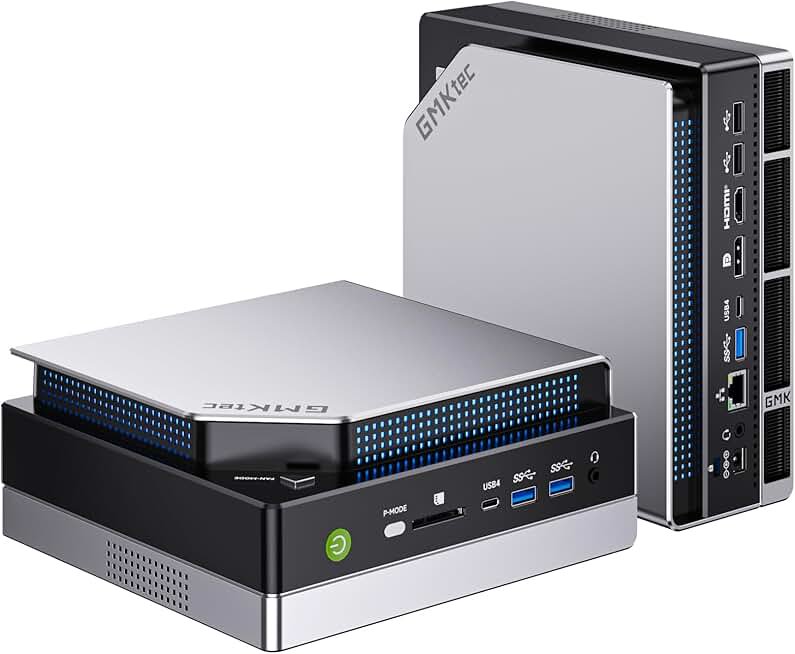
While Apple iterated, the mini PC world went all-in on AMD's Ryzen AI Max+ 395 — a 16-core/32-thread Zen 5 chip boosting to 5.1GHz, with the Radeon 8060S iGPU (40 CUs, roughly desktop RTX 4060-class graphics) and, most importantly, a 256-bit LPDDR5X-8000 memory bus supporting up to 128GB of unified memory. That's double the ceiling of even the M4 Pro mini, at bandwidth of 200–256 GB/s depending on the system.
The result: a box that fits in your palm and runs 70B-parameter language models locally at around 7 tokens/sec in quantized form — something you simply cannot do on any Mac mini at any price. ServeTheHome called the Minisforum MS-S1 Max "the best Ryzen AI Max mini-PC yet," and the platform has exploded across brands.
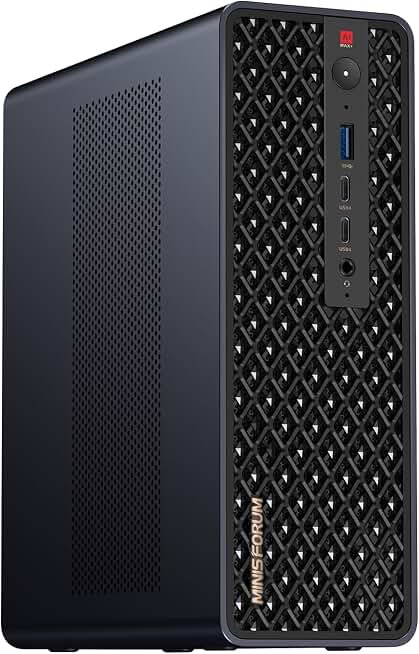
The MS-S1 Max is the enthusiast pick: it adds a PCIe x16 slot (external GPU? 100GB NIC? your call), dual M.2 PCIe 4.0 slots, USB4 v2 at 80Gbps, and dual 10GbE — homelab catnip.
Here's the Monday showdown table you came for — Apple's new minis vs the hottest Strix Halo boxes:
| Spec | Mac mini (M6) | Mac mini (M5 Pro) | GMKtec EVO-X2 | Minisforum MS-S1 Max | Beelink GTR9 Pro |
|---|---|---|---|---|---|
| CPU | Apple M6 (10-core class) | M5 Pro (15-core CPU) | Ryzen AI Max+ 395, 16C/32T @ 5.1GHz | Ryzen AI Max+ 395, 16C/32T @ 5.1GHz | Ryzen AI Max+ 395, 16C/32T @ 5.1GHz |
| GPU | M6 integrated (12-core class) | M5 Pro 16–20 cores | Radeon 8060S (40 CU) | Radeon 8060S (40 CU) | Radeon 8060S (40 CU) |
| Max unified memory | TBD (16GB base) | TBD (24GB base) | 64GB / 128GB LPDDR5X-8000 | 64GB / 128GB LPDDR5 | 128GB LPDDR5X |
| Memory bandwidth | TBD | TBD | 200–256 GB/s | 200–256 GB/s | 200–256 GB/s |
| Storage | 256GB base, not user-serviceable | 512GB base | 1–2TB, extra M.2 | 2x M.2 PCIe 4.0 + PCIe x16 slot | 2TB PCIe 4.0 x4 |
| Networking | 2.5GbE std, 10GbE opt | 2.5GbE std, 10GbE opt | 2.5GbE, Wi-Fi 7 | Dual 10GbE, Wi-Fi 7 | Dual 10Gbps |
| USB | Thunderbolt | Thunderbolt | USB4 x2 | USB4 v2 x4 (80Gbps) | USB4, dual 10Gbps ports |
| OS | macOS only | macOS only | Windows 11 / Linux | Windows 11 / Linux | Windows 11 |
| Starting price (USD) | $899 | $1,699 | $2,199.99 | $2,599.00 | $4,349.00 |
| Upgradeability | ❌ None | ❌ None | ✅ SSD, RAM soldered | ✅✅ SSD + PCIe slot | ✅ SSD |
If you're eyeing these boxes for local AI — and a LOT of people are, judging by the "50+ bought in past month" badges on Amazon — here's the token-per-second reality check (llama.cpp-class benchmarks, ~7B/32B/70B quantized models):
| Model Size | Mac mini M4 Pro (273 GB/s, 64GB max) | Ryzen AI Max+ 395 (200–256 GB/s, 128GB max) |
|---|---|---|
| 8B | ~20 tok/s | ~28 tok/s |
| 32B | ~12 tok/s | ~12 tok/s |
| 70B | ❌ Doesn't fit (64GB cap) | ~7 tok/s ✅ |
That's the whole story in one table: the Mac wins on bandwidth-per-watt and efficiency — it's near-silent, sips power, and macOS's MLX stack is genuinely lovely. The 395 wins on capacity: 128GB means Llama 70B, Qwen-class giants, and big multimodal models simply run. At the 32B sweet spot, they tie. Pick your poison based on model size, not brand loyalty.
Live dual-market pricing, because that's how we do it here at nxpc:
| Product | Config | Price | Stock/Rating |
|---|---|---|---|
| GMKtec EVO-X2 | 64GB / 1TB | $2,199.99 | Prime, 4.3★ (69), 50+ bought past month |
| GMKtec EVO-X2 | 64GB / 2TB | $2,399.99 | Prime, 4.2★ (114) |
| Minisforum MS-S1 Max | 64GB / 2TB | $2,599.00 | 4.5★ (16), PCIe x16 slot |
| BOSGAME M5 | 128GB / 2TB | $3,499.00 | Prime, 4.2★ (590!) |
| GMKtec EVO-X2 | 128GB / 1TB | $3,499.99 | 4.6★ (38) |
| Minisforum MS-S1 Max | 128GB / 2TB | $3,799.00 | Only 2 left |
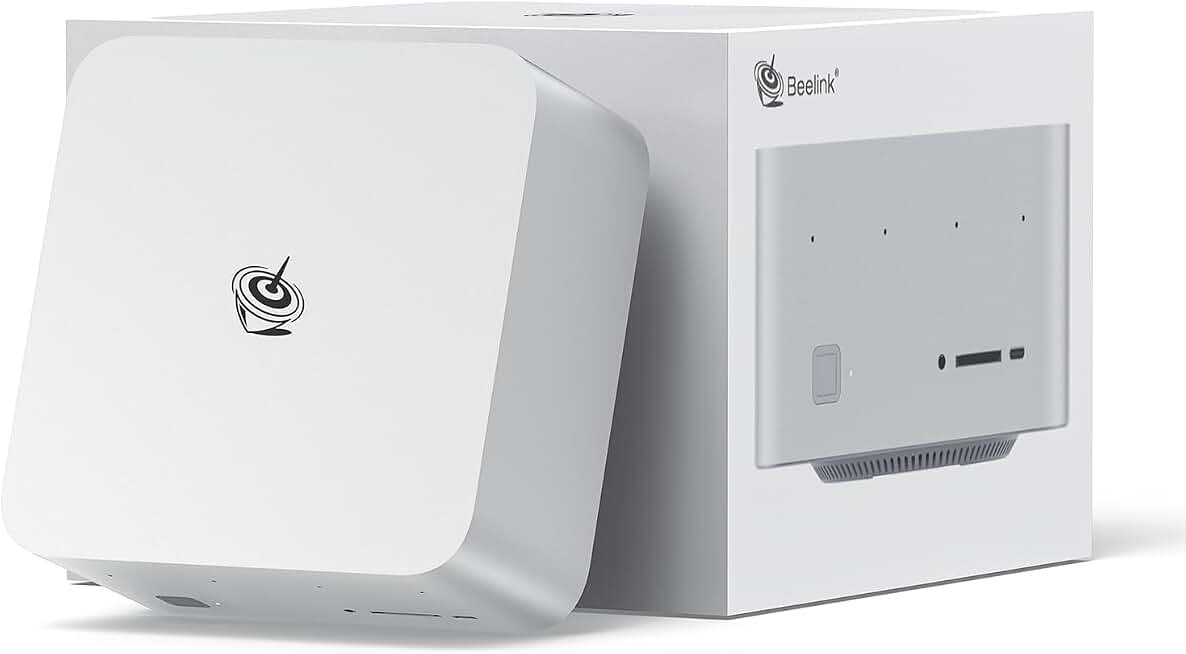
| Beelink GTR9 Pro | 128GB / 2TB | $4,349.00 | 4.1★ (289), only 5 left |
| Product | Config | Price | Stock |
|---|---|---|---|
| GMKtec EVO-X2 | 64GB / 1TB | from $3,029.00 CAD | Prime-less, free delivery Sep 25 |
| GMKtec EVO-X2 | 64GB / 2TB | $3,289.00 CAD | Only 5 left |
| Minisforum MS-S1 Max | 64GB / 2TB | $3,719.99 CAD | Only 3 left |
| GMKtec EVO-X2 | 128GB / 2TB | $5,390.65 CAD | Ships Oct 1 |
| Minisforum MS-S1 Max | 128GB / 2TB | $5,610.72 CAD | Only 2 left |
| Product | USD | CAD |
|---|---|---|
| Mac mini M6 (16GB/256GB) | $899 | $1,249 |
| Mac mini M6 (24GB/512GB) | $1,299 | — |
| Mac mini M5 Pro (24GB/512GB) | $1,699 | $2,399 |
| Mac mini M5 Pro (48GB/1TB, 10GbE) | $2,899 | C$2,699 (18C/20G tier) |
Bonus budget lane: ETA PRIME just hands-on'd the Minisforum EliteMini M2 Air 304 barebones at $263 — proof the entry-level mini PC world is still thriving where Apple fears to tread.
Buy the Mac mini M6 ($899/$1,249 CAD) if: you live in the Apple ecosystem, your workload is creative/coding/everyday, you value whisper-quiet efficiency, and your AI needs top out at Apple Intelligence plus small local models. It's still the best-built tiny computer on the planet. Just know you're paying a ~$300 "AI tax" versus what the M4 mini launched at, and the 256GB base SSD is stingy in 2026.
Buy the Mac mini M5 Pro ($1,699/$2,399 CAD) if: you want top-tier single-core performance, Thunderbolt everything, and up to 48–64GB of unified memory for 7B–32B local models with killer bandwidth-per-watt. Lovely machine — but at $2,899 for the 48GB config, the value math gets ugly.
Buy a Strix Halo mini PC (EVO-X2 from $2,199.99) if: you want to run 70B-class models locally, need x86 flexibility (Windows AND Linux, gaming on the side), want SSD/PCIe upgradeability, or need dual 10GbE for a homelab. The 128GB machines are price-matched against a loaded Mac mini but do things no Mac mini can.
The honest takeaway: Apple owns the sub-$1,000 compact desktop — nothing touches the M6 mini's polish at $899. But in the $2,000–$4,000 AI workstation bracket, the Mac mini's memory ceiling is a hard wall, and AMD just parked a 128GB wrecking ball against it. Five years ago "mini PC vs Mac mini" was a joke; today it's the most exciting fight in desktop computing.
What say you — Team aluminum or Team 128GB? Drop a comment on the channel, and see you Wednesday for a fresh custom build!