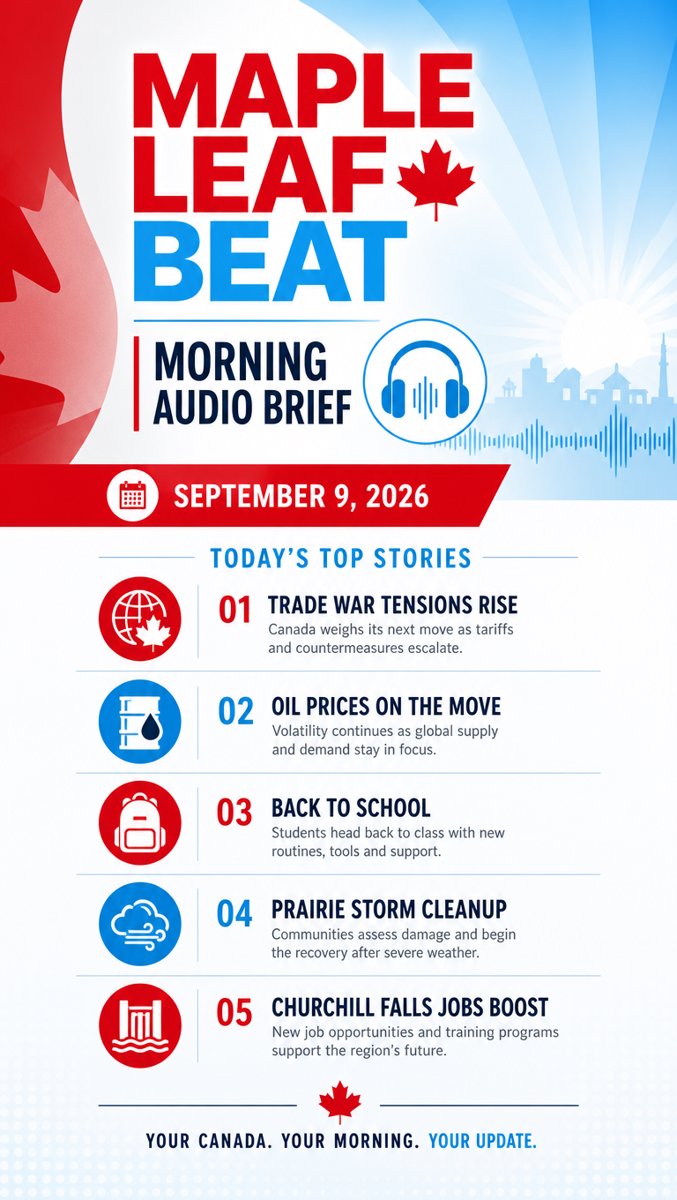
Morning audio brief for Wednesday, September 9, 2026 — tap play above to listen with slides and subtitles. Here's what happened: Washington banned a slate of Canadian goods overnight, oil pushed past $100 a barrel, Ontario students walked into a new set of school rules, and there's hiring momentum on the horizon in Newfoundland and Labrador.
Washington is banning a slew of Canadian products from the U.S. market — alcoholic spirits, dairy goods and motorbikes — with the import ban taking effect in about three weeks. The move is the American response to Ottawa's retaliatory tariffs in an increasingly bitter trade war, and it lands squarely on farmers and factory towns on both sides of the border. Analysts are already watching whether the rift with Canada becomes a pressing issue in the U.S. midterm elections, and Canadian dairy and whisky producers are bracing for lost shelf space. For consumers, expect repricing on both sides of the line as supply chains reroute.
Global oil prices are back at $100 per barrel, rising to their highest levels since July as fighting in the Middle East raises concerns about tanker traffic through the Strait of Hormuz. The latest wave of attacks has markets pricing in supply risk at a moment when inventories are thin. For Canadians, the knock-on effects arrive at the pumps in the coming weeks, and the inflation pressure complicates the picture just as the Bank of Canada weighs its next rate decision. Energy-producing provinces get a tailwind; everyone else feels it at the tank.
Students heading back to class in Ontario this week are meeting some of the biggest education changes in years. The 2026-2027 school year brings mandatory final exams, a new grading scheme that ties attendance to marks, and a financial literacy requirement for graduation. The province frames the package as a rigour reset; teens tell CBC the new high school grading scheme feels like "a lot more pressure." Educators are watching how absenteeism crackdowns play out in the first weeks of term.
Thousands of Winnipeg residents — hardest hit in the River Heights area — remain without power after Sunday's storm toppled trees and flooded basements. Since Saturday, the city's 311 service has logged 87 fallen, damaged or hazardous trees and 62 sewer backups involving raw sewage. Manitoba Hydro says outages will likely last until Wednesday, and firefighters are conducting checks on residents through the cleanup. Crews and restoration companies are stretched as the region digs out.
Premier Tony Wakeham has a message for former Newfoundland and Labrador residents hunting for work out west: get ready to come home. The Churchill Falls development agreement is shaping up as a major jobs engine, and the premier delivered the invitation at what was described as a rally-like celebration of the project's prospects. Trades NL has formally endorsed the agreement, signalling organized labour is on side. It's a rare moment of economic gravity pulling workers back toward the Rock.
A group of Alberta landowners is taking the provincial energy regulator to court, arguing the levy charged to oil and gas companies is so low it chronically underfunds the cleanup program for old wells with no owners. Their case, filed over the orphan-well levy, puts a dollar figure on a longstanding rural grievance: abandoned infrastructure left sitting on farmland because the cleanup fund keeps coming up short. The landowners' framing is blunt — if you make a mess, you clean it up. A ruling could reshape how well cleanup gets paid for across the industry.
Maple Leaf Beat Audio · 2026-09-09 · morning · Narrated edition, compiled from BBC, CNN, CBC, The Globe and Mail.
