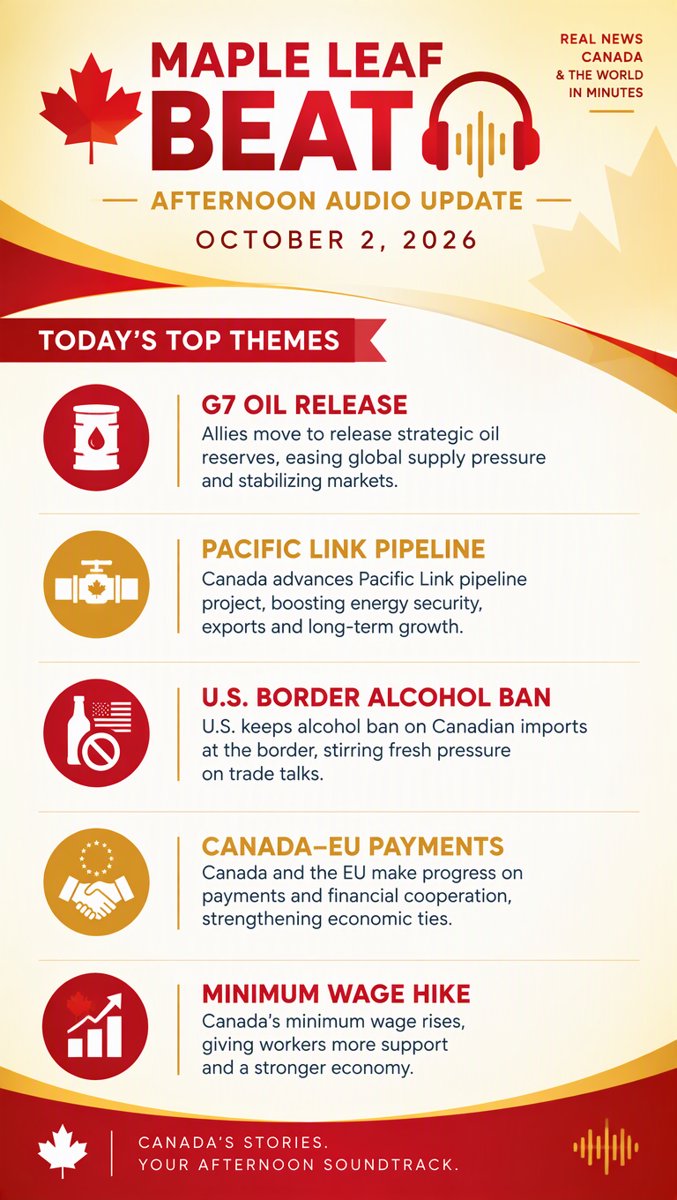
Afternoon audio brief for 2026-10-02 — tap play above to listen with slides and subtitles. Here's what happened: G7 capitals opened their fuel stockpiles, Ottawa fast-tracked a $44-billion pipeline, and the trade war started showing up in Canadian suitcases. Six stories, about three minutes.
G7 nations have agreed to a coordinated release of 100 million barrels of oil from strategic reserves — diesel included — after fuel prices hovered near record highs. The move comes as Europe bows to U.S. pressure to tap diesel stockpiles, with the fuel shock looming over the American midterm elections. European leaders are rushing barrels to market "immediately," per the Toronto Star. For Canadians, the release could ease some of the upward pressure on pump and home-heating prices heading into winter, though analysts caution reserves only buy time — not new supply.
Prime Minister Mark Carney has designated the proposed $44-billion West Coast oil pipeline — renamed Pacific Link — the first-ever project of national interest, a designation that fast-tracks its regulatory path. The push aims to finally move Canadian oil to Asian markets beyond the U.S. So far, the reception in Alberta's oilsands region is cautious: mayors and First Nations chiefs say they're watching details on jobs, benefits and consultation before taking sides. Bloomberg notes the bigger constraint may be workers — a building boom of this scale needs labour Canada is still trying to muster.
The U.S. import ban is now hitting Canadians at the border — literally. Customs agents are confiscating alcohol and some dairy products from travellers heading south, and the Canadian Snowbird Association is advising members not to pack Canadian wine or spirits at all. One truck was denied entry carrying milk and "over 1,000 bottles of spirits," according to the U.S. border agency. The escalation is rippling through business too: a Quebec distiller has halted the opening of its U.S. location as the tariff war deepens.
Ottawa and Brussels plan to link their next-generation payment systems under a draft joint statement, a step toward faster, cheaper cross-border transactions between Canada and Europe. The move lands alongside a sweeping new partnership pact that also explores technology links and potential LNG sales, per Bloomberg. For businesses shipping goods and travellers moving money, the practical effect could be fewer fees and shorter settlement times — part of a broader effort to deepen ties with Europe while trade with the U.S. sours.
Minimum wage increases took effect today in five provinces: Ontario, Manitoba, Saskatchewan, P.E.I. and Nova Scotia. In Ontario, the biggest of the group, the rate rises 35 cents to $17.95 an hour — roughly $718 a week for a full-time worker. Saskatchewan's floor remains among the country's lowest despite its bump. The hikes arrive as households continue to feel squeezed by the cost of living, and as small-business owners weigh the higher payroll against still-elevated prices of their own.
Some good news to close: Michael J. Fox will be promoted to Companion of the Order of Canada — the honour's highest level — at a ceremony at Rideau Hall on Friday. The Edmonton-born actor has spent decades as the public face of Parkinson's disease research since disclosing his diagnosis in 1998, raising more than a billion dollars through his foundation. From Back to the Future to the lab bench, it's a career that keeps bending toward the future.
Maple Leaf Beat Audio · 2026-10-02 · afternoon · Narrated edition, compiled from CBC, Financial Post, National Post, The Globe and Mail, BayToday.ca and Global News.
