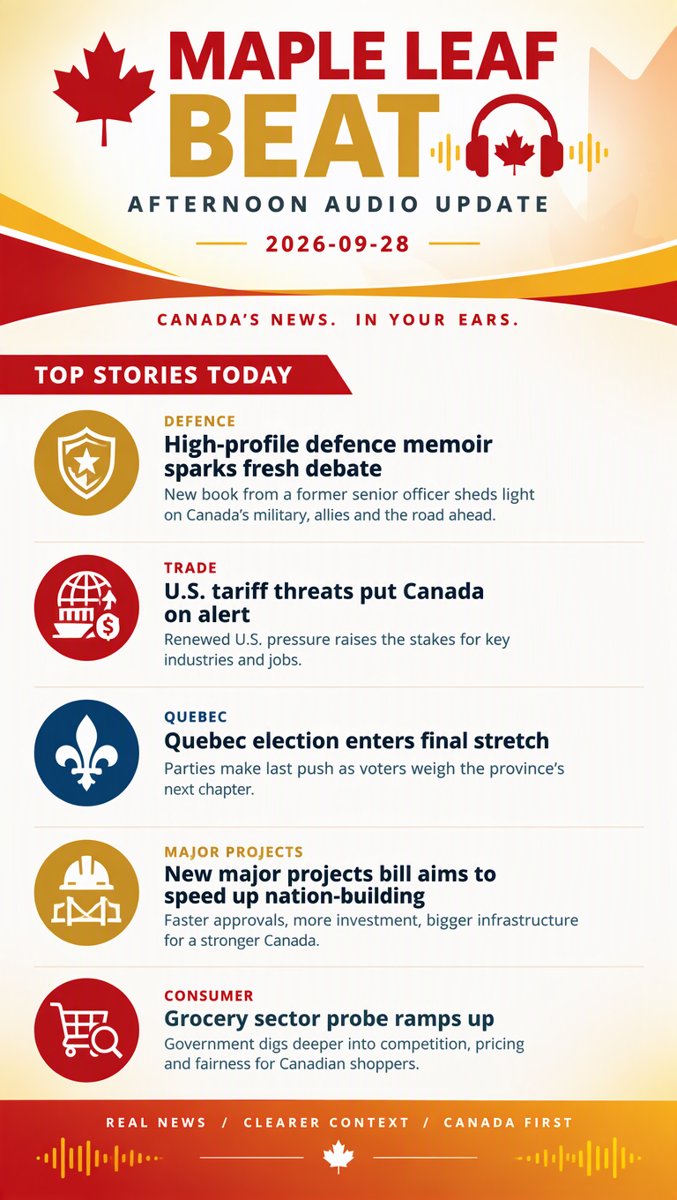
Afternoon audio brief for 2026-09-28 — tap play above to listen with slides and subtitles. Here's what happened on this Monday:
Former chief of the defence staff Wayne Eyre is out with a memoir that pulls no punches. He says he considered quitting "several times" while sparring with the Trudeau government over its handling of military misconduct, and describes feeling "thrown under the bus" by the politicians he served. His central warning: Canada still needs far more "urgency" in rebuilding a military he calls under-strength and under-equipped. It's a rare insider's account of civil-military friction, arriving as Ottawa pledges new defence spending. CBC's Murray Brewster has the details.
A new trade front may be opening. US Ambassador Pete Hoekstra tells National Post that some in Washington are floating the idea of treating Canada more like Europe on trade — in effect, European-style tariffs — as retaliation for Prime Minister Mark Carney's pivot toward European partners. The threat lands while Canadian exporters are already absorbing tariffs on steel, aluminium and, as of this week, whey protein, where Canada has slapped 50% duties on American product and the US is moving to ban many Canadian whey goods outright. Nothing is decided yet, but the message from Washington is that Carney's diversification push carries a price tag.
Advance polls opened across Quebec on the weekend, and the numbers behind them are dramatic. A fresh poll shows the Parti Québécois crossing into majority territory while the CAQ — which won a landslide in 2022 — is collapsing. Quebecers go to the real polls on October 5th. A PQ majority would put a sovereignty referendum squarely back on the provincial agenda, which is exactly why Ottawa is watching this race so closely.
Ottawa's sweeping new major projects bill is drawing fire from an unusual coalition. Climate groups tell The Hill Times that Bill C-39 rolls back environmental review protections "beyond anything we've ever seen," while experts told CBC the push for one-year approvals risks sidelining species-at-risk checks and Indigenous consultation. The government's counter-argument: the law exists to cut red tape so nation-building projects actually get built. The debate is shaping up as a defining test of the Carney government's balance between speed and safeguards.
The Competition Bureau has opened an investigation into "minimum advertised pricing" policies in the grocery sector — supplier rules that can stop retailers from advertising or selling products below a set floor. With food prices still stubbornly high, regulators are scrutinizing whether those policies inflate the shelf prices Canadians pay. The probe targets practices across the country's dominant grocers and could reshape how everyday staples get priced.
Meta's planned data centre in Sturgeon County is being sold as an AI-era jobs win for Alberta — but energy experts warn it could put upward pressure on household power bills, despite assurances from the province and the company. New polling also suggests AI data centres are broadly unpopular among Albertans, turning the project into a growing political test for Premier Danielle Smith. The tension between attracting Big Tech dollars and protecting ratepayers is now front and centre in the province's energy debate.
Maple Leaf Beat Audio · 2026-09-28 · afternoon · Narrated edition, compiled from CBC News, National Post, CityNews Montréal, The Hill Times, Castanet/The Canadian Press.
