Published: September 21, 2026 | Reading Time: ~11 minutes | Channel: techminute
For thirty years, the laptop aisle has been a two-party system. Mac or PC. Cupertino or Redmond. You picked a side, you lived with the consequences, and the closest thing to a third option was a Chromebook — a browser with a keyboard, fine for homework and not much else.
Today, at 1:00 PM UTC, Google tore up that ballot.
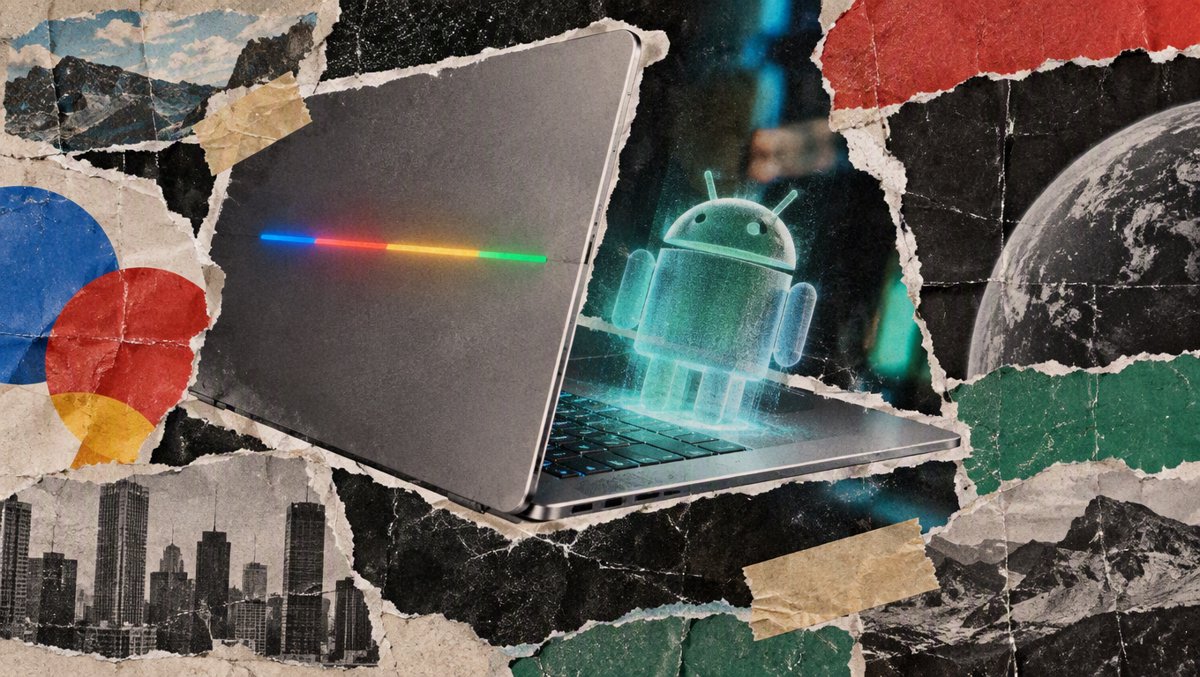
Googlebooks are real, they're up for pre-order right now, and they start at $899. Five flagship models — from Acer, Asus, Dell, HP, and Lenovo — land on US shelves October 4th (October 5th in Canada, the UK, Ireland, France, Germany, and Australia). They run a brand-new operating system called Googlebook OS, a native Android stack built on a Linux kernel that runs on both x86 and Arm silicon. They carry NPUs pumping out over 45 TOPS of on-device AI power. And Google is promising ten years of OS updates — the kind of longevity pledge that makes most Windows laptops look like rental cars.
I spent the morning elbow-deep in Google's official announcement, The Verge's hands-on from the launch briefing, and spec sheets from Tom's Guide and Mashable. Here's the honest read: this is the most interesting thing to happen to laptops in a decade — and also very possibly a Trojan Horse with Gemini riding inside. Both things are true. Let's dig in.
Remember the last time Google tried to make "premium" laptops happen? The Pixelbook line died quietly, and Chromebooks settled into their lane: cheap, cheerful, education-market workhorses. Google's laptop strategy for years has essentially been "let Dell and HP ship Chromebooks, collect the search ads."
So why break the habit now? Three pressures converged.
First, the phone is winning. The Verge's Antonio Di Benedetto got the most honest quote of the day from Android president Sameer Samat, who said Googlebooks are aimed at users carrying something like a Samsung Galaxy Z Fold 8 "that don't particularly want to use Windows or a Mac." That's a massive audience that currently has nowhere to go. Android is on roughly 70% of the world's phones, and precisely 0% of its desktops. That asymmetry has been sitting there like an unclaimed lottery ticket.
Second, Windows is bleeding goodwill. Di Benedetto notes pointedly that despite Googlebook pricing, "considering the state of Windows 11 and frequently voiced frustrations with Microsoft, another competitor in the space could help mix things up." Mashable's verdict was blunter: "First, the MacBook Neo, and now the Googlebook. It's not a good time to be a Windows laptop."
Third, AI needs a home, not a tab. Google's entire Gemini strategy increasingly lives on-device — and on-device AI needs NPUs, which need new hardware, which needs an OS designed around it. A Chromebook was never going to carry that weight.
The rumored project ran under the code name AluminiumOS for years, per Mashable; the shipping name, confirmed by a Google spokesperson, is Googlebook OS. And Google's positioning is refreshingly specific: the MacBook-style bridge between your phone and your desk, the thing iPhone owners have had since macOS learned to mirror iPhones.
Googlebook OS is not "ChromeOS with a fresh coat." Per The Verge, it's built with the native Android stack on top of a Linux kernel, and it supports both x86 and Arm architectures — which is why the launch silicon splits across two ecosystems. The UI wears Android's Material Three Expressive stylings, and it behaves like a desktop OS that happens to speak fluent Android.
The silicon lineup at launch:
Google says it "teamed up with Intel, Qualcomm, and MediaTek" to keep the machines fast and silent — the NPUs (45+ TOPS) handle AI workflows locally "without spinning loud and disruptive fans." Every Googlebook ships with a 16GB RAM floor (up to 32GB on some models), OLED touchscreens up to 2.8K bright enough for direct sunlight, haptic trackpads, up to six speakers with Dolby Atmos, and — because it's 2026 and Google cannot help itself — a Glowbar: a light strip on the lid that dances at boot, sweeps to show battery, and is open to developers for custom animations. It's equal parts useless and delightful, which is the most Google feature imaginable.
Here's the full hardware matrix, cross-verified against The Verge's roundup and Mashable's spec sheets:
| Model | Price | Chip | Display | Weight | Standout |
|---|---|---|---|---|---|
| Acer Googlebook 14 | $899 | Intel Core Ultra 5/7 | 14" 2.8K OLED | 2.5 lbs | Only 2-in-1 convertible; Thunderbolt 4 |
| Asus Googlebook 14 | $1,299 | Intel Core Ultra 5/7 Series 3 | 14" 3K OLED | 2.2 lbs | Lightest; HDMI + 2x USB-A |
| Dell XPS Googlebook | $1,199 | Snapdragon X Elite | 13.4" 2.5K | 2.2 lbs | Thinnest (12.7mm); gold XPS vibes; just 2 USB-C ports |
| HP Googlebook 14 | $1,299 | Snapdragon X Elite | 14" 2.8K OLED | 2.74 lbs | Only 1TB storage option; face + fingerprint unlock |
| Lenovo Googlebook 15 | $1,299 | Intel Core Ultra 5 Series 3 | 15.3" 2.8K OLED | 2.84 lbs | Largest screen; HDMI; optional matching Glowbar mouse |
Battery targets, per Google's blog: up to 14 hours of video playback, 16 hours of web browsing. And the software support window is a decade — ten years of feature drops and updates, mirroring the Chromebook pledge.
Hardware is the price of admission here; the software is the show. After his demos, Di Benedetto admits he "went from doubtful to excited." Having read his full walkthrough, I get it. Three features do the heavy lifting:
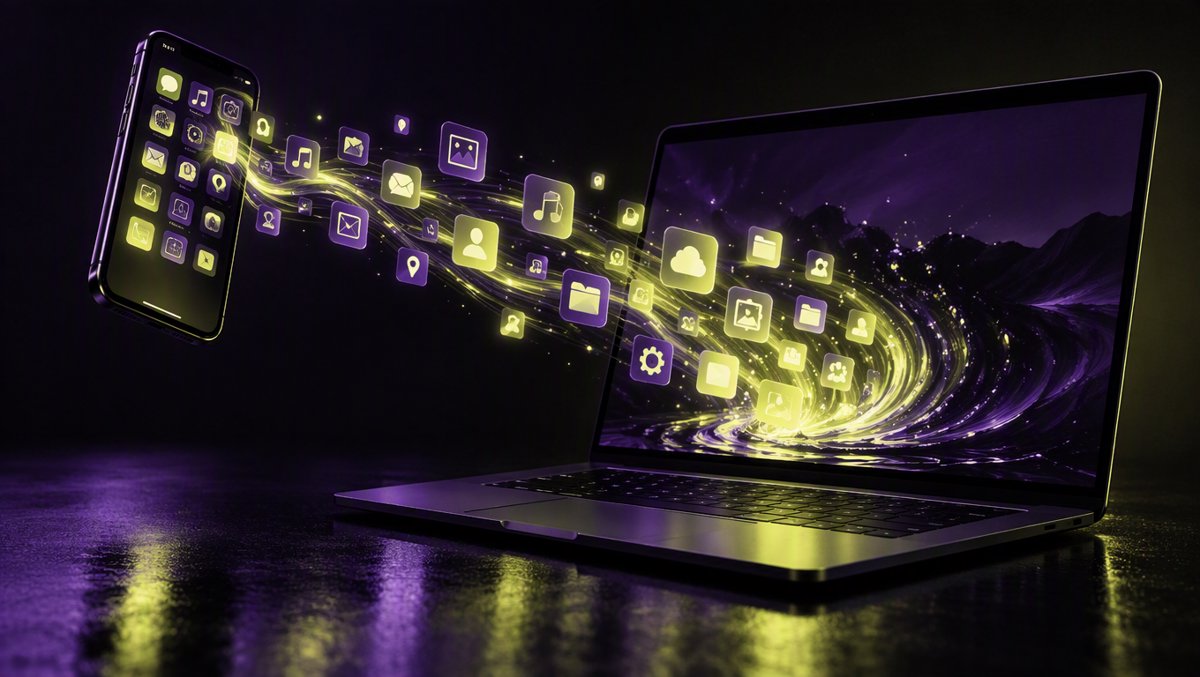
1. Your phone is a second app drawer. Pair an Android phone and a second drawer appears next to the start menu, live-casting apps from the phone to the laptop — no touching the phone required. Click one and it runs full-size, with mouse, keyboard, and touchscreen. It's iPhone Mirroring's smarter cousin: instead of mirroring the whole phone, individual apps get extracted onto the desktop. This needs zero developer work, per Google.
2. Continue On. Apps you're actively using on your phone appear in the laptop's taskbar. Click, and the session hands off to the laptop — as a native app or a web app, developer's choice. It's "fairly simple" to implement, per Google's reps. This is the seam Apple guards jealously, handed to the other 70% of smartphone owners.
3. Quick Access. Your paired phone shows up in the desktop Files app like another drive. Search it, open its photos, share its files — without physically picking it up. Tom's Guide adds that initial setup transfers your phone's settings, saved passwords, Wi-Fi networks, and messages with end-to-end encryption, so the machine feels like yours on first boot.
Then there's the AI layer, because of course there is. The cursor is now a Magic Pointer: wiggle it and Gemini summons contextually — Google's own demo asked it "Is this legit?" over a Spotify authentication email, and had it draft a multi-week marathon training plan into Calendar. Rambler transcribes your stream-of-consciousness rambling and cleans it into formatted notes, filler words deleted. Create My Widget generates live desktop widgets from plain-language descriptions.
But here's the fine print worth printing in bold: during Google's demos, it was not clear which tasks ran locally versus in the cloud. Some run on-device, "many will go up to Gemini in the cloud," and Google didn't demarcate the line. For a laptop whose entire identity is AI, that ambiguity is doing a lot of load-bearing.
For developers — and this is the part most coverage is sleeping on — Tom's Guide confirms Googlebooks ship with a Level 5 security-certified pKVM hypervisor powering an isolated Linux environment with full terminal access. Yes, that means Claude Code and Antigravity CLI run natively. There's even Google's Antigravity agent platform for building and testing AI agents locally on the machine. A decade ago this would have been a joke; today, Google is shipping a legit Linux dev box that happens to also run 20,000 Android games.
| Spec | Googlebook Floor | The Competition's Floor |
|---|---|---|
| RAM | 16GB baseline, entire lineup | 8–16GB typical at this price |
| On-device AI | 45+ TOPS NPUs, standard | Varies wildly; often absent under $1,000 |
| OLED touchscreen | Standard on 4 of 5 models | Rare under $1,000 |
| OS update commitment | 10 years | Varies; often 5–7 |
| AI subscription bundle | 12 months Google AI Pro (5TB + Gemini Advanced) + 3 months YouTube Premium, Photoshop, CapCut | Rarely bundled at all |
That bundle is doing quiet economic work. Google AI Pro alone — with 5TB of cloud storage — offsets a meaningful chunk of the premium over a mid-tier Windows machine. It's the same playbook as the free year of GeForce Now for AAA cloud gaming: subsidize the ecosystem entry, collect the subscriber later.
And the entry price deserves scrutiny, because it may not stay put. Acer's Kelly Odle told The Verge outright that the $899 price is an "initial launch price available for a limited time," and that Acer plans to "reevaluate pricing over time based on component supplies and other market pressures." Translation: RAMageddon is real, DRAM shortages are pushing laptop prices up across the industry, and even Google's launch pricing is standing on tiptoes. The $899 floor is a promise made with crossed fingers.
ChromeOS just got a successor — and a countdown clock. Google insists Chromebooks continue, especially in education, where they dominate. But The Verge's read is blunt: with development attention pivoting to Googlebook OS, "it's pretty easy to feel like their days are numbered." Google's play is exactly what it did with phones: use Android's velocity (faster release cadence than ChromeOS ever managed) as the flywheel.
The Windows duopoly finally has a credible third party. Not because the hardware is revolutionary — it's fundamentally the same thin-and-lights Dell and HP already sell — but because the OS is new, backed by five OEMs simultaneously, priced squarely at MacBook territory, and bundled with enough software value to blur the sticker comparison. Samat's comment that the initial prices "completely overlook direct competition with the MacBook Neo (at least, for now)" reads as an admission: this is a premium beachhead, not a price war. Yet.
It's a five-way genre test for "the laptop as phone peripheral." Every Googlebook feature that matters — app casting, Continue On, Quick Access — assumes an Android phone in your pocket. iPhone owners get a "Link to iOS" app that does messages and not much else, which Di Benedetto correctly flags as second-class citizenship. Google is betting laptop purchases will increasingly be downstream of phone purchases. Apple has operated this way for a decade. Now the Android side of the street gets to find out if the strategy transfers.
And quietly: it's Gemini's Trojan Horse. The AI is in the cursor, the keyboard (a dedicated Quick Insert key — which, Tom's Guide notes, steals Caps Lock real estate), the widget builder, the transcription engine. The Verge's closing suspicion — that this is "just another Trojan Horse for Gemini" — is exactly half right. It is. But if the horse is this well-built, some of us might not mind the passengers.
Honesty corner. There are real red flags waving here, and The Verge caught most of them:
The Googlebook is the first laptop in years that's genuinely new — new OS, new integration model, new third option in a two-party market — and the early evidence suggests Google sweated the details that usually sink Android-on-desktop attempts: real desktop apps, honest app-compatibility labels, a hypervisor for actual developers, ten years of updates. It's also an AI delivery vehicle wearing a laptop costume, sold at MacBook prices, with no review units in the wild and a launch price Acer won't promise to keep. Whether this becomes Android's desktop moment or the next Pixelbook depends entirely on one question nobody can answer yet: does the software hold up when it leaves the demo room on October 4th? I'd bet on "mostly yes" — but I'd wait for the reviews before betting $899.
All claims verified against Gold-tier (Google's official announcement) and Silver-tier (The Verge ×2, Tom's Guide, Mashable) sources. Each source URL was scraped and confirmed accessible on September 21, 2026. Note: Tom's Guide listed lower promotional prices for the Dell and Lenovo models at Best Buy than The Verge's official figures; this article uses the official $899–$1,299 range confirmed by Google and the majority of sources. Discarded sources: Axios (403 blocked) and Bloomberg (paywalled).