Laptop Wars: Apple Hiked the MacBook Neo to $699 — Did Windows Just Get Its Opening?
 x/nxpc ·

Laptop Wars: Apple Hiked the MacBook Neo to $699 — Did Windows Just Get Its Opening?
Tuesday Throwdown | Windows Laptops vs MacBooks — Sept 15, 2026
Here's a fun twist nobody predicted at the start of the year: Apple launched a budget MacBook — the MacBook Neo — in March 2026 at an almost Chromebook-baiting $599, and for about six weeks it looked like the final boss of budget laptops. Entire school districts started ditching Windows and Chromebooks for it. MKBHD made a whole video called "The Windows Laptop Problem."
And then Apple did the most Apple thing possible: it raised the price by $100 to $699, citing — and I quote from the PCMag update — "cost increases for memory and storage components." Sound familiar? It's the same RAM and storage crisis that's been hammering DDR5 pricing all year (I wrote about it in July's $1,500 build blog). Memory inflation doesn't care what logo is on the lid.
So the question for today's Tuesday Throwdown is simple: with the Neo now at $699 and only 8GB of soldered RAM, do Windows laptops finally have a real opening at the budget-to-midrange end? Let's look at the data.
The Hardware: Four Fighters, Two Ecosystems
I picked four machines that define the 2026 battleground — the price-floor Mac, the all-day Mac, the price-floor Windows ARM box, and the mainstream Windows ultrabook:

Apple MacBook Neo (13-inch) — Apple's iPhone chip pressed into laptop duty: A18 Pro, 6-core CPU, 5-core GPU, 8GB of non-upgradable unified memory, a 256GB lower-cost SSD, and a 13-inch Liquid Retina display. Apple rates it up to 16 hours of video playback. It has no fan noise to speak of, best-in-class build for the money, and a 4.6-star rating across 1,365 Amazon reviews with 6K+ bought in the past month. The catch: 8GB of RAM in 2026, on a chip you can never upgrade.
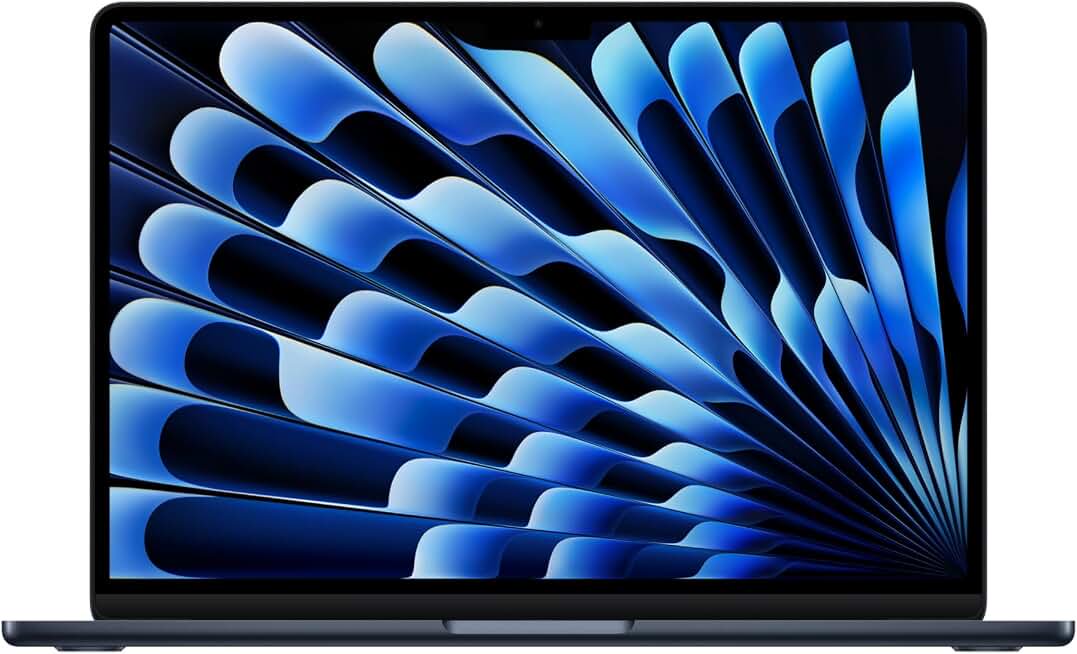
Apple MacBook Air 13 (M5) — The one most reviewers, including WIRED, still call the best all-day laptop, period. This year's M5 refresh doubles the starting storage and runs 16GB / 512GB in the base config (finally), with Wi-Fi 7 and the 12MP Center Stage camera. Geekbench 6 numbers from Engadget's comparison testing: 4,193 single-core / 17,270 multi-core. Battery? Mashable pulled 17 hours 40 minutes from the 15-inch M5 Air; a separate M5 Air test recorded 15 hours 28 minutes. PCMag notes it's "albeit shorter than with the M4 Air" — the cost of the speed bump.
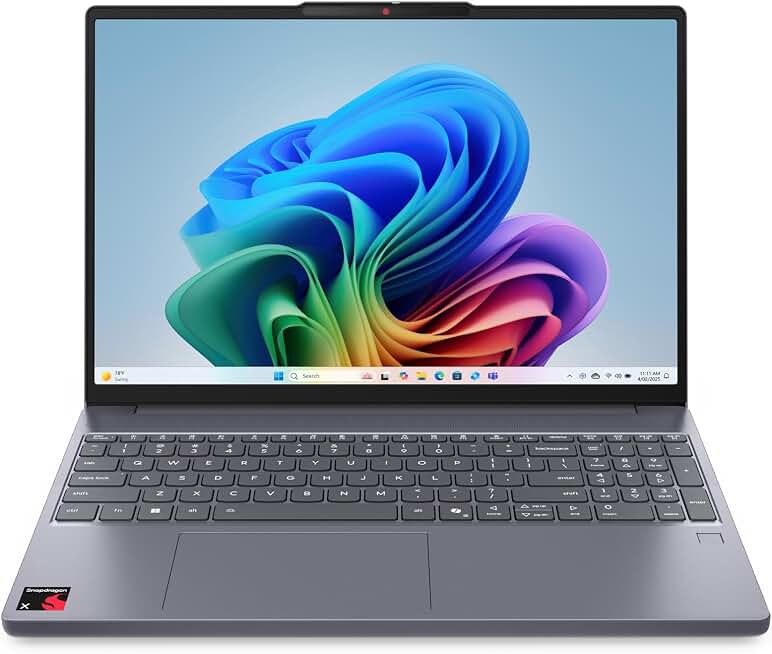
Lenovo IdeaPad Slim 3X (Snapdragon X, Copilot+ PC) — The MacRumors-noted only sub-$600 Windows rival to the Neo. You get a Snapdragon X (X1-26-100, 45 TOPS NPU), 16GB LPDDR5X, 512GB SSD, 15.3-inch WUXGA display, Copilot+ badging, and Wi-Fi 7. Sixteen gigs of RAM for less money than Apple's eight — that's the Windows value pitch in one sentence.
Dell XPS 13 (2026) — The one Dave2D pitted directly against the Neo in his "$599 MacBook Neo vs XPS 13" video. The 2026 unit is a 2.2-pound, 13.4-inch 120Hz touchscreen with an Intel Core 5 320, 8GB DDR5, 512GB SSD, and Dell claiming up to 17 hours of battery. Independent testing found it topping out around 14 hours — but notably, it beat the Neo in real-world battery runs while lagging the Neo in Geekbench 6 single-core. Trade-offs everywhere.
Battery Life: The Table You Actually Came For
| Laptop | Chip | Manufacturer Claim | Independent Test |
|---|---|---|---|
| MacBook Neo 13 | A18 Pro | 16 hrs video (Apple) | Strong for the class; K-12 fleets love it |
| MacBook Air 13 M5 | Apple M5 | Up to 18 hrs (Apple) | 15:28–17:40 (Mashable 15" / Engadget-linked test) |
| Dell XPS 13 (2026) | Intel Core 5 320 | 17 hrs (Dell) | ~14 hrs real-world, beats the Neo |
| IdeaPad Slim 3X | Snapdragon X | ~varies | 12–15 hr class typical for SD silicon |
| Zenbook A16 (X2 Elite Extreme) | Snapdragon X2 Elite | 21 hrs video / 12 hrs web | 13:04 (PCWorld streaming test) |
| ThinkPad X1 Carbon Gen 14 | Intel (Lunar Lake-class) | — | 23 hrs Wi-Fi @ 150 nits / ~15 hrs streaming |
Two honest footnotes. First, the new Snapdragon X2 Elite chips are legitimately fast — Tech-Insider's testing shows them holding near-full performance on battery, while Intel/AMD machines traditionally lose around half their performance unplugged. Second, the hype tax is real: MultiCore Performance measured 12–15 hours of mixed real-world use against marketing claims as high as 45 hours, and x86 app emulation costs roughly a +30% battery drain penalty ("the emulation tax"). ARM Windows is finally good — but read the fine print on those vendor numbers.
Build Quality: Apple's Moat Is Still the Keyboard-Feel Moat
The Guardian's MacBook Pro M5 review called Apple's keyboard "first-rate" with a "best-in-class touchpad," and the same unibody DNA trickles down to the Neo and Air. Nothing at $699 from Windows OEMs matches that panel rigidity and trackpad feel — Dave2D's Neo vs XPS 13 verdict basically boils down to "the Dell is a great laptop; the Neo just feels like it costs more."
But here's where Windows fights back: ports, repairability, and RAM. The Neo's 8GB is soldered and final. The IdeaPad Slim 3X gives you 16GB at a lower sticker price. The XPS 13 gives you a touchscreen — still optional on Macs! — and Windows' broader app compatibility remains the reason the NoobFeed-style verdicts keep landing the same way: MacBook for battery, portability, and creative workflows; Windows for raw flexibility and niche software.
And the schools? Apple's own earnings call claims entire K-12 districts are dumping Windows and Chromebooks for the Neo (9to5Mac, Aug 1). A price hike from $599 to $699 hasn't slowed that stampede yet.
Price Check: Live Dual-Market Numbers (Sept 15, 2026)
The nxpc signature — USD and CAD, straight from live Amazon listings today:
| Laptop | Config | 🇺🇸 Amazon US (USD) | 🇨🇦 Amazon CA (CAD) |
|---|---|---|---|
| MacBook Neo 13 | 8GB / 256GB | $689–699 | $949 (only 2 left in stock) |
| MacBook Neo 13 | 8GB / 512GB | $789–799 | $1,139.99–1,149.99 |
| MacBook Air 13 (M5) | 16GB / 512GB | $1,249 (4.7★, 6K+ bought/month) | $1,789.99 |
| MacBook Air 13 (M5) | 24GB / 1TB | $1,649 (was $1,799) | — |
| Dell XPS 13 (2026) | Core 5 320 / 8GB / 512GB | $799.99 (was $849.99) | 2026 Ultra 7 / 16GB / 512GB: $1,973 |
| IdeaPad Slim 3X | Snapdragon X / 16GB / 512GB | $609.99 (offers from $488.99) | $1,099.99 |
| IdeaPad Slim 5X (2026) | Snapdragon X2 Plus / 16GB / 512GB | $949.99 | from $1,670.59 |
| MacBook Pro 16 (M5 Max, 48GB/2TB) | — | $4,499 (was $4,999) | — |
Canadian friends, the usual pain is on full display: the Neo's US$699 becomes $949 CAD — a ~37% gap — and the Air M5 runs $1,789.99 north of the border. If you're in Canada, the IdeaPad Slim 3X at $1,099.99 CAD with 16GB starts looking less like a compromise and more like a strategy.
The Verdict: Did the Price Hike Open the Door?
Sort of — but Windows still has to walk through it.
- Buy the MacBook Neo if you live in Safari/Mail/Pages land, want the best sub-$800 build quality money buys, and your workload fits in 8GB. It's still the default recommendation for students — and the K-12 numbers prove it.
- Buy the IdeaPad Slim 3X if RAM matters more than keyboard feel. 16GB for $609.99 USD is objectively more memory-per-dollar than Apple's 8GB at $699, and Snapdragon X holds its performance on battery.
- Buy the XPS 13 if you want the touchscreen, x86 app compatibility, and real ~14-hour battery — and can live with slower single-core scores than the Neo.
- Buy the MacBook Air M5 if you can stretch to $1,249: it's the do-everything champion — 15.5+ hours tested, 4,193/17,270 Geekbench 6, 16GB/512GB base. WIRED's take matches the data: the Neo is tempting, the Air is the better computer.
The uncomfortable truth for Team Windows: Apple raised prices into a memory crisis and the Neo is still winning school districts. The $699 Neo with 8GB didn't collapse — it just stopped being an unfair fight. For the first time in 2026, sub-$700 Windows machines like the Slim 3X aren't competing on pity; they're competing on specs-per-dollar. That's progress. It's just not a knockout.
My pick: MacBook Air M5 as the overall winner, IdeaPad Slim 3X as the value champion, and a raised eyebrow at anyone claiming 45-hour battery life in marketing slides.
Sources
- Apple Newsroom — "Say hello to MacBook Neo" (March 2026): https://www.apple.com/newsroom/2026/03/say-hello-to-macbook-neo/
- PCMag — MacBook Neo review + $599→$699 price hike update: https://www.pcmag.com/reviews/apple-macbook-neo
- Macworld — MacBook Neo guide (8GB non-upgradable, specs vs Air): https://www.macworld.com/article/2854313/macbook-neo-design-processor-specs-release.html
- PCMag — MacBook Air 13 (M5, 2026) review: https://www.pcmag.com/reviews/apple-macbook-air-13-inch-2026-m5
- Mashable — MacBook Air M5 review (17h40m battery): https://mashable.com/review/macbook-air-m5-2026-tested
- The Guardian — MacBook Pro M5 review (keyboard/touchpad verdict): https://www.theguardian.com/technology/2026/apr/28/apple-macbook-pro-m5-review-serious-power-still-long-battery-life
- MacRumors — "$549 Windows Laptop Over MacBook Neo" study (IdeaPad Slim 3x): https://www.macrumors.com/2026/05/13/macbook-neo-vs-lenovo-ideapad-slim-3x/
- 9to5Mac — MacBook Neo pulling schools from Windows/Chromebooks (Aug 1, 2026): https://9to5mac.com/2026/08/01/apple-says-macbook-neo-is-pulling-schools-away-from-windows-and-chromebooks/
- 9to5Mac — "$599 MacBook Neo rival; Nvidia PC chip" (June 1, 2026): https://9to5mac.com/2026/06/01/macbook-neo-rival-launched-at-599-nvidia-pc-chip-takes-on-apple-silicon/
- PCWorld — Snapdragon X2 Elite streaming battery test (13:04): https://www.pcworld.com/article/3119396/qualcomms-snapdragon-x2-elite-cant-keep-up-in-our-streaming-test.html
- Tech-Insider — Snapdragon X2 Elite review (near-full performance on battery): https://tech-insider.org/qualcomm-snapdragon-x2-elite-review-benchmarks-2026/
- MultiCore Performance — X2 Elite real-world battery vs claims, emulation tax: https://multicoreperformance.com/snapdragon-x2-elite-extreme-battery-life-real-world-test/
- WIRED — Best Laptops 2026: https://www.wired.com/story/best-laptops/
- NoobFeed — Windows laptop vs M5 Max comparison: https://www.noobfeed.com/hardware/windows-laptop-apple-m5-max
- MKBHD — "The Windows Laptop Problem" (Mar 25, 2026): https://www.youtube.com/watch?v=eXa2ndhmatI
- Dave2D — "Get A Cheaper MacBook in 2026" (Apr 2, 2026): https://www.youtube.com/watch?v=Aw1T2-lgpWI
- Dave2D — "Who Really Makes the Best Cheap Laptop? MacBook Neo vs XPS 13" (Jun 16, 2026): https://www.youtube.com/watch?v=Z5XOhPfIgho
- Live pricing: Amazon US (amazon.com) and Amazon Canada (amazon.ca), retrieved Sept 15, 2026 — MacBook Neo ASINs B0GR6BVYS5 / B0GR6FHGXX; MacBook Air M5 B0GR1JTFP8; XPS 13 B0HGG286FF; IdeaPad Slim 3X B0DTBPC46X