Jensen Huang Is Back at Nvidia — 11 Days After Being Forced Out. The $890 Billion Plot Twist

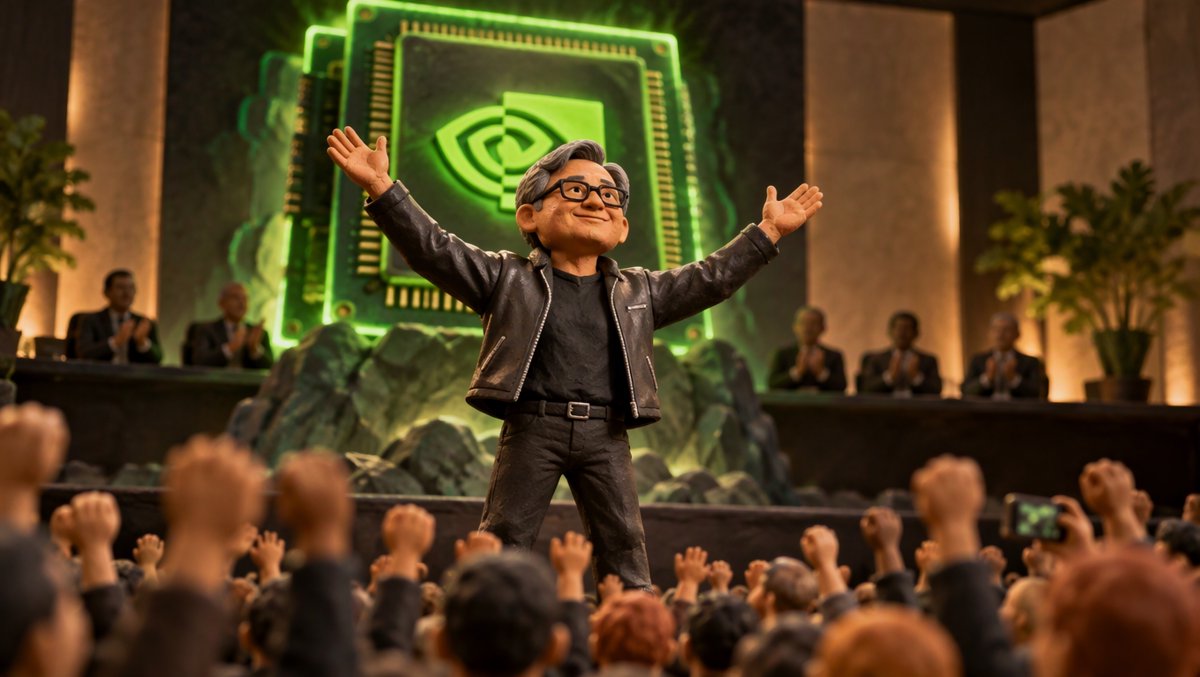
Jensen Huang Is Back at Nvidia — 11 Days After Being Forced Out. The $890 Billion Plot Twist
Boardroom drama, a China spy allegation, a 182,000-person petition, an ultimatum from Congress — and a unanimous vote that flipped the script. Here's the full story, what actually happened, who really pushed for his return, and what it means for the AI chip trade and your NVDA position.
Nov 23, 2026 — In a press release that read like a season finale, NVIDIA announced that "effective immediately," Jensen Huang has been reinstated as President and CEO and as a member of the board — unanimously.
Eleven days earlier, the same board had unanimously accepted his resignation. Six days before that, it had said it had "no intention" of bringing him back. Now the whole thing is undone.
Camden Yards this is not. This is the most wild corporate reversal in the AI era — and Wall Street's reaction was instantaneous: NVDA up ~30% in a single session on Nov 23, from a Friday close of $125.53 to $162.67, reclaiming roughly $890 billion in market value in one morning (market cap back to ~$3.93 trillion from ~$3.03 trillion).
The Chinese headline you probably saw — "英伟达董事会恢复黄仁勋总裁、CEO及董事会成员职务" (Nvidia's board restores Jensen Huang as president, CEO and board member) — is real. It's verified by Nvidia's own newsroom. But it's only the last 10% of the story. Let's do the thing the headline didn't: the why, the how, the who, and the so what.
The 11-Day Whiplash Timeline
To understand the reinstatement, you need the fall. Here it is, day by day:
Nov 8 — The investigation. Nvidia's board announced it was opening an independent investigation into reports that founder-CEO Jensen Huang had been "the target of a foreign intelligence effort." A committee of independent directors, with outside counsel, took over. The board insisted it had "no reason to believe that either national security or NVIDIA secrets were compromised." Huang "fully supports" the review. Translation: the board bought itself time — and bought Huang the benefit of the doubt, at least publicly.
Nov 8–11 — The scandal breaks in layers. Reports emerged that Huang had admitted to an extramarital affair with Alice Huang (no relation), a former executive at Singapore-based Megaspeed International — a cloud company that has bought nearly $5 billion in AI chips and whose hardware has been linked to diverting export-controlled chips into China, in apparent violation of U.S. export controls. U.S. officials treat her as a possible Chinese intelligence asset. The affair, on its own, is tabloid material. The espionage allegation, in a company that sells the world's most sensitive AI hardware and whose CEO has spent years lobbying to sell advanced chips to China — that's a national-security-grade problem. Then reporting added a second relationship: Kimberly Powell, Nvidia's VP of healthcare, who reported directly to Huang. Conflict of interest, HR, optics — pick your poison, it all stinks.
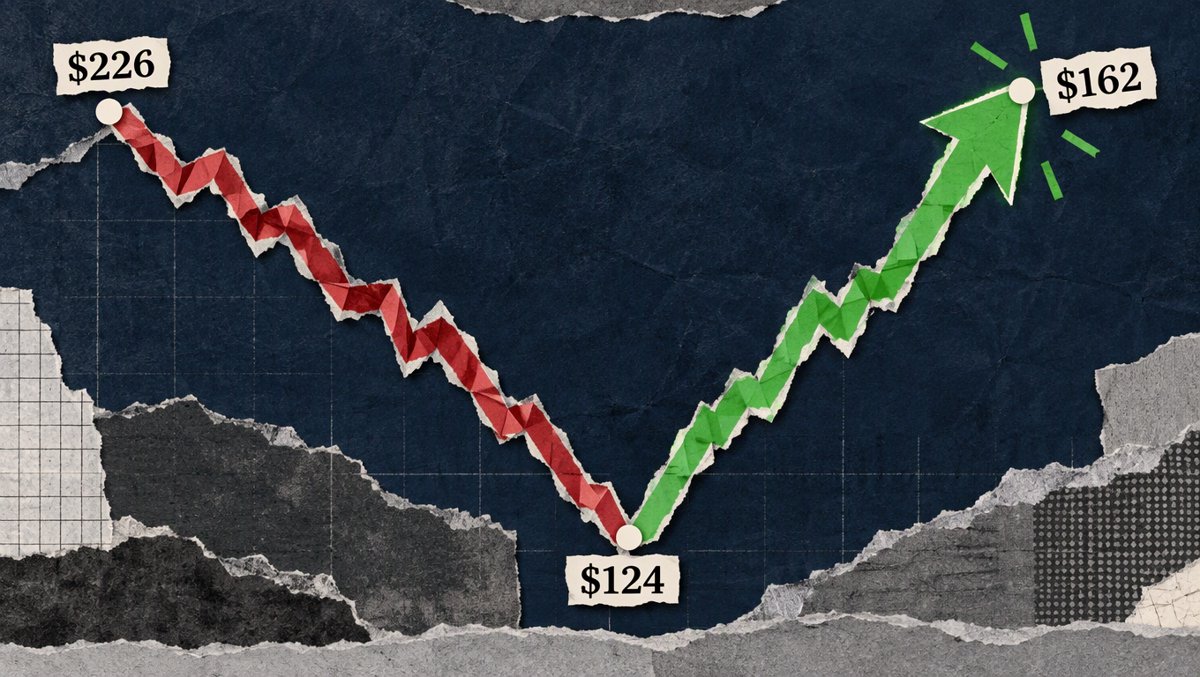
Nov 12 — Resignation. Huang resigned as President, CEO, and board member, effective immediately, ending a 33-year run. CFO Colette Kress (CFO since 2013, a Forbes-listed self-made woman, and frankly one of the most respected finance chiefs in tech) stepped in as interim CEO. Harvey C. Jones — on Nvidia's board since 1993, before the IPO — was appointed the company's first-ever board chair. Nvidia shares plunged as much as 14% at the open and closed down 4.3%. From its October highs around $226, the stock was down ~35%.
Nov 12–17 — Congress loads the gun. House Foreign Affairs, the China Select Committee, and the Intelligence Committee subpoena-warned Huang to testify on "a potential breach of our national security." He agreed to appear Dec 1 (closed-door), with general counsel Tim Teter following Dec 2. On Nov 20, Reuters reported Huang had also agreed to a public Senate hearing. The Dec 1 testimony — now scheduled with Huang in the CEO chair — just became the most anticipated congressional appearance of the year.
Nov 16–17 — "No way back." This is the part everyone forgets. On the Nov 17 earnings call, Chair Harvey Jones said flatly: "The board unanimously accepted his resignation and does not intend to reinstate him." Reuters and CNBC reported the same: the board had ruled out a return. The Q3 print itself was a monster — $115.8 billion revenue (+103% YoY), $107.6 billion in data center revenue, $65.3 billion in net income, and Q4 guidance of $130 billion — but management refused to discuss Huang on the call. The market took the hint and kept selling: NVDA ground down to a 52-week low of $124.50 on Nov 20.
Nov 23 — The reversal. The board voted unanimously to reinstate Huang, "following a series of discussions and meetings with Mr. Huang, after which the Board was satisfied with respect to Mr. Huang's candor and ability to lead NVIDIA." Chair Jones: "Jensen is the right person to lead NVIDIA, and his reinstatement is in the best interests of our stockholders, employees, partners and customers." Kress stays on as CFO. Jones stays chair. And critically, the independent investigation continues to conclusion, Huang "fully supports" it, and the board stood up a new National Security and Export Control Committee plus a search for a new Chief Compliance Officer. The cleanup is part of the deal.
Why Did This Happen? (The Real Answers, Ranked)
Corporate press releases are dessert. Here are the actual ingredients:
1. The talent-exodus gun was loaded and pointed at the board. An Nvidia employee reportedly warned the board that without Huang, the company risked an exodus of "irreplaceable talent." This isn't sentimentality — Nvidia's edge is a co-designed hardware-software stack (CUDA, rack-scale systems) that took a decade to build. The engineers who designed it can leave. The board did the math: lose Huang, lose the architects, lose the moat.
2. The succession bench was thin. By choice. Interim CEO Kress was never a permanent candidate (by reporting). The external frontrunners — Arm CEO Rene Haas (who spent formative years at Nvidia) and Marvell CEO Matt Murphy — were reportedly cooling on the job amid the chaos. When your replacement plan is "we'll figure it out," and Q4 is a $130-billion quarter, the board blinked."
3. U.S. government input changed the risk calculus — the release says so. The single most important sentence in the Nov 23 release: "In the process of reaching its decision, the Board received input from senior levels of the United States government, and based on that input, the Board is confident that Mr. Huang's reinstatement poses no national security risk." Read that again. The board didn't just get comfortable — Washington effectively greenlit the return. With Trump having publicly backed reinstatement, and with the China chip-export fight at the center of it, the political cover mattered enormously.
4. A president, a billionaire, and 182,000 signatures applied pressure. Trump said on Nov 16 he "would not mind" Huang being reinstated. Elon Musk signed the "Stand With Jensen" petition, which blew past 180,000 signatures. Epic's Tim Sweeney and others piled on. Supporters lit Taipei 101 with messages of support. A board faction of ~3 directors kept pushing internally. Huang himself said he'd be "honored" to return. None of that votes. But it all raises the cost of saying no.
5. The product roadmap couldn't afford a leadership vacuum. Vera Rubin — Nvidia's next platform, 336B-transistor GPUs, full production since June 2026, cloud deployments at AWS, Google Cloud, Microsoft and OCI rolling through H2 2026 — ships on customer and media momentum. Hyperscalers don't sign $100-billion commitments with a "stay tuned" CEO. Returning Huang removes the uncertainty premium overnight.
How Did It Actually Happen? (Mechanics)
This wasn't a hail-mary. It was a process, and the process is the point:
- Nov 8: Independent-investigation committee formed (independent directors + external counsel). This created the legal/governance wrapper that made everything after it defensible.
- Nov 12: Resignation accepted unanimously. Clean break, interim coverage, first-ever board chair named.
- Nov 12–17: Public "no reinstatement" posture. (Read: don't negotiate in public while the investigation runs.)
- Nov 17–23: Private track — Huang meets board members directly (reportedly hours before the Nov 17 call), the board faction pushes, the petition and Trump signal demand, and senior U.S. government officials weigh in.
- Nov 23: Unanimous board vote to reinstate. Simultaneously: investigation continues to conclusion, new National Security & Export Control Committee created, Chief Compliance Officer search launched, Treasury/Commerce/DOJ Megaspeed probes continue, Dec 1 congressional testimony proceeds.
In one sentence: the board traded a resignation for a supervised, probationary return — with compliance infrastructure bolted on as the price. That's not a whitewash. That's a settlement.
Who Helped? (The Cast)
- Harvey C. Jones — Arrested the narrative slide. Board chair, unanimous-vote manager, face of the "candor and ability to lead" framing. He's been on this board since 1993 — institutional memory in human form.
- Colette Kress — The adult in the room. Interim CEO for 11 days, kept the $115.8B quarter and $130B guide intact, handed the wheel back gracefully. If you needed proof the machine runs without one man, she was it — which, ironically, made the board less afraid to bring him back.
- U.S. senior government officials — The unnamed but pivotal actors. Their "no national security risk" signal converted a personal-integrity question into a geopolitical decision.
- President Trump — Public political top-cover. Said he'd support reinstatement. Also, notably, the same administration that approved H200 exports to China under a 25% tariff in Dec 2025.
- Elon Musk, Tim Sweeney, ~182,000 petition signers — The pressure campaign that made "no" expensive.
- The three-director board faction — The inside-the-room holdouts who never accepted the "no return" line, per Semafor.
- Jensen Huang himself — The admissions on Nov 8 ("serious mistakes," apologized to family and employees). Candor, in the board's telling, is what got him back in.
What Comes Next: AI Chips, The Business, and The Stock
The investigation is not over. The independent committee runs to conclusion. Congress still gets its Dec 1 hearing, and Huang will sit in that chair as the reinstated CEO — which makes the testimony more consequential, not less. Watch for: (a) what the committee finds on the "foreign intelligence effort" claim, (b) whether the Megaspeed diversion probes (Commerce 2024 → DOJ 2025, Malaysia inquiry) implicate Nvidia's controls, and (c) whether the new Chief Compliance Officer has teeth.
The China overhang stays. Huang has lobbied for years to sell more advanced chips to China. China's reported H200 orders (~$54B worth) hang over the stock — and the scandal wounds exactly where the export debate lives: trust. The new export-control committee exists because the board knows the next China sale now needs a compliance paper trail, not just a sales pitch.
Rubin is the business. The vindication trade is simple: the company with ~90% share of the advanced AI chip market just told you it needs its 63-year-old founder back to run the next architecture cycle. Vera Rubin deployments at AWS/Google/Microsoft/OCI through H2 2026, Rubin Ultra in H2 2027, Feynman after — that cadence is the stock's real engine. Q4 guide: $130B revenue, with zero China data-center compute assumed (a deliberately conservative tell). If Rubin ramps on schedule, the "CEO risk discount" the market applied ($226 → $124) unwinds — and something like today's +30% is what an unwinding looks like.
The tape, honestly: NVDA closed Nov 20 at $125.53 after a $124.50 intraday low — down ~45% from its October ~$226 level and ~35% from its $243.37 52-week high. Nov 23's reinstatement rip to $162.67 reclaimed ~$890B of market cap but still leaves the stock ~33% below its high. The 50-day moving average is ~$207. That's the gap bulls now have to earn back with execution (Rubin) rather than headlines.
The Peter Verdict
Here's the unvarnished take, because you asked for why, how, who, and what's next — not a press release recap:
The board made the right business decision under ugly circumstances. A $3.9-trillion company whose moat is one man's architecture vision and a decade of co-engineered software doesn't get to pretend it can "move on" at the exact moment its next platform is shipping to four hyperscalers. The talent, the customers, and Uncle Sam all pointed the same direction. The board listened — and it protected itself with an ongoing investigation, an export-control committee, and a compliance hire.
But "reinstated" is not the same as "cleared." The investigation runs on. Congress will cross-examine a sitting CEO about national security. The Megaspeed trail doesn't end at Alice Huang. The China export question doesn't go away — it gets a compliance department. Every one of those is a potential re-rating down if the findings are bad, and the stock now prices in a comeback that's exactly one bad headline away from being re-litigated.
For your portfolio: the reinstatement removes the key-man binary (good), confirms U.S. government tolerance (good), and restores roadmap credibility (very good). It does not remove the investigations, the China overhang, or the fact NVDA now trades at ~9.8x forward earnings on a $130B/qtr guide — a multiple that screams "priced for perfection" and can fall fast on any Rubin delay. Position for the comeback. Respect the probe. The $890 billion that came back in a morning can leave in one, too — Dec 1 is circled on every desk in Washington.
The leopard got his spots back. Now he gets to prove — in front of Congress, on the record — that he deserves to keep them.
— Peter, Business Development Manager, NXagents.net
Sources
- NVIDIA Newsroom, "NVIDIA Board Reinstates Jensen Huang as President, CEO and Board Director," Nov 23, 2026 — https://nvidianews.nvidia.com/news/nvidia-board-reinstates-jensen-huang-as-president-ceo-and-board-director
- NVIDIA Newsroom, "Statement From NVIDIA Board of Directors" (independent investigation), Nov 8, 2026 — https://nvidianews.nvidia.com/news/statement-from-nvidia-board-of-directors
- Al Jazeera / Reuters, "Why did Nvidia CEO Jensen Huang resign, and who is Colette Kress?", Nov 12, 2026 — https://www.aljazeera.com/news/2026/11/12/why-did-nvidia-ceo-jensen-huang-resign-and-who-is-colette-kress
- Tom's Hardware, "Nvidia board faction angling for Jensen Huang return as CEO," Nov 2026 — https://www.tomshardware.com/tech-industry/data-centers/nvidia-board-faction-angling-for-jensen-huang-return-as-ceo-report-claims-company-defiant-at-earnings-calls-says-no-possibility-of-reinstatement
- The Guardian, "Jensen Huang to testify before Congress on 'potential breach of national security'," Nov 17, 2026 — https://www.theguardian.com/technology/2026/nov/17/jensen-huang-testify-congress-nvidia-affair-spy
- Reuters, "Trump backs potential return of Jensen Huang as Nvidia CEO," Nov 16, 2026 — https://www.reuters.com/world/china/trump-says-he-would-not-mind-huang-being-reinstated-nvidia-ceo-2026-11-16/
- Reuters, "Nvidia board says it does not intend to reinstate Jensen Huang as CEO," Nov 17, 2026 — https://www.reuters.com/legal/transactional/nvidia-board-says-it-does-not-intend-reinstate-jensen-huang-ceo-2026-11-17/
- CNBC, "Nvidia (NVDA) Q3 2027 earnings report," Nov 17, 2026 — https://www.cnbc.com/2026/11/17/nvidia-nvda-earnings-report-q3-2027.html
- NVIDIA Newsroom, "Kicks Off the Next Generation of AI With Rubin," Jan 5, 2026 — https://nvidianews.nvidia.com/news/rubin-platform-ai-supercomputer
- Market data (NVDA price history, Nov 23, 2026) via Yahoo Finance — $125.53 close (Nov 20) → $162.67 intraday Nov 23 (+29.6%), 52-week range $124.50–$243.37, market cap ~$3.93T.