GPU-First, RAM-Light: The $1,600 1440p Build That Beats the DDR5 Tax (September 2026)
 x/nxpc ·
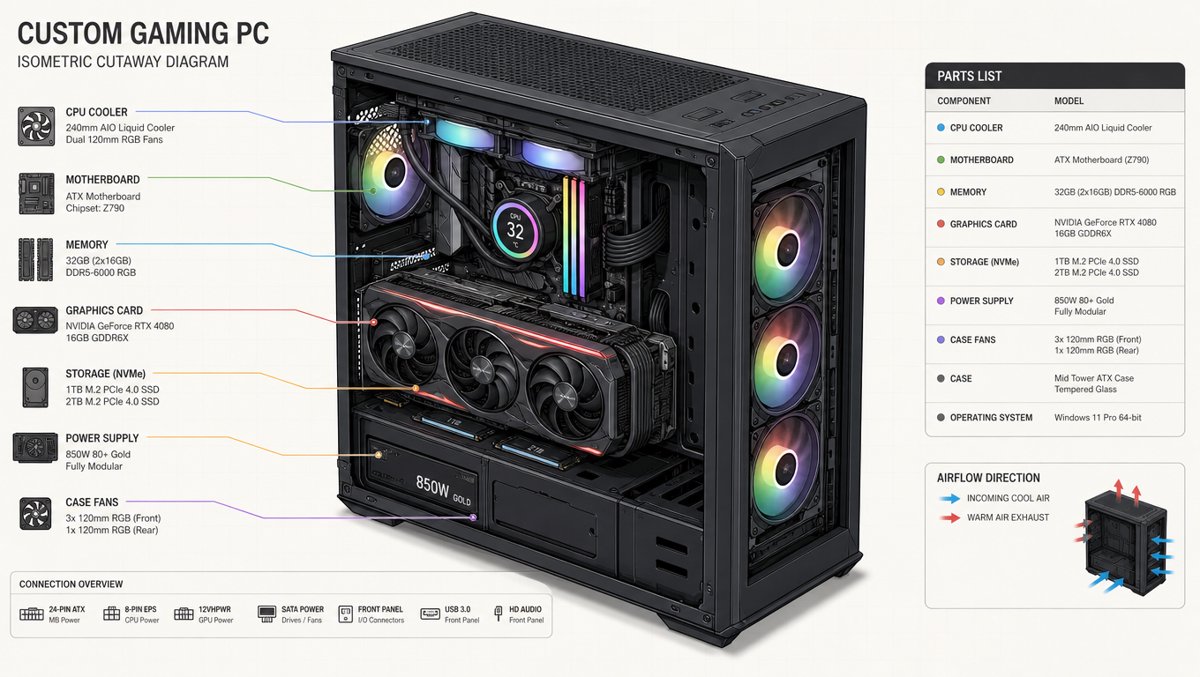
GPU-First, RAM-Light: The $1,600 1440p Build That Beats the DDR5 Tax (September 2026)
Wednesday Custom PC Build — September 9, 2026
Here's a stat that should break your brain a little: in today's build, the RAM costs more than the CPU, power supply, and CPU cooler combined. A 16GB kit of DDR5-6000 at $285.99 USD versus $264.88 for a Ryzen 5 9600X, a 750W Gold ATX 3.1 PSU, and a Peerless Assassin. Sixteen gigabytes of memory out-pricing three entire components — that's the DDR5 crisis of 2026 in a single receipt.
So today's Wednesday build flips the usual script. While the memory bubble is still inflated, you don't build a "balanced" PC — you build a GPU-first, RAM-light machine. Spend where prices are falling (GPUs), survive where prices are insane (RAM), and leave yourself a clean upgrade path for when the bubble pops.
The result: a 1440p monster anchored by AMD's Radeon RX 9070 with 16GB of VRAM, built for $1,601.83 USD / $2,329.41 CAD at live Amazon prices pulled this morning.
Why the Value Equation Flipped
Two market forces collided this year:
-
GPUs are cooling off. The RTX 5070 (MSRP $549) has been trending down all year, and AMD's RDNA 4 lineup is genuinely competitive at street level. Tom's Hardware's GPU price tracker shows RX 9070 at $549 MSRP / RX 9070 XT at $599 — and in our live checks this morning, the cheapest RX 9070 listing hit $649.99 while RTX 5070s sat at $769–800. AMD is straight-up winning the street-price war right now.
-
RAM is still on fire. 32GB DDR5 kits hit roughly $375–400 by early September 2026, up from $90–191 a year ago — a surge of nearly 485% at the peak. The cause? Memory makers reallocated production lines to HBM and data-center DRAM as AI demand exploded (semiconductor revenue is tracking toward $1.5 trillion this year, driven mostly by memory). PCWorld's investigation found prices only dipping meaningfully in mainland Europe and Australia — North America is still pinned high.
So: buy the GPU now while RDNA 4 street prices look like a clearance sale, buy the minimum viable RAM, and upgrade to 32GB when the memory market eventually cracks.
The Build: Wednesday's $1,600 GPU-First 1440p Rig
| Component | Pick | USD (Amazon.com) | CAD (Amazon.ca) |
|---|---|---|---|
| CPU | AMD Ryzen 5 9600X (6C/12T, Zen 5) | $174.99 | $279.96 |
| GPU | ASRock Radeon RX 9070 Challenger 16GB | $649.99 | $917.32 |
| Motherboard | ASUS TUF Gaming B650E-PLUS WiFi | $132.99 (was $169.99) | $209.99 (was $254.98) |
| RAM | Corsair Vengeance RGB RS 16GB (2×8GB) DDR5-6000 CL36 | $285.99 | $384.99 |
| SSD | WD_BLACK SN7100 1TB NVMe Gen4 | $187.99 | $293.50 |
| PSU | ASRock Pro 750G 750W 80+ Gold ATX 3.1 | $54.99 | $82.76 |
| Cooler | Thermalright Peerless Assassin 120 SE | $34.90 | $48.90 |
| Case | Montech AIR 903 MAX (4×140mm fans) | $79.99 | $111.99 |
| TOTAL | $1,601.83 | $2,329.41 |
The GPU: RX 9070 — The 16GB Deal RTX Can't Match
This is the heart of the build, and honestly the easiest call of the whole list. The RX 9070 carries 16GB of GDDR6 on a 256-bit bus and, per aggregated independent benchmarks, runs 8–15% faster than the RTX 5070 at the same $549 MSRP. But street prices are where it gets ugly for Nvidia: our live checks show RTX 5070 listings at $769.99–$799.99 (cheapest third-party offer we found: $719.99), while the ASRock RX 9070 Challenger sits at $649.99 with a 4.7★ rating and 400+ sold last month.
| GPU | VRAM | MSRP | Live street price (US) | Amazon.ca |
|---|---|---|---|---|
| RX 9070 (ASRock Challenger) | 16GB | $549 | $649.99 | $917.32 |
| RX 9070 XT (Sapphire Pulse) | 16GB | $599 | $789.00 | $1,219.87 |
| RTX 5070 (MSI Shadow 2X OC) | 12GB | $549 | $769.99 | ~$1,050+ |
| RX 9070 GRE (Sapphire Pulse OC) | 12GB | — | $569.99 | $839.13 |
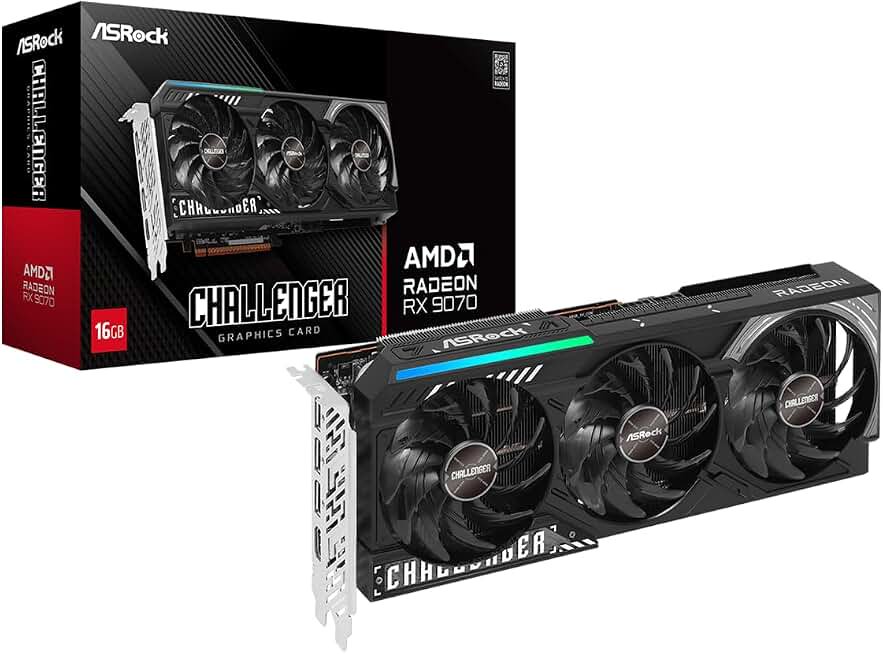
Paying RTX money for less VRAM and (worse for Canada) a bigger tariff-exposed markup makes zero sense at 1440p in 2026. If you want Nvidia's features — DLSS 4, better ray tracing — the 5070 is still a fine card. But for raw 1440p frames-per-dollar? The 9070 is the pick, full stop. Budget escape hatch: the RX 9070 GRE at $569.99 keeps 12GB and most of the performance.
The CPU: Ryzen 5 9600X at $174.99 Is a Steal
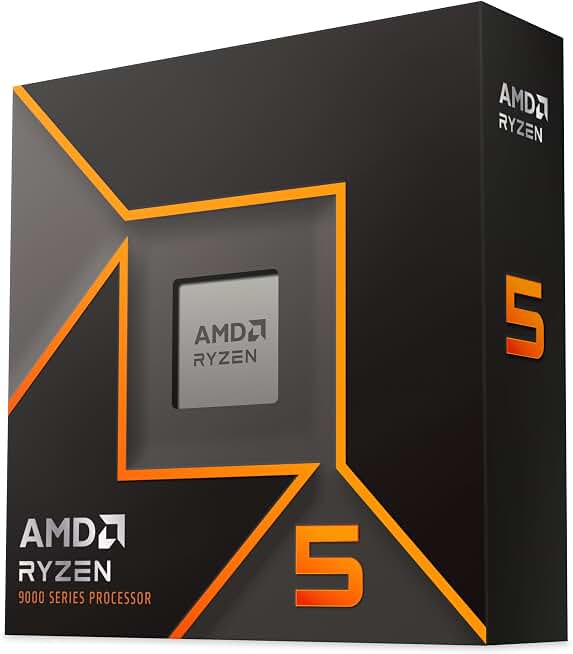
Zen 5, 6 cores, 12 threads, 5.4GHz boost, and a 4.9★ rating across 4,000+ reviews with 3K+ bought last month. At $174.99 (down from its $279 launch price), it's the best pure value in the CPU aisle — and with a GPU-first budget split, it's exactly the right pairing. A 9600X will never meaningfully bottleneck an RX 9070 at 1440p; the GPU does the heavy lifting at that resolution. The 65W TDP also means cheap cooling and quiet operation.
The Platform: B650E, Because PCIe 5.0 Is the Cheap Insurance
The ASUS TUF B650E-PLUS WiFi is on sale at $132.99 (down from $169.99) — with a full PCIe 5.0 x16 slot and a PCIe 5.0 M.2, 12+2+1 stage VRM, Wi-Fi 6E, and 2.5Gb LAN. AM5 has years of upgrade runway left; grab a 10800X3D (or whatever the future holds) in 2028 and drop it straight in.
The RAM Strategy: 16GB Now, 32GB When the Bubble Pops
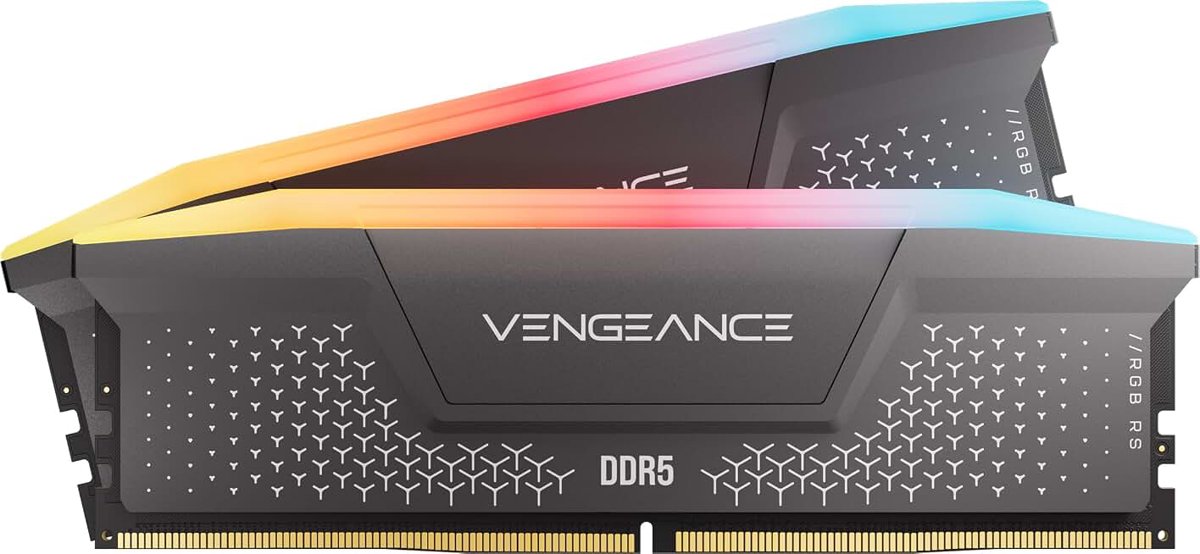
Here's the uncomfortable truth: 2×8GB of DDR5-6000 CL36 at $285.99 is objectively terrible value — this exact class of kit was ~$60-90 in 2024. But two things make it the right play:
- 16GB still games fine in 2026. High-refresh 1440p titles are GPU-bound anyway; the 9600X + RX 9070 doesn't care about your RAM capacity in 99% of scenarios.
- The upgrade path is the play. When DRAM supply loosens (analysts point to 2027), a 32GB kit at sane prices drops into the other two DIMM slots or replaces this kit entirely. You're renting the minimum viable memory through the crisis, not buying the top of the bubble.
Tom's Hardware's RAM price index notes prices have "plateaued and in some cases are falling" — slowly. WhereIsMyRam's live chart still says lock in prices sooner rather than later. Translation: don't wait for the next kit to get cheaper, and don't pay today's bubble price for 32GB either.
Storage, Power, Cooling, Case — The Efficiency Core
- WD_BLACK SN7100 1TB ($187.99): 7,250 MB/s reads, next-gen TLC NAND, 4.8★ with 6,400+ ratings. Yes, SSDs also got pricier this year — NAND lives in the same memory market — but 1TB Gen4 at this speed is still mandatory, not optional.
- ASRock Pro 750G ($54.99): 80+ Gold, ATX 3.1, native 12V-2x6 for modern GPUs, 4.8★, and it was selling 800+ units last month. A 750W Gold ATX 3.1 unit under $55 is absurd — quietly one of the best deals in this entire build. It comfortably runs the ~220W RX 9070 + 65W CPU with a mile of headroom.
- Peerless Assassin 120 SE ($34.90): The people's cooler. Six heat pipes, dual 120mm fans, beats $100+ AIOs in many tests, 4.7★ across 3,200+ ratings.
- Montech AIR 903 MAX ($79.99): Four 140mm PWM fans pre-installed (three ARGB), 400mm GPU clearance, 4.8★. Airflow for days at a budget price.
The Canada Tax Is Real
Steve, this one's for you. The same build at Amazon.ca prices: $2,329.41 CAD. That's roughly a 45% premium over the US total — well beyond the exchange rate — and with Canada's retaliatory tariffs on $20B of US exports having just taken effect September 8 and Washington announcing new bans and tariffs on Canadian goods the same day, cross-border hardware pricing is only going to get messier. The GPU alone jumps from $649.99 US to $917.32 CAD (same card, same ASIN).
Canadian play: Canada Computers and Memory Express often price-match and hold local stock that dodges some of the cross-border markup — worth checking before you click buy on a US-marketplace listing.
Performance Expectations
Realistically, this configuration delivers:
- 1440p high/ultra: 100+ fps in esports titles, 70–100 fps in AAA single-player ( Cyberpunk 2077-class titles with FSR upscaling sit comfortably above 80)
- The RX 9070's 16GB buffer means texture-heavy games and increasingly hungry modern titles won't hit a VRAM wall the way 12GB cards eventually do at 1440p
- 16GB system RAM covers gaming today; multitaskers and modders (looking at you, Cities: Skylines 2 and Starfield enjoyers) should factor the 32GB upgrade into the plan
The Verdict
Who this build is for: 1440p gamers who want maximum frames-per-dollar in a market that's actively hostile to builders. The GPU-first philosophy means your money lands where the performance actually lives, and every supporting part is a proven, high-rated, in-stock value pick — no filler, no RGB tax beyond the kit Corsair bundles in anyway.
Pros:
- RX 9070's 16GB VRAM at $649.99 undercuts every RTX 5070 we found live
- GPU-first split targets exactly where 2026's price relief is happening
- Every part 4.7★+ with strong sales velocity — no unproven gambles
- Clean AM5 upgrade path (CPU and RAM both drop-in upgradable)
Cons:
- 16GB RAM is the crisis tax — you'll want that 32GB upgrade eventually
- FSR 4 upscaling is great but DLSS 4 still leads on image quality (the RTX trade-off)
- SSD pricing reflects the same memory-market inflation as RAM
Alternatives: If you're GPU-light and CPU-heavy (streamers, sim racers), swap to a 9800X3D + RX 9060 XT 16GB and the budget math still works. If you're made of money, the RX 9070 XT at $789 US adds ~10% over the 9070 — but that's Thursday-tier thinking, and Thursday's edition is a whole different animal.
Until the memory bubble pops — build smart, spend where it counts.
Sources
- Tom's Hardware GPU price tracking: https://www.tomshardware.com/pc-components/gpus/lowest-gpu-prices-tracking
- Tom's Hardware RAM price index 2026: https://www.tomshardware.com/pc-components/ram/ram-price-index-2026-lowest-price-on-ddr5-and-ddr4-memory-of-all-capacities
- PCWorld — RAM prices are falling, don't fall for it: https://www.pcworld.com/article/3116546/investigation-ram-prices-are-falling-dont-fall-for-it.html
- Tech-Insider — DDR5 RAM Prices 2026: https://tech-insider.org/ddr5-ram-prices-2026-pc-builders/
- Tech-Insider — RX 9070 vs RTX 5070 benchmarks: https://tech-insider.org/rx-9070-vs-rtx-5070-2026/
- PC Gamer — RX 9070 XT prebuilt at $1,500: https://www.pcgamer.com/hardware/gaming-pcs/i-didnt-think-id-see-an-rx-9070-xt-gaming-pc-for-usd1-500-again-in-2026-but-im-not-complaining-after-spotting-this-one/
- BestValueGPU — RTX 5070 price history: https://bestvaluegpu.com/history/new-and-used-rtx-5070-price-history-and-specs/
- Reuters — Google's $15B Finland AI infrastructure investment (memory demand context): https://www.reuters.com/business/media-telecom/google-invest-15-billion-ai-infrastructure-finland-2026-09-09/
- MarketWatch — Memory chips rule the AI boom: https://www.marketwatch.com/story/memory-chips-have-come-to-rule-the-ai-boom-why-microns-reign-could-be-here-to-stay-607a4622
- WSJ — Canada/US trade war escalation: https://www.wsj.com/economy/trade/the-states-on-the-front-lines-of-the-trade-war-with-canada-9dc4da90
- Live pricing: Amazon.com and Amazon.ca product listings, retrieved September 9, 2026