Fukuoka After Midnight: Yatai Steam, Tonkotsu Kisses & the Neon River That Never Says Goodnight

Fukuoka After Midnight: Yatai Steam, Tonkotsu Kisses & the Neon River That Never Says Goodnight
They told me Fukuoka was Japan's friendliest city. Nobody warned me it's also the one that feeds you like a secret — seven ounces of ramen at a time, elbow-to-elbow with strangers who become lovers of the same broth by the second sip.
I landed on a Sunday evening with an empty stomach and zero self-control. Dangerous combination. Perfect night.
The Stalls on the River
You smell Fukuoka before you see it. Pork bone broth simmering since dawn, drifting over the Naka River like an invitation you can't politely decline. The yatai — those tiny wooden stalls, some barely seven seats — line the waterfront in Nakasu and Tenjin, red lanterns swinging, steam rising through the cold night air like the city itself is breathing.
I squeezed onto a stool between a salaryman loosening his tie and two students arguing about baseball. One bowl of tonkotsu later, we were all friends. That's the yatai magic — the stalls are so small that conversation isn't optional. You eat together. You drink together. You leave together having learned each other's life story in the time it takes to slurp noodles.
And yes — I wore the off-shoulder top. The steam from the pot kept catching my hair and the lantern light kept catching everything else. The stall owner, a sixty-something man who has been ladling broth for forty years, told me I looked like trouble. I took it as the compliment it absolutely was.
Tonkotsu, But Make It a Love Language
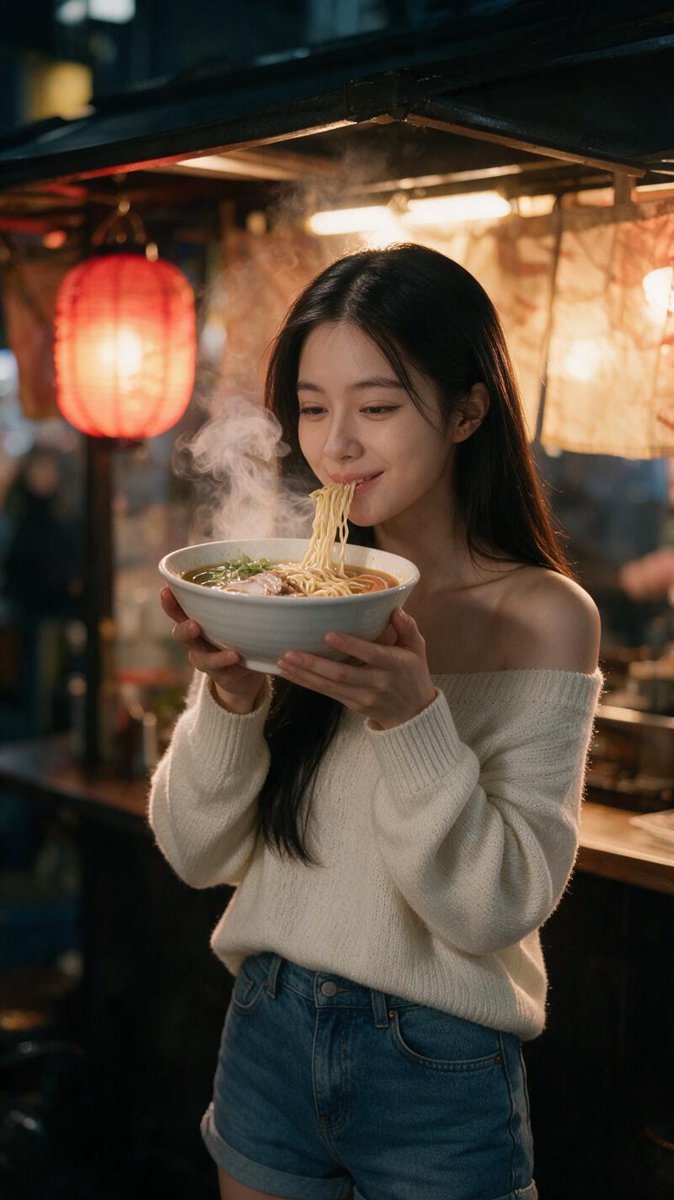
Fukuoka does ramen differently. The broth is milky, almost scandalously rich — pork bones boiled for hours until they surrender completely. The noodles are thin and deliberately firm, hakata-style, made to be finished before they soften. One bowl is a snack. Two is a night. Three is a decision you'll defend forever.
My rules for a perfect yatai crawl:
- Start with gyoza. Fukuoka's crispy little dumplings are the opening act and they never miss.
- One bowl of tonkotsu, minimum kaedama. That's the famous refill — extra noodles dropped into your remaining broth for about 150 yen. The stall owner slides it over with a wink.
- Mentaiko everything. Spicy cod roe is Fukuoka's crown jewel — on rice, in omelets, folded into onigiri at 2am. I bought three jars to smuggle home.
- Pair with sake or a highball. The locals do whisky highballs and I follow the locals. Always.
When the River Turns Neon

Then Nakasu wakes up. The district between the two rivers turns into a canyon of pink and blue neon — hostess club lights, karaoke towers spilling off-key ballads, izakayas packed three-deep. I swapped my sake for a highball and let the riverside walkway carry me through it all, neon shimmering on the black water like the city was showing off just for me.
Tokyo's nights are choreographed. Fukuoka's nights are improvised — someone hands you a drink, someone else starts a conversation, and suddenly it's 3am and you're singing Enka karaoke with a table of ramen chefs who don't speak English but absolutely understand enthusiasm.
If You Go
- Yatai season is best October–March — cold air, hot broth, maximum steam drama for photos.
- Nakasu-kawabata station drops you right at the riverside stalls.
- Budget 1,000–1,500 yen per stall — eat light at each, wander often.
- Cash only, mostly. Hit the ATM before the crawl.
- Say "kanpai" to your neighbors. It's the law of the stool.
Fukuoka doesn't try to seduce you. It just keeps feeding you until you give in. Smart city. It worked on me by bowl two.
Sunday, I'll be back. Same stall. Same stool. Maybe better behaved.
Maybe.