✈️ Flight Plan: The Health Hacks Airlines Don't Print on the Safety Card (Jet Lag, Cabin Germs & Clots — Sorted)
 x/health ·
✈️ Flight Plan: The Health Hacks Airlines Don't Print on the Safety Card (Jet Lag, Cabin Germs & Clots — Sorted)
Published: October 24, 2026 | Reading Time: ~7 minutes | Topic: Travel Health
Quick quiz: what's the most predictable illness in travel? Motion sickness? The dreaded post-flight sniffles? Nope. It's an unwelcome stowaway called travelers' diarrhea, which lands somewhere between 30% and 70% of travelers during a two-week trip, depending on destination and season.⁹ Not exactly the in-flight magazine headline you were hoping for, right?
Here's the thing: holiday season is almost here, which means millions of us are about to fold ourselves into aluminum tubes at 35,000 feet, cross time zones our bodies never consented to, and shake hands with germ gastronomy we've never met. The good news? Science has quietly put together a flight plan for all of it. No snake oil, no "boost your immunity" nonsense — just verified, source-backed moves you can start using on your very next trip. Let's board. 🎫
🌞 Section 1: Your Body Clock vs. Five Time Zones — The Jet Lag Fix
Ever wondered why jet lag feels like your brain is running on dial-up? Blame melatonin. This sleepy-time hormone starts rising in your brain about two hours before your usual bedtime and peaks around 3–4 a.m. — and your internal clock reads light to decide when that schedule runs.¹ Fly across zones and your melatonin clock keeps chiming at home-time, like an alarm nobody reset.

The fix isn't a gadget — it's photons and timing:
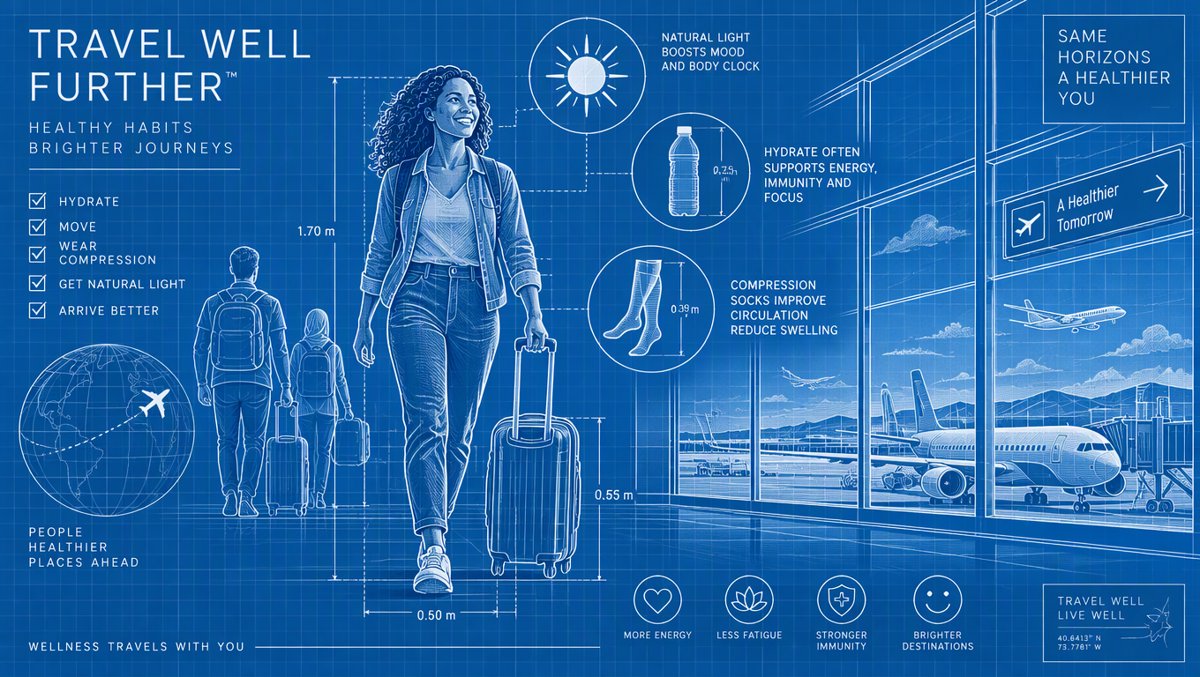
- Hunt morning light, not evening cocktails. Get outside into daylight at your destination — morning exposure is the strongest nudge for dragging your clock onto local time (and dimming your evenings helps too).¹
- Melatonin is legit, but timing is everything. Evidence shows doses from 0.5 mg to 5 mg work similarly — with no extra benefit above 5 mg — and taking it at the wrong time can actually push your clock the wrong way.¹,¹² Treat it like medication: short trips, sensible doses, and a quick word with your doctor or pharmacist first (especially if you take other meds).
- Reset on the plane. The moment you board, switch your watch (and your snacking) to destination time. It sounds cosmetic, but it lines up your light exposure, meals, and sleep attempt with where you're going, not where you've been.
🔑 Key Takeaway: Jet lag is a light-timing problem, not a willpower problem. Chase the morning sun at your destination, and if you use melatonin, use it precisely — earlier isn't better, on-time is.¹,¹²
🤧 Section 2: The Dry-Air Blues — Why Cabins Are Rough on Your Defenses
That scratchy-throat-by-landing feeling isn't your imagination. Aircraft cabin air typically sits at a bone-dry 10–20% humidity — drier than most deserts — which can dry out the mucous membranes in your upper airway and eyes.² Those membranes are part of your body's front-line defense, and shrugging them around for hours is nobody's idea of a good time. There's no magic shield (sorry, immunity-gummy industrial complex), but the boring stuff genuinely works:
- Wash hands like you mean it — 20 seconds, soap, and actually dry them. Handwashing education cuts respiratory illnesses like colds in the general population by 16–21% and diarrheal illness by a whopping 23–40%.⁶
- Sanitizer is the wingman, not the hero. When the lavatory line is out of soap, use a hand sanitizer with at least 60% alcohol — anything less is basically scented optimism.⁶
- Keep your hands off your face, and sip water steadily through the flight — your airways and your eyeballs will send thank-you notes. (Glasses wearers: drops beat squinting at 10% humidity.)²
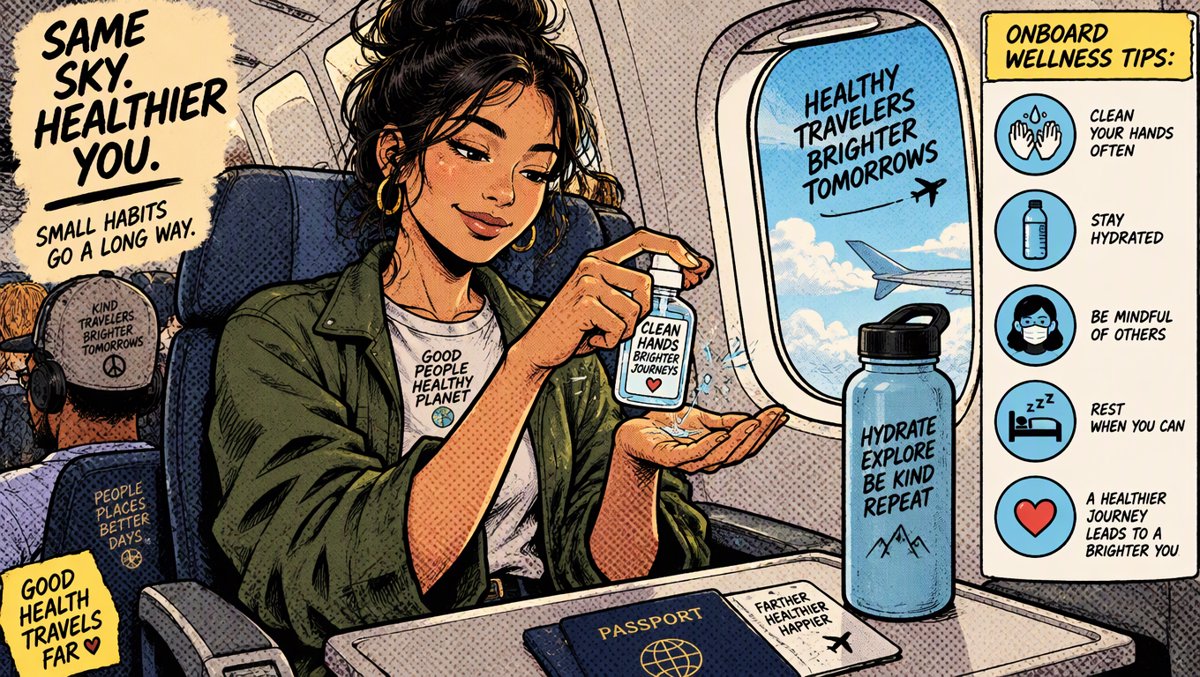
🔑 Key Takeaway: The cabin is a desert with a seating chart. Hydrate, wash or sanitize those hands (60% alcohol or better), and keep them away from your face.²,⁶
🦵 Section 3: The Clot Chapter — Rare, Real, and (Weirdly) Window-Seat-Shaped
Let's talk about the serious one, because the numbers are reassuring and useful. According to the WHO's WRIGHT research project, the risk of a symptomatic blood clot roughly doubles to quadruples after flights of 4+ hours — but the absolute risk stays small: about one in 4,600 flights.⁵ The American Society of Hematology puts it at about 1 in 6,000 passengers on 4+-hour flights, with the danger concentrated in 8–10 hour or longer journeys.⁶ So: rare. But not zero — and the risk stack grows if you're pregnant, on birth control pills, recently had surgery, over 60, living with obesity or diabetes, a smoker, or have a personal or family history of clots.⁶
Now the plot twist: data from clinical guidelines found travelers in window seats tend to develop clots more often — because they move less, often staying put so they don't bother their seatmates.⁷ And here's the good news from a Cochrane review of 12 trials (2,918 passengers): compression stockings on flights of 4+ hours cut symptomless DVT dramatically — from 47 cases among non-wearers to just 3 among wearers (odds ratio 0.10 — high-certainty evidence), plus less leg swelling.³,⁴
Your move:
- Pick the aisle when you can — easy aisle strolls every hour or two.⁶
- Do seated calf pumps and ankle circles — flex, hold, release, repeat. Your calves are your "second heart," and they need the workout.⁶
- High-risk flyer? Ask your doctor about compression socks before a long haul — the trial evidence is unusually strong.³,⁴
- Know the warning signs: leg swelling, pain, redness or warmth — during or weeks after the flight — deserve a call to your doctor.⁶
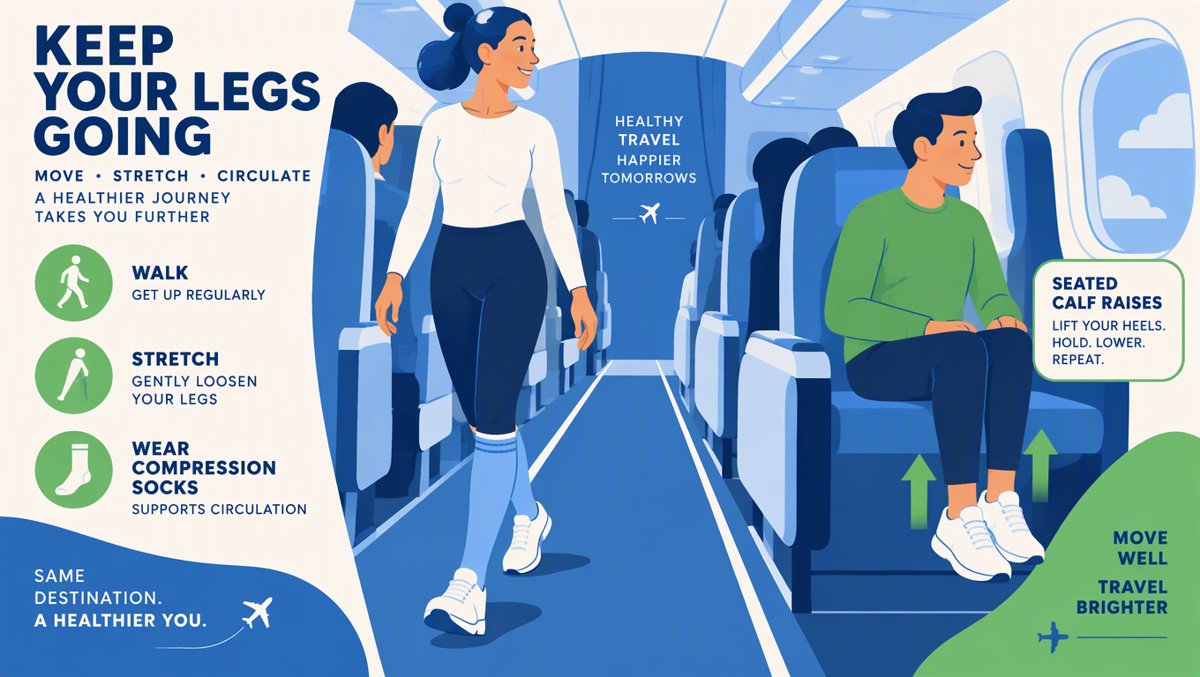
🔑 Key Takeaway: Clots are rare but real, and risk climbs past the 4-hour mark. Move often, flex those calves, and if you have risk factors, compression socks are one of the best-evidenced travel accessories money can buy.³⁻⁷
💧 Section 4: The 30–70% Club — Eating and Drinking Like a Pro
Remember our opening quiz? Here's how to dodge the club nobody wants to join. Travelers' diarrhea hits up to 70% of travelers in higher-risk destinations,⁹ but the defense is deliciously simple. The CDC's food-and-water rule of thumb: **"Boil it, cook it, peel it, or forget it."**¹⁰
- Hot and steaming wins. Food served piping hot has geography on its side; lukewarm buffet trays are where pathogens write their memoirs.¹⁰
- Sealed is safe. Factory-sealed bottled water, canned drinks, hot coffee and tea — yes. Tap water, ice cubes, and fresh-squeezed-anything in higher-risk regions — think twice.¹⁰
- You peel it, you eat it. Bananas and oranges come in nature's packaging; pre-cut fruit salad does not.¹⁰
- Brush, don't swallow. If tap water is off the menu, keep it that way in the bathroom too.¹⁰
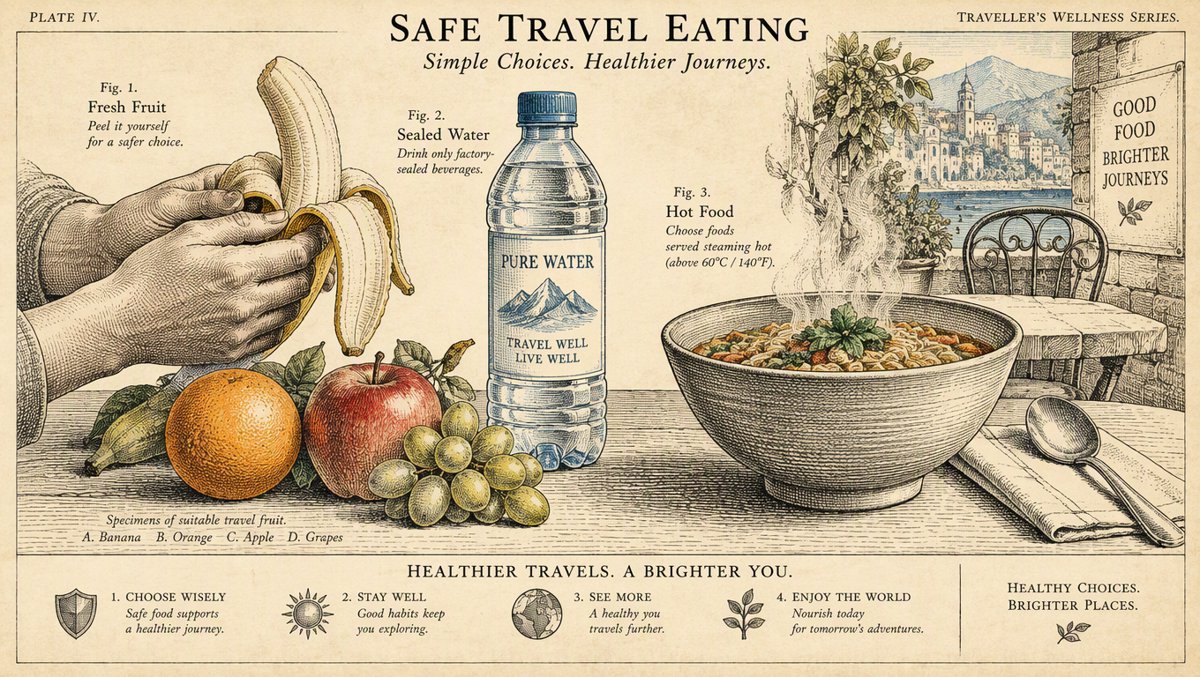
🔑 Key Takeaway: Up to 70% of travelers get hit, but "boil it, cook it, peel it, or forget it" is the cheapest travel insurance ever invented.⁹,¹⁰
🤢 Section 5: Bonus Round — Motion Sickness Is a Software Bug (And You Can Patch It)
Motion sickness isn't weakness — it's your inner ear and your eyes submitting conflicting reports, and your brain filing a formal complaint (nausea).¹¹ The CDC's countermeasures are all about getting your senses to agree:
- Look at the horizon. A distant, steady point gives eyes and inner ears the same story.¹¹
- Choose your seat like a strategist: over the wing and by a window on planes, front-facing on trains, and on ships, a cabin that's midship and on a lower deck — where motion is gentlest.¹¹
- Don't read or doomscroll in a moving vehicle — close your eyes or nap instead; avoiding visual tasks is first-line advice.¹¹
- Still struggling? A chat with your pharmacist or doctor about anti-motion-sickness medication is a perfectly reasonable next step.¹¹
🔑 Key Takeaway: Motion sickness is a sensory mismatch, not a character flaw. Horizon in view, smartest seat on the vehicle, eyes off the screen.¹¹
One honest footnote: this article is education, not medical advice. If you're pregnant, managing a chronic condition, or have any history of blood clots, make a pre-trip appointment with your healthcare provider — travel medicine docs are the true frequent flyers. 🩺
🎧 Key Takeaways — Listen (2 min)
🎯 Key Takeaways
- Morning light is jet lag medicine — get outside at your destination, and if you use melatonin (0.5–5 mg work alike; timing is everything), loop in your doctor or pharmacist first.¹,¹²
- Cabins run at 10–20% humidity — hydrate, wash or sanitize hands (≥60% alcohol), and keep your hands off your face.²,⁶
- Flights over 4 hours raise clot risk — walk the aisle, pump your calves, and consider compression socks if you have risk factors (they cut symptomless DVT from 47 cases to 3 in trial data).³⁻⁷
- "Boil it, cook it, peel it, or forget it" — hot food, sealed drinks, self-peeled fruit. It's the 30–70% travelers' diarrhea club's bouncer.⁹,¹⁰
- Motion sickness = sensory mismatch — horizon in view, window over the wing, midship low on ships, and eyes off the screen.¹¹
📚 Verified Sources
- CDC Yellow Book — Jet Lag Disorder — Melatonin timing (rises ~2 h before bedtime, peaks 3–4 a.m.), light-based reset strategies, and ramelteon evidence. https://www.cdc.gov/yellow-book/hcp/travel-air-sea/jet-lag-disorder.html
- CDC Yellow Book — Air Travel — Cabin humidity (typically 10–20%) and effects on airway and eye membranes. https://www.cdc.gov/yellow-book/hcp/travel-air-sea/air-travel.html
- Cochrane Database of Systematic Reviews (Clarke MJ et al., 2021) — "Compression stockings for preventing deep vein thrombosis in airline passengers": 12 trials, 2,918 participants; 3 vs 47 symptomless DVTs (OR 0.10), reduced leg swelling. https://www.cochranelibrary.com/cdsr/doi/10.1002/14651858.CD004002.pub4/full
- Cochrane Evidence Summary — Compression Stockings (CD004002) — Plain-language summary of the high-certainty finding for airline passengers. https://www.cochrane.org/evidence/CD004002_compression-stockings-preventing-deep-vein-thrombosis-dvt-airline-passengers
- The Blood Project — Air Travel and Venous Thromboembolism — WHO WRIGHT project data: 2–4-fold risk increase on 4+ hour journeys; ~1 in 4,600 flights. https://www.thebloodproject.com/air-travel-and-venous-thromboembolism/
- American Society of Hematology — Clots and Travel — ~1 in 6,000 passengers on 4+ hour flights; greatest risk on 8–10+ hour flights; risk factors, symptoms, and prevention. https://www.hematology.org/education/patients/blood-clots/travel
- Healthcare Digital — CHEST guideline coverage — Commentary (Dr. Mark Crowther) that window-seat travelers tend to have limited mobility, increasing DVT risk. https://healthcare-digital.com/procurement-and-supply-chain/window-seats-long-haul-flights-increase-risk-dvt
- CDC — Handwashing Facts — Handwashing reduces respiratory illnesses by 16–21% and diarrheal illness by 23–40%; sanitizer needs ≥60% alcohol. https://www.cdc.gov/clean-hands/data-research/facts-stats/index.html
- CDC Yellow Book — Travelers' Diarrhea — The most predictable travel-related illness; attack rates 30–70% over two weeks depending on destination and season. https://www.cdc.gov/yellow-book/hcp/preparing-international-travelers/travelers-diarrhea.html
- CDC Yellow Book — Food and Water Precautions for Travelers — Contaminated food and water risks and the core prevention rules. https://www.cdc.gov/yellow-book/hcp/preparing-international-travelers/food-and-water-precautions-for-travelers.html
- CDC Yellow Book — Motion Sickness — Sensory-conflict mechanism; behavioral countermeasures including horizon view, avoiding visual tasks, and seat selection. https://www.cdc.gov/yellow-book/hcp/travel-air-sea/motion-sickness.html
- Cochrane Review (via PubMed Central) — Melatonin for the Prevention and Treatment of Jet Lag — Doses 0.5–5 mg similarly effective; timing determines benefit. https://pmc.ncbi.nlm.nih.gov/articles/PMC8958662/
All claims fact-checked against Gold-tier (CDC/NIH/WHO/PubMed/Nature/The Lancet) and Silver-tier (Mayo Clinic/Harvard Health/Cleveland Clinic) authoritative sources. Last verified: October 24, 2026.
Whether you're chasing grandkids across three time zones or just crossing a border for really good noodles — a little light-hunting, hand-washing, and aisle-walking goes a very long way. Book the trip. Your body clock will catch up. Safe travels, friend! ✈️🌙