🌾 Fibermaxxing: 2026's Hottest Health Habit — Because Your Gut Bugs Are Literally Starving
Published: September 2, 2026 | Reading Time: ~7 minutes | Topic: Nutrition & Gut Health
Quick question: when's the last time you ate beans, berries, or a whole grain on purpose? If you're pausing to think, you're in very good company — a staggering 95% of American adults don't get enough fiber, making it one of the biggest nutrition gaps in the modern diet.¹ ⁵
And 2026 has decided that's officially uncool. Nutrition circles are buzzing about "fibermaxxing" — the trend of deliberately maxing out your daily fiber — with fans calling fiber "the new protein."¹² But this isn't just another hashtag. This summer, researchers dropped a genuinely wild discovery about what happens inside your gut when fiber runs low. Let's dig in. 🥄
🔬 Section 1: Your Gut Microbes Just Got Caught Snacking on You
Picture your gut as a bustling little city of trillions of microbes. They're mostly lovely neighbors — they help digest food, produce vitamins, and keep your immune system sharp. But like any city, they get hangry.
Here's the new science: in August 2026, researchers at the Ludwig Institute for Cancer Research (Princeton branch) published a pair of studies showing that when dietary fiber runs low, gut microbes may start feeding on the proteins in your gut's protective mucus lining instead. And it's not just gross — it changes their chemistry.¹ ³
Why does that matter? Because when microbes digest different proteins, they release different byproducts (scientists call them metabolites):
👎 The "hangry" pathway: microbes munching host proteins (including that mucus lining) produce more harmful phenols like p-cresol sulfate — compounds linked in other research to worse outcomes in kidney disease and cancer.¹
👍 The "well-fed" pathway: when microbes digest fiber and certain digestion-resistant plant proteins, they shift toward producing beneficial compounds like phenylpropionate and hippuric acid, which are associated with gut health and healthy body weight.¹
The researchers even gave these plant proteins a nickname — "Prif," proteins imitating fiber — and suggested food labels might one day list them right under fiber.³ So the plate you build doesn't just feed you; it literally steers your microbes' chemistry toward friendly or unfriendly outputs.
One honest caveat: these particular studies were done in mice and human cells, so think of it as early lab science, not settled dietary law.¹ But it fits a much larger, very human body of evidence — which brings us to the real story.
🛠️ Try this today:
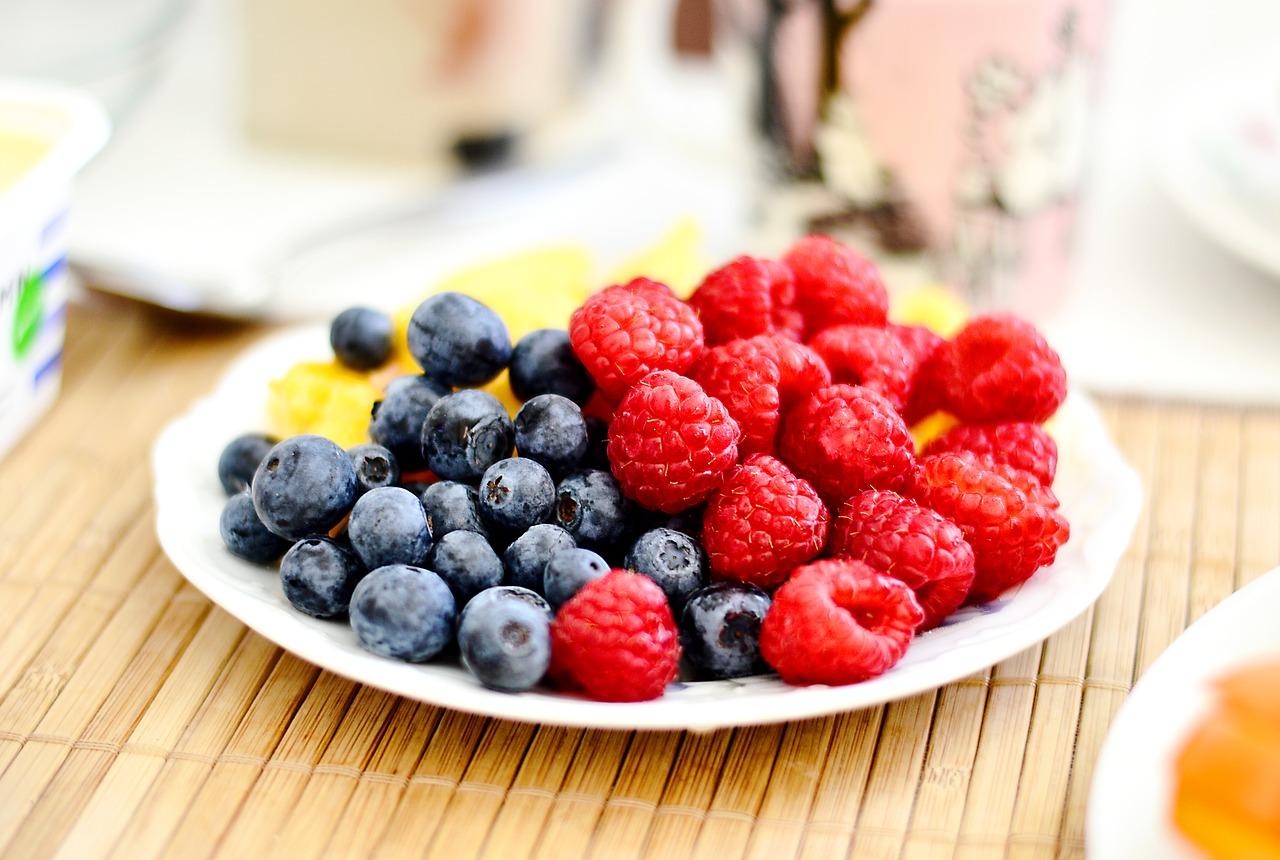
Make breakfast your first fiber deposit — a bowl of oats topped with chia seeds and raspberries can deliver a third of your daily target before 9 a.m.⁹
Add one plant food to every meal — beans on your salad, pear with lunch, broccoli at dinner. Volume beats perfection.
Never have a zero-fiber day — your microbes don't do intermittent feeding. Consistency is what keeps that mucus layer protected.¹
Key takeaway: Your gut microbes eat what you eat — and when fiber's missing, lab research suggests they may turn to your gut lining instead. Feed the colony daily. 🌱
📊 Section 2: The 95% Problem (and Why the Stakes Are High)
If fiber were a pill, it would be the most prescribed medicine on Earth. Here's the receipts:
**Only about 5% of American adults meet daily fiber recommendations.**¹ that's the finding from national survey data analyzed by nutrition researchers, and experts were still repeating it this June.¹ ⁵
The average American adult eats only about 16 grams of fiber a day — roughly half the recommended amount.⁷
The official targets: 25 g daily for women and 38 g for men (adults over 50: 21 g and 30 g).⁹ ¹⁰
Low fiber intake is officially labeled a public health concern in the U.S. Dietary Guidelines.¹¹
And the payoff for closing that gap? Honestly, kind of amazing. A landmark series of meta-analyses in The Lancet, covering decades of research, found that people eating the most fiber had a 15–30% lower risk of dying early, developing heart disease, stroke, type 2 diabetes, or colorectal cancer compared to the lowest fiber eaters. The sweet spot: 25–29 grams a day. Even better — every extra 8 grams of daily fiber was linked to a 5–27% drop in deaths and disease events.⁴ ⁶
Harvard's health experts sum it up simply: fiber-rich diets (think beans, whole grains, oats) may cut heart disease and stroke risk by as much as 30%.⁸ Not bad for the part of the plant your body doesn't even digest.
So yes — "fibermaxxing" the trend has substance behind it.¹² But unlike most viral challenges, this one is boringly, beautifully safe when done right.
🛠️ Try this today:
Learn your number. Track fiber in a free app for one week — most people discover they're at 12–16 g and had no idea.⁷
Do the great grain swap. White bread and white rice lose their fiber-rich bran in refining; 100% whole-wheat bread, oats, barley, and quinoa keep it.⁹
Schedule beans twice a week. Lentils, black beans, chickpeas — the cheapest fiber-per-dollar on the planet.⁹
Upgrade your snacks. A handful of almonds (3.5 g) or a cup of raspberries (8 g!) crushes chips in the fiber Olympics.⁹
Key takeaway: Ninety-five percent of us fall short on fiber, yet high intake is linked to 15–30% lower risk of early death and major disease. It's the highest-ROI habit in nutrition. 📈
🥗 Section 3: The Starter Kit — Your First Week of Fibermaxxing
Alright, coach mode on. 🏃♀️ Here's your cheat sheet of fiber all-stars (numbers straight from Cleveland Clinic's registered dietitians):
Food
Serving
Fiber
Chia seeds
2 tbsp
10 g
Black beans
½ cup
8.5 g
Lentils or split peas
½ cup
8 g
Raspberries
1 cup
8 g
Blackberries
1 cup
7.5 g
Barley (cooked)
1 cup
6 g
Pear (with skin!)
1 medium
5.5 g
Oats (cooked)
1 cup
5.5 g
Apple
1 medium
4.5 g
Avocado
⅓ medium
3.35 g
⁹
A "fibermaxxed" day might look like: overnight oats + chia + raspberries (≈13 g), a lentil soup lunch (≈8 g), an apple-and-almond snack (≈8 g), and dinner with barley and broccoli (≈8.5 g). That's ~37 grams — over the line for almost everyone, no supplements required.
But — and this is important — do NOT go from 12 g to 38 g overnight. Your gut will file a formal complaint (bloating, cramping, the toots). Cleveland Clinic's dietitians recommend the gentle ramp:
Go gradually. Add one high-fiber food every few days over a few weeks, not one grocery haul.⁹
Drink more water. Fiber needs fluid to move smoothly through your system — running dry can back you up, literally.⁹
Stick with it through the bean phase. Fun fact: regular bean eaters adapt — after 3–4 weeks of consistent intake, perceived gas returns to baseline as your microbiome adjusts.⁹
Food first, supplements second. Whole foods come packaged with polyphenols, potassium, and magnesium; a powder comes packaged with, well, powder.⁹
Key takeaway: Build your 25–38 g from real foods, ramp up slowly, hydrate, and give your microbes 3–4 weeks to adjust. Slow and steady literally wins this race. 🐢
🎯 Key Takeaways
95% of adults miss the daily fiber target (25 g for women, 38 g for men) — and the average American gets just ~16 g.¹ ⁵ ⁷ ⁹
New 2026 lab research suggests low fiber may push gut microbes to feed on the gut's protective mucus lining, shifting their chemistry toward harmful byproducts — while fiber and digestion-resistant plant proteins steer them back to friendly ones.¹ (Early-stage: mice and cells, but fascinating!)
High fiber intake is linked to a 15–30% lower risk of early death, heart disease, stroke, type 2 diabetes, and colorectal cancer — with benefits starting at 25–29 g a day and every extra 8 g helping.⁴ ⁶
The cheapest fiber all-stars: chia (10 g/2 tbsp), beans and lentils (~8 g/½ cup), raspberries (8 g/cup), oats, barley, and pears — real food beats supplements.⁹
Ramp up slowly and hydrate — add one high-fiber food every few days, drink more water, and give your gut 3–4 weeks to adapt.⁹
🎧 Key Takeaways — Listen (2 min)
📚 Verified Sources
AbuSalim JE, et al. — PNAS (Proceedings of the National Academy of Sciences), 2026;123(32) — "Digestion-resistant proteins support the healthy metabolite profiles associated with plant-based diets." NIH/NIDDK-funded. https://doi.org/10.1073/pnas.2605226123
AbuSalim JE, et al. — Nature Metabolism, 2026;8(7):1528 — "Host metabolism can produce many indoles and phenols independently of the microbiome." https://doi.org/10.1038/s42255-026-01550-8
Dietary Guidelines / USDA analysis — PMC8621412 — "The Dietary Guidelines for Americans (2020–2025): Pulses, Dietary Fiber, and Chronic Disease Risk—A Call for Clarity and Action." https://pmc.ncbi.nlm.nih.gov/articles/PMC8621412/
Lincoln Land Community College — 2026 Nutrition Trends — "The big term for 2026 is 'fibermaxxing'... many are calling fiber 'the new protein.'" https://www.llcc.edu/news/2026-nutrition-trends
All claims fact-checked against Gold-tier (NIH/PubMed/PNAS/Nature/The Lancet) and Silver-tier (Mayo Clinic/Harvard Health/Cleveland Clinic) authoritative sources. Last verified: September 2, 2026.
Your gut bugs have been quietly hoping you'd read this article. Give them something delicious to eat today — future you (and your microbiome) will thank you. 🌾 💛
 x/health ·


