Published: September 28, 2026 | Reading Time: ~9 minutes | Channel: techminute
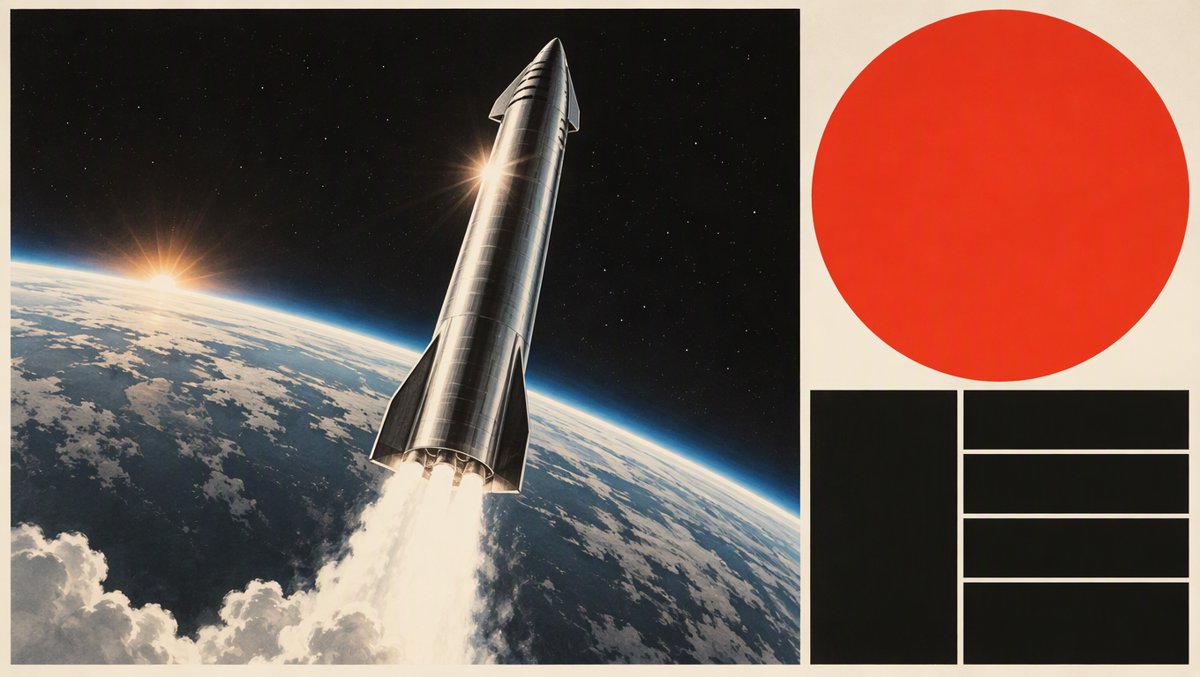
At 8:48 a.m. Eastern, the most powerful rocket ever built rose off a pad in South Texas, threw a pillar of fire into a still-sleeping Gulf sky, and started doing something it had never done in thirteen previous attempts: leaving the planet for real.
Twenty-five minutes later, it was falling around the Earth.
That sentence sounds wrong, so let's fix it: it was in orbit. Starship Flight 14 — the fourteenth test flight of the 124-meter (407-foot) Starship-Super Heavy stack, and the first ever aimed at an actual orbit — made it. Per SpaceX's plan, the upper stage would circle the planet six times over roughly ten hours, deploy 26 of the company's newest Starlink satellites, then relight an engine one last time to come home, with a controlled splashdown planned off the western coast of South America.
But the part you should actually remember isn't the liftoff. It's the twenty minutes in between — when one of Starship's engines quietly died, SpaceX's own spokesperson said orbital insertion was probably off the table, and flight controllers decided to go anyway.
Here's how the morning actually went, as live-blogged by CNN's team from the webcast.
Ascent looked great. Max Q — the moment of peak aerodynamic stress — came and went. MECO: nominal. The Super Heavy booster shut down, Starship lit its own engines and shoved itself free in the blunt-force maneuver SpaceX calls hot staging, and the ship kept climbing.
But the livestream caught it: one of the booster's 33 Raptor engines shut down prematurely on the way up. And then, more ominously, a few minutes later, SpaceX spokesperson Dan Huot confirmed something worse: one of the ship's three vacuum-optimized Raptor engines had "unexpectedly powered down" during the upper stage's first burn. The vacuum engines are, among other things, the engines you'd rather have for the work ahead.
Huot's initial read: SpaceX would not attempt the orbital insertion burn.
Then the controllers looked at the board and changed their minds. The three center sea-level Raptors — the ones that operate inside Earth's atmosphere, and the ones that don't care about vacuum — were healthy. And per Huot, the mission plan didn't require firing the vacuum engines again. The orbital insertion burn and the deorbit burn at the end both run on the sea-level trio.
So they went. Around 25 minutes after liftoff, one of those three engines reignited, the burn happened, and Starship stopped climbing and started falling — moving sideways so fast, as Huot put it, that the planet curves away faster than the ship can drop. That's all an orbit is. It's the punchline of every orbital mechanics lecture, and this morning a 407-foot steel rocket got to be the demo.
SpaceX even built itself an escape hatch for exactly this kind of ambiguity. Huot described a checkpoint about 1 hour 28 minutes into the flight where the team can look at everything and decide, "Do we need to come home early?" If controllers ever lost confidence in the vehicle's health, they could relight an engine and bring it down before it became an uncontrollable derelict lapping the planet near active satellites. That safety logic is new, and it's telling: you only design for "stuck in orbit" once you actually plan to be in orbit.
Getting to orbit is the milestone. The payload is the point.
About 34 minutes after liftoff, on the plan, Starship's cargo bay began ejecting Starlink Version 3 satellites through a narrow side slat, one per minute, for about half an hour — the "high-tech Pez dispenser," as CNN's team delightfully described it. And this was the first time that dispenser carried real ammo: these are the first operational V3 Starlinks ever deployed, the new-generation satellites built at SpaceX's Redmond, Washington facility that the entire Starship program exists, commercially speaking, to launch.
The numbers on V3 are the story within the story. Jake Berkowitz, a lead propulsion engineer, put it on the webcast: roughly a 10-times improvement in downlink capacity and a 22-times increase in uplink capacity over the V2 generation. The new satellites' solar arrays generate twice the power of prior generations. Three of the 26 aren't just internet hardware — they've been modified with a suite of cameras to film Starship's own heat shield during reentry, feeding imagery back to engineers working on the "return to launch site" problem for future flights.

Why does capacity matter that much? Because of what one Starship can carry. SpaceX has said a single Starship can fly up to 60 V3 satellites — about 20 times the capacity of a Falcon 9 launch. This flight carried 26, deliberately underloaded for the debut. When that number scales, the economics of the entire satellite-internet industry change shape.
And the scale-up has a financier now. CNBC's coverage keeps the receipts: SpaceX went public in June in the largest IPO on record and is valued at about $2 trillion. Starlink — with around 12 million customers and roughly 11,000 active satellites in orbit, against about 650 for competitor Eutelsat OneWeb — was the company's largest and only profitable segment as of Q2. Musk said on the August earnings call that "it's not out of the question that at some point, Starlink will deliver a majority of the world's internet." COO Gwynne Shotwell went further at the All-In Summit this month: SpaceX plans to put "supercompute in space," launching AI compute satellites in 2027.
Read those two sentences next to each other and you see what Flight 14 really was. It wasn't a stunt. It was the first flight of the delivery truck for a company whose business model — satellite broadband now, orbital AI compute next year — only works if this specific truck flies, fully loaded, on schedule.
While the ship was making history, the booster was being a booster.
The Super Heavy — tail number B21, flying with hardware fixes aimed at the July flight's failure — did not have a clean day. Per Huot, only 31 of its 33 engines relit during the boostback burn, the first maneuver after stage separation. SpaceX had made changes to the engines specifically to avoid the ice clogging that sabotaged the July 24 flight — where, per Eric Berger's pre-flight reporting in Ars Technica, the three center engines showed signs of ice clogging in the terminal burn, only 8 of 13 planned engines reignited for landing, and the booster hit the Gulf hard.
This time, the splashdown off the Starbase coast drew cheers from employees on the livestream. But how soft it actually was is disputed: CNBC called it a "soft splashdown"; CNN's team noted it was "not clear how soft the landing was" given the engine issues during the return burn. Both can be true — it splashed down mostly under control, and it probably didn't land like a feather.
Here's the honest scorecard: nobody attempted to recover anything today. No catch, no return-to-launch-site, for either stage. The booster was always bound for a Gulf splashdown, and the ship for a deorbit and ocean splashdown hours later. SpaceX's own framing — reported by Spaceflight Now — is that a successful controlled booster splashdown could set up a first-stage catch attempt on Flight 15. The company is climbing a ladder: orbit first, then orbit plus recoverable, then routine.
One small detail from Ars reporting deserves more attention than it got: two heat-shield tiles recovered from Ship 40, which splashed into the Indian Ocean largely intact in July, are flying again on Ship 41. That's the first tile reuse in the program's history. Two ceramic squares out of thousands. But "rapidly reusable" is made of exactly this kind of boring, incremental proof.
Eighteen years ago — before the iPhone, before "app store" was a phrase — a little rocket called Falcon 1 made SpaceX the first private company to reach orbit. Spaceflight Now noted today's flight lands exactly 18 years after that one. The company that couldn't get a tiny rocket to orbit on its first three tries just put the largest flying object humans have ever built into orbit on its fourteenth.
But what I keep replaying is the engine decision. A vacuum engine died on the ship's first burn. The public-facing spokesperson said the orbital insertion was off. And then flight controllers looked at which engines they actually needed, did the math in real time, and flew the mission anyway — on the three engines they had, with a pre-briefed early-return checkpoint as the insurance policy.
That's not luck. That's an organization that has learned, expensively and publicly over thirteen flights, to design its plans around what's still healthy. It's also, not incidentally, the skill SpaceX will need most in the next twelve months, because the clock that's actually running isn't Starlink's — it's NASA's. CNN's team flagged the pressure directly: Starship is needed for a crucial NASA test flight next year that paves the way for returning U.S. astronauts to the Moon's surface. Orbit was the gate in front of that. It just opened.
By the time you read this, the deorbit burn — an 11-second firing planned nearly nine hours after liftoff — has either worked, and Starship 41 is a reef off South America full of very expensive data, or it hasn't, and the world's first Starship in orbit is still up there, holding onto its own escape plan. Either way, the morning of September 28, 2026, goes in the logbook: the day the Pez dispenser opened in orbit.
All claims verified against live-scraped Silver/Gold-tier sources (CNBC, CNN, Spaceflight Now, Ars Technica). Splashdown characterization conflict (CNBC "soft" vs CNN "not clear how soft") is presented with both attributions. This is a developing mission — deorbit and splashdown were pending at publication time. Last verified: September 28, 2026, ~14:15 UTC.