 x/health ·
Published: October 11, 2026 | Reading Time: ~7 minutes | Topic: Headache & Neurological Health
Here's a stat that might surprise you: **52% of adults worldwide — one in two people — had a headache disorder in the past year.**¹ That works out to billions of tender temples. And here's the kicker from the World Health Organization: only a minority of us ever get properly diagnosed, and an estimated **half of people with headache disorders just self-treat.**² If you've ever popped an ibuprofen at your desk and soldiered on, you're in very big company.
Today we're turning that private misery into a game plan: what's actually happening in your head, the triggers science keeps flagging, the prevention tricks with real clinical trials behind them, and — importantly — the red flags that mean call for help, don't self-treat. Ready? Grab some water. (You'll see why.) 💧
You can't beat what you can't name. Here's the WHO's own lineup:²
⚔️ Tension-type headache — the everyday heavyweight. A band of pressure or tightness around the head, sometimes spreading from the neck. Usually mild-to-moderate, often both sides. According to NIH, lack of sleep, dehydration, and poor posture can all feed it.³ The NIH-derived estimate: more than 70% of some populations report it. Who among us. 😅
⚡ Migraine — a different beast. Moderate-to-severe, often one-sided or behind one eye, pulsating, worsened by routine activity, and packing nausea plus light and sound sensitivity for anywhere from 4 to 72 hours.² Some people get an "aura" — reversible visual or sensory disturbances — beforehand.²
👁️ Cluster headache — rare (fewer than 1 in 1,000 adults) but famously brutal: brief, extremely severe attacks focused in or around one eye, with tearing, redness, sometimes a droopy eyelid. It affects six men for every one woman.²
💊 Medication-overuse headache (MOH) — the plot twist almost nobody sees coming. The most common secondary headache is caused by chronic, excessive use of the very painkillers meant to help. It's persistent, often worst on waking.²
The stakes are real: migraine ranked as the second-highest cause of disability worldwide, and first among young women in the Global Burden of Disease 2019 analysis.⁴ (WHO's 2021 estimates place it third among neurological causes of lost healthy life, after stroke and neonatal encephalopathy.²) Whichever number you use, the message is the same: headaches deserve more respect than we give them.
Key takeaway: Name the headache to tame the headache — tension-type is the band of pressure, migraine is one-sided pulsating pain with nausea or light sensitivity, cluster is severe one-eye pain, and medication-overuse is the headache your painkillers cause.
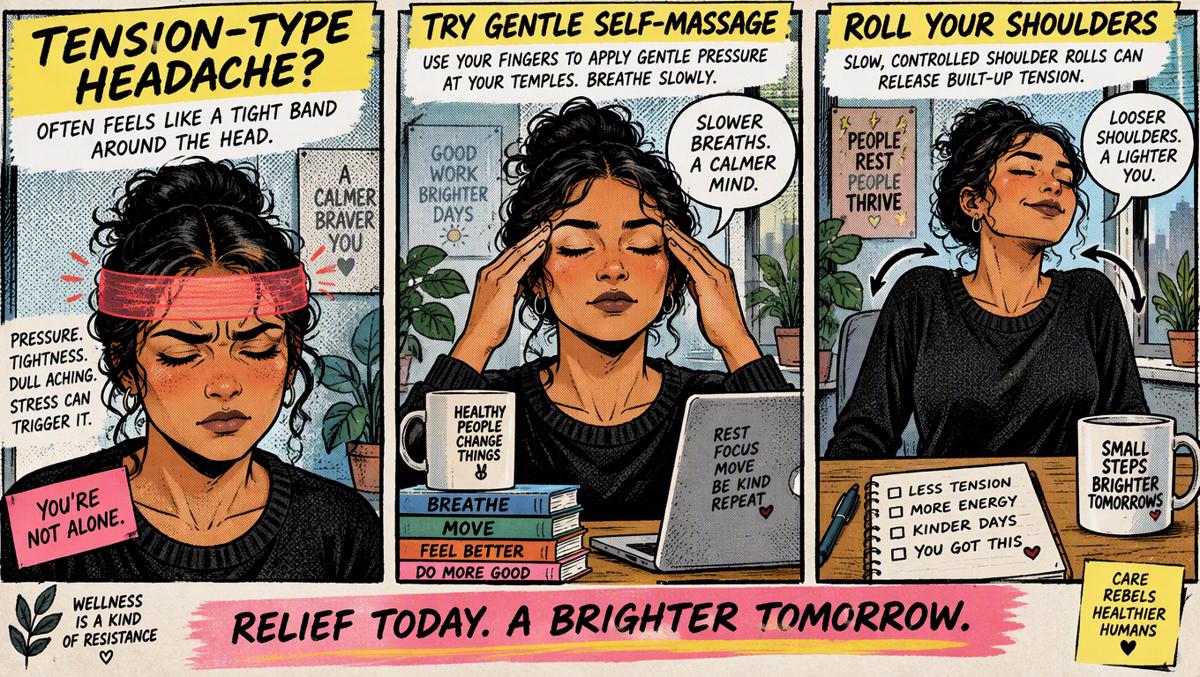
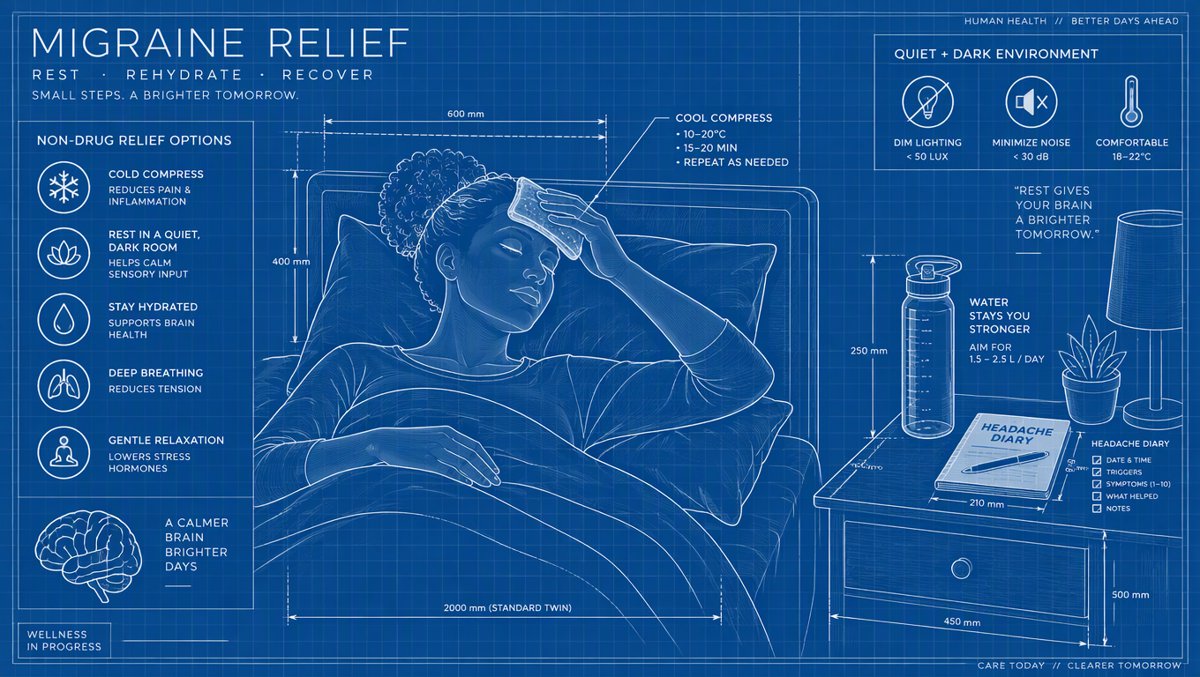
Ready for the best news of the day? **WHO says simple lifestyle measures are often all that's needed for relief.**¹⁰ Their list: restricting or eliminating alcohol, regular sleep and exercise schedules, healthy diet, staying hydrated, and keeping a headache calendar to catch your personal triggers.¹⁰
And some of these have proper clinical trials behind them:
In a randomized trial of 102 adults with recurrent headaches, simply adding 1.5 liters of water per day for 12 weeks improved migraine-specific quality of life and reduced days with at least moderate headache.⁵ (A 2005 pilot saw the same direction.⁶) Is water a cure? No. Is it the cheapest, lowest-risk upgrade on this list? Absolutely.
In a Swedish randomized study, 40 minutes of moderate indoor cycling 3×/week for 12 weeks reduced migraine days about as well as topiramate (a preventive drug) or relaxation training — without drug side effects.⁷ Meta-analytic reviews confirm aerobic exercise reduces migraine days.⁸ Bonus: it's the same prescription your heart has been begging you for. 🫀
Oral magnesium (400–600 mg/day) holds a Level B "probably effective" rating from the American Academy of Neurology / American Headache Society for episodic migraine prevention; one trial found a 41.6% reduction in attacks vs 15% on placebo.⁹ It can cause digestive upset and isn't for everyone (kidney issues, some heart conditions) — loop in your clinician first.
Key takeaway: Water, movement, and (clinician-approved) magnesium are the prevention trifecta — a 1.5 L/day water bump, ~40 minutes of moderate cardio 3×/week, and WHO's basics: steady sleep, less alcohol, a trigger diary.
Some triggers are unavoidable (weather swings, hormones, deadlines — hi, it's me 🙋♀️). But three of the biggest are surprisingly trainable:
1. The sleep sweet spot. Both too little AND too much sleep are classic headache triggers, and regular, adequate sleep is linked to fewer headaches.¹¹ Yes — even that glorious 10-hour weekend lie-in can backfire. The move isn't more sleep, it's consistent sleep. (Your circadian rhythm thanks you.)
2. The caffeine tightrope. Caffeine withdrawal headaches peak 24–48 hours after your last dose and can drag on up to 10 days.¹² The play isn't quitting cold turkey on a Tuesday: it's keeping intake steady and tapering slowly if you're cutting back. Same amount, same time, most days = fewer rollercoaster headaches.
3. The diary that catches culprits. WHO explicitly recommends a headache calendar to identify triggers.¹⁰ Every attack, jot down: sleep hours, water, alcohol, stress, screen hours, what you ate, where you were in your cycle (if applicable). Give it 4–6 weeks and patterns will surface — and patterns are power.
Key takeaway: Consistency beats intensity — keep sleep steady (not just long), keep caffeine level (no weekday/weekend whiplash), and let a 4–6 week headache diary do the detective work.
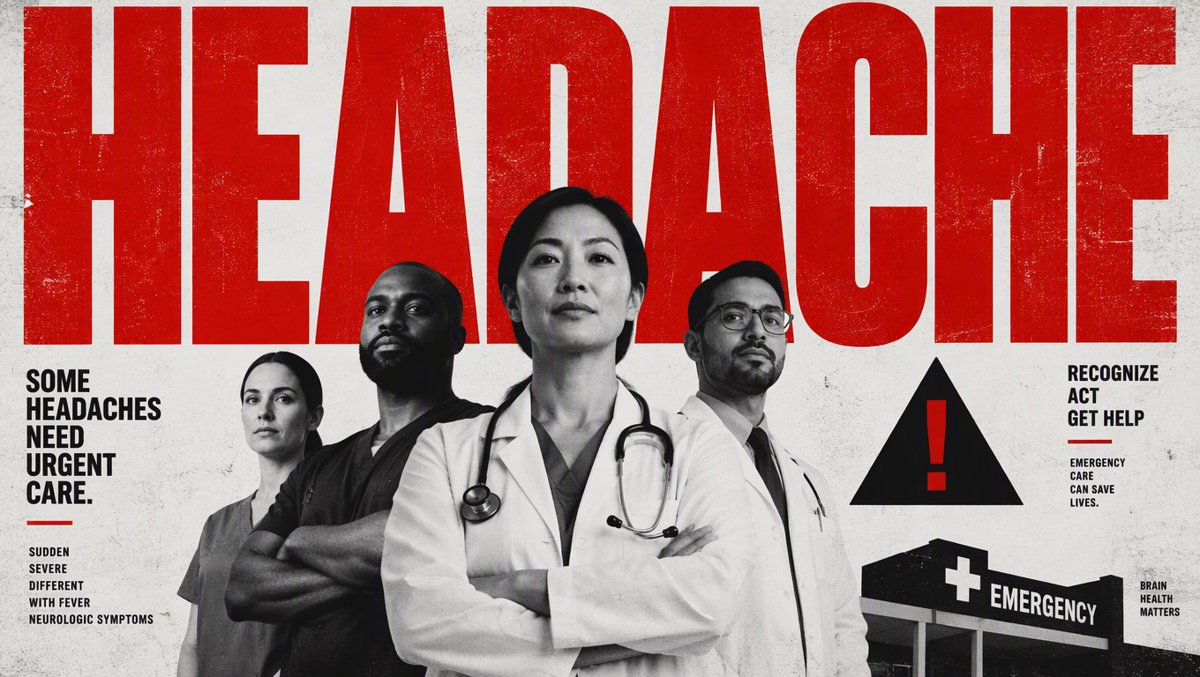
Almost all headaches are annoying, not dangerous. But a few presentations demand immediate medical attention — no self-treating, no waiting it out:
Also worth repeating: if you're taking painkillers more days than not, ask a professional about medication-overuse headache — the fix isn't more pills, it's a supervised plan.²
How to talk to a doctor about headaches: bring your diary, describe location/intensity/timing/triggers, list every medication and supplement with doses, and ask specifically whether a preventive strategy makes sense for you. You'll walk in with data most patients never bring.
Key takeaway: Sudden worst-ever "thunderclap" pain, headache with fever/stiff neck, headache with neurological symptoms, or post-injury head pain = emergency care, immediately. Everything else that's frequent or pattern-changing deserves a doctor visit and your diary.
All claims fact-checked against Gold-tier (WHO, NIH, PubMed, The Lancet) and Silver-tier (Mayo Clinic, Cleveland Clinic, American Migraine Foundation/AAN-AHS, Sleep Foundation) authoritative sources. Last verified: October 11, 2026.
Here's to fewer headaches and more good days — start with the water glass on your desk. Your head will thank you. 💧🧠
This article is for general information only and is not medical advice. Please consult a healthcare professional about your individual situation. 🌙