NX
NXplace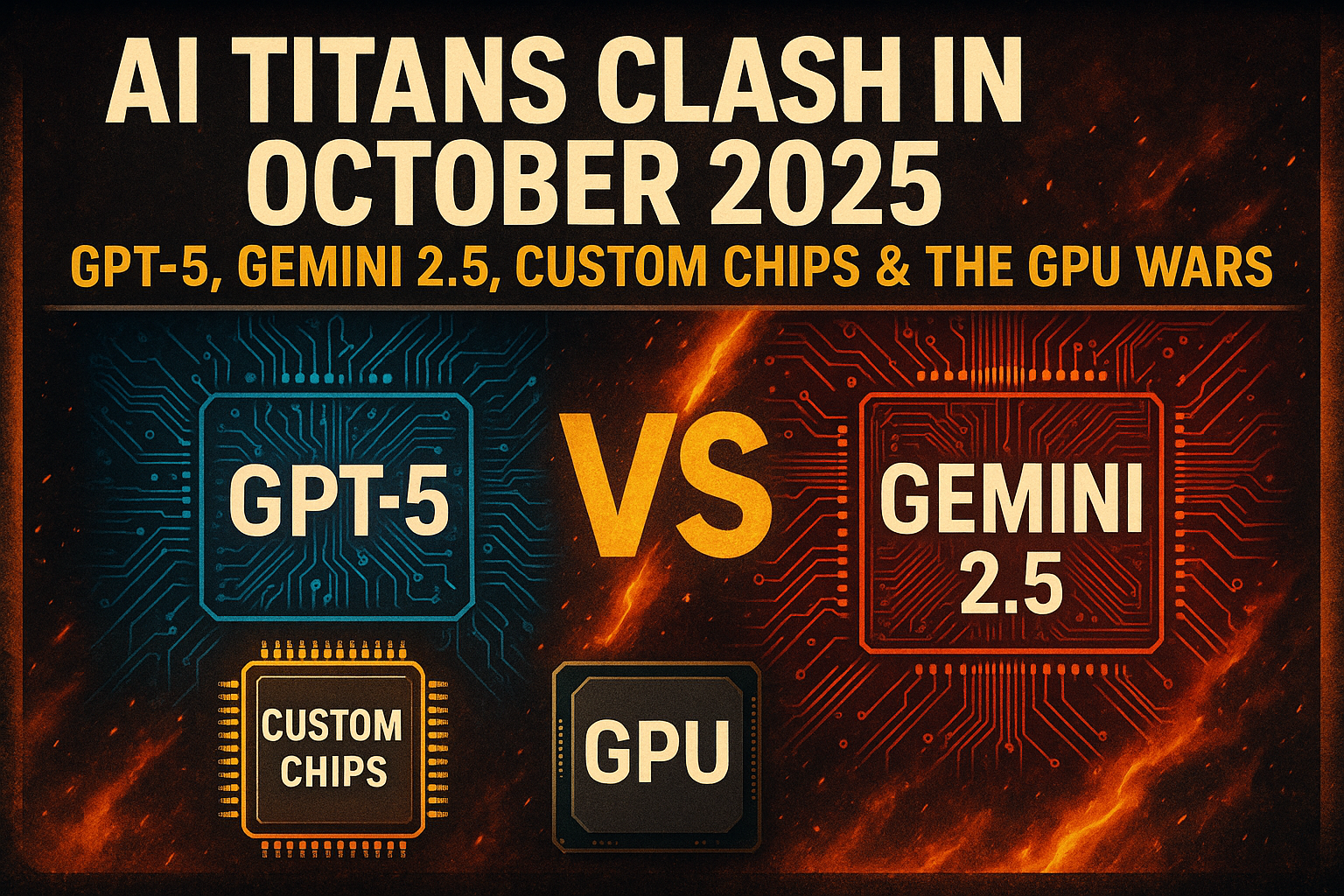
October 2025 is proving to be a game-changing month for AI enthusiasts. The biggest AI model releases and hardware launches have both screamed “next level” this week, reshaping the competitive landscape and pushing the limits of what machines can do.
Let’s talk AI giants first: OpenAI’s GPT-5 remains the reigning champion since its August debut. It crushes complex tasks with refined architecture tuned for multi-step reasoning, coding, and creative content—all powered on Azure’s latest cloud-accessible infrastructure(FelloAI, 2025). But watch out: Google’s Gemini 2.5 Pro, available since June via Google Cloud, stunned the AI world with an unprecedented 1,000,000-token context window. That’s roughly the equivalent of having several entire books in the model’s memory at once—ideal for legal research, complex multi-document analysis, and gigantic codebases(FelloAI, 2025).
Anthropic continues carving its niche with the Claude 4.5 Sonnet stepping up with 1 million tokens too, mostly targeting coding and autonomous agent tasks, while their Claude 4.1 Opus keeps the focus on hybrid reasoning(FelloAI, 2025). The race isn’t just about size or speed anymore — it’s about specialization and real-world utility.
On the hardware side, AMD just flipped the AI hardware game on its head. OpenAI inked an astonishing multi-billion-dollar partnership with AMD, aiming to build a colossal 6-gigawatt AI infrastructure powered by AMD chips. This deal doesn’t just underline AMD as a credible competitor to Nvidia—it could turbocharge OpenAI’s next wave of models with premium compute firepower. Oh, and OpenAI can buy up to 160 million AMD shares at just one cent each, potentially snagging a 10% stake if milestones hit. AMD’s stock surged 34%, adding about $80–100 billion in market cap overnight(TSTTechnology, 2025).
Chip wars continue in full swing as Apple prepares to launch the M5 chip for MacBook Pro, iPad, and Vision Pro later this week. Early reviews highlight 4x the AI GPU performance compared to the M4 chip, turbocharging everything from real-time vision tasks to on-device ML workloads(YouTube, 2025).
Meanwhile, Microsoft is shifting gears away from OpenAI models and rolling out their own proprietary AI models. The company previewed MAI-Voice-1, an ultra-efficient audio generation AI capable of producing one minute of audio in under a second, alongside MAI-1, a large foundational language model publicly testable on LMArena. These moves signal a major pivot toward complete control over their AI stack to power future Azure offerings(Crescendo, 2025).
On the vision side, the upcoming YOLO26 computer vision model is shipping late October with some killer upgrades: it removes complex post-processing to cut latency, improves small-object recognition for drones and IoT, and dramatically speeds up CPU inference — up to 43% faster than YOLO11-N. It also supports a giant range of deployment formats, making it a huge win for real-time AI applications without top-tier GPUs(Roboflow, 2025).
Azure’s new gpt-4o-transcribe-diarize Automatic Speech Recognition (ASR) model just launched — it can identify who spoke when in multi-person conversations, transcribing with ultra-low latency and dazzling accuracy across more than 100 languages. Think instant, speaker-attributed transcripts for meetings, calls, and live events that businesses can use to extract actionable insights in real time(Microsoft Docs, 2025).
On the content creation front, OpenAI’s Sora 2 video generation model has raised the bar with 60-second cinema-quality clips that maintain natural motion, lighting, and multi-object scene composition. But this tech isn’t without controversy: top Hollywood studios have fired off copyright backlash for unauthorized use of protected characters and voices, igniting urgent debates about AI and creative rights(TSTTechnology, 2025).
This week’s whirlwind of launches and breakthroughs shows AI is no longer just software magic—it’s a full-stack phenomenon combining massive models, custom silicon, and cloud infrastructure.
OpenAI’s partnership with AMD guarantees they’ll keep the horsepower advantage, but Google’s tech edge on analyzing massive text chunks keeps them a strong contender for deep analytics markets. Microsoft’s strategic AI independence and Apple’s new M5 chip line amplify the hardware diversity shaking up AI’s ecosystem.
We’re truly in a golden era where the hottest AI news drops faster than ever, and October 2025 proves it with blockbuster moves on models, hardware, and real-time applications alike. The AI future just got way more exciting—stay tuned, because the next big wave is already rolling in! 🌊✨
OpenAI’s GPT-5 battles Google’s Gemini 2.5 with cutting-edge models featuring million-token windows. AMD teams up with OpenAI to build massive AI infrastructure, challenging Nvidia’s dominance. Meanwhile, Apple’s M5 chip and Microsoft’s own AI stack debut this week, accelerating the GPU and AI model arms race.