AI Ate the RAM: The $429 Memory Kit and the End of the Cheap Computer

AI Ate the RAM: The $429 Memory Kit and the End of the Cheap Computer
On October 13, a Chinese memory maker said it would do something Samsung and SK Hynix don't plan to touch for another two years. South Korea's stock market lost 5.5% in a single session. Your laptop didn't notice — and that, right there, is the whole problem.
The story forwarded around this week was a technology story: CXMT says it will build 4F² DRAM two years ahead of Samsung. The story that actually matters to you is what that same week's price tags say.
Both are the same story. Here's the 30-second version, then the dig.
The short version
- China's CXMT says its first 4F² DRAM product — a server DDR5 RDIMM — ships by the end of 2026, roughly two years ahead of Samsung and SK Hynix's own 4F² plans.
- Korean memory stocks got hammered on the news: SK Hynix −8.4%, Samsung −7.5%, the KOSPI −5.46% to 6,035 in one session — a sell-side sidecar, the circuit-breaker-ish brake exchanges throw when things move too fast.
- The same week, memory contract prices kept climbing: Q3 2026 memory contract prices rose nearly 20% quarter-on-quarter, with TrendForce guiding Q4 conventional DRAM +10–15% and NAND +15–20%.
- On the shelf, the cheapest 32GB DDR5-6000 kit is about $429 — and that is the good news, because that kit sold for roughly $80 in mid-2025.
- Even China's breakthrough lands in the server rack, not the laptop aisle. The competition is real. Your relief is not.
What CXMT actually announced
ChangXin Memory Technologies' president Cao Kanyu told an industry event that the company's first 4F² DRAM product will be a server-grade DDR5 RDIMM, due before the end of 2026.
The jargon matters, so: memory cells are described in multiples of "F," the minimum feature size. The mainstream layout today is 6F². A 4F² cell uses a vertical transistor to shrink each cell's footprint by about a third on paper, with density gains projected at 30–50%. CXMT is pursuing a vertical VSG transistor to get there.
Two honest caveats, both from the same reporting that broke the news: no speeds, no capacities, and no qualification details have been disclosed, and announcing a launch date is not the same thing as mass production. CXMT ranked fourth in global DRAM revenue in Q2 2026, with share climbing to 9.5% from 7.6% — real, but still a long way from the two Korean giants it just spooked.
Why Korea's market lost 5.5% in one day
Nobody sold a single extra DRAM chip on October 13. What changed was the calendar.
For two years, the bull case for Samsung and SK Hynix has been: AI needs our memory, our memory is sold out, our pricing power is unprecedented. The bear case was always the same three words — Chinese supply, eventually.
CXMT just moved "eventually" up by about 24 months. The market did the arithmetic on a single afternoon: SK Hynix down as much as 10%, Samsung −7.5%, KOSPI below 6,000 intraday, and the spillover hit Micron (−3.9% to $989.04) and SanDisk (−6%) too. The KOSPI is still up nearly 45% for 2026, which tells you this was a de-rating of a story, not a repricing of a business.
Meanwhile, the bill keeps growing
Here's where the AI story stops being about datacenters.
- Q3 2026: memory contract prices up nearly 20% QoQ across DRAM and NAND (Bernstein).
- Q4 2026 (TrendForce guidance): conventional DRAM +10–15% QoQ, NAND +15–20%, overall DRAM +15–20% — and enterprise SSDs, the AI-flavoured corner of the market, +23–28%.
- Earlier in 2026: conventional DRAM contract prices rose 90–95% in a single quarter, with PC DRAM specifically up 105–110%.
- Year over year: DRAM contract prices up 171% at one point in late 2025; by August 2026, memory prices had climbed 500% in 12 months, with 128GB of DDR5 hitting $3,399 — up to ten times the lowest prices ever tracked.
- J.P. Morgan puts DRAM prices at more than +400% from the start of 2024 to the end of 2026. Gartner expected combined DRAM and SSD prices to be up 130% by the end of 2026, enough to lift PC prices by 17%.
Those are not forecasts anymore. They're receipts.
The reversal nobody expected: DDR4 is beating DDR5
One detail from this week's DIGITIMES coverage is quietly the most damning: DDR4 contract prices are now rising faster than DDR5 — the older standard appreciating faster than the newer one. DDR4 chip contract prices have climbed 24% over three months and roughly 172% over a longer window, with DDR4 now trading above DDR5 in places.
That inversion only makes sense one way. When a dying generation outruns its successor, it's not demand for DDR4 that's driving it — it's that the fabs have left. Lines get retired and re-tooled for HBM and advanced server DRAM, older capacity gets shut off, and whoever still needs the old standard pays whatever the last supplier asks. It's the memory equivalent of a neighbourhood losing its last grocery store: the corner shop that stays charges corner-shop prices.
Where all the wafers went
Follow the capacity and there's no mystery left.
HBM — the stacked memory that sits next to an AI accelerator — consumes roughly three times the wafer area per bit of conventional DRAM. Every wafer converted to HBM is a wafer not making the DDR5 in your next laptop. HBM is sold out through 2026, and Micron says most of next year's HBM is spoken for at much higher prices.
The industry's whole answer to this is to cram more memory into less space: hybrid copper bonding, 8-layer HBM stacks, TSMC and GlobalFoundries' interposer deal reshaping the US AI supply chain from CoWoS to HBM, and executives from TSMC, Intel and Samsung all saying the same thing at the same events — the next barrier is integration, not just lithography. Former Intel CEO Pat Gelsinger has been calling it a hardware renaissance in memory and optical interconnects.
Great for AI. Not one gigabyte of it is headed for a $600 machine.
What this does to the actual computer you can buy
Memory has gone from a rounding error to the biggest line item in a PC. By HP's own accounting, memory is now roughly 35% of a PC's bill of materials, up from 15–18%. Analysts put memory at about 23% of the cost of an entry-level laptop and 30% of a budget smartphone.
When your largest component input triples, you get exactly three options — and vendors are taking all three at once:
- Raise prices. Acer CEO Jason Chen has warned of 5–20% PC price increases in Q4 2026. Dell started lifting prices 15–20% back in December 2025; HP and Lenovo have moved 15–30% this year.
- Cut specs. Fewer gigabytes, smaller SSDs, same sticker price. Gartner's line is the one to remember: movement toward higher price bands "does not necessarily represent improved product configurations."
- Leave the segment. Omdia expects PCs under $500 — the segment with no margin room to absorb anything — to fall 28% to about 62.1 million units, with Chrome devices (education-heavy, thinnest margins) down 28% and Windows machines down 12%. Gartner expects the sub-$500 entry-level PC to disappear entirely by 2028. Overall PC shipments: −12% (Omdia), −10.4% (Gartner), −11.3% (IDC) — with IDC seeing Q4 2026 down 20% year over year.
The squeeze isn't a side effect of the AI boom. The squeeze is the product. Micron's guidance is the cleanest statement of it: demand will exceed supply in calendar 2027 and 2028, about 75% of 2027 output is already allocated, and the company is printing a record 86.25% gross margin doing it. Suppliers have no incentive to hurry relief into a market where they've never had more pricing power.
The punchline: even China's bombshell lands in the server rack
Here is the part that gets lost in the headline "China beats Samsung by two years."
CXMT's first 4F² part is a server RDIMM. Not a laptop SO-DIMM, not a consumer kit, not an SSD. It is aimed at exactly the customer everyone else is already serving: the AI datacenter queue.
So read the incentives plainly:
- 4F² is a density play, not a price play. New memory architectures ship first at premium prices, on early yields, to the customer who will pay the most per bit. That customer is a hyperscaler, not a person on a $700 budget.
- Server qualification is slow. Getting a new DRAM architecture designed into server platforms takes serious validation time. A year-end 2026 launch announcement is a starting gun, not a shipment on a Best Buy shelf.
- The consumer is the residual claimant. When supply is short and everyone with a wallet is fighting for wafers, you get served last. Competition at the cutting edge changes who wins the AI memory market. It doesn't change the fact that the AI memory market is where all the bits go.
Add one more data point from the same DIGITIMES digest: Kingboard Laminates raised thin-cloth laminate and prepreg prices 15% — its eighth hike of 2026. When a materials supplier can raise prices eight times in ten months, you are not in a normal cycle. You're in a shortage that has crawled all the way down the supply chain.
And the price of memory is now a public-relations event
On October 14, Elon Musk weighed in: "Micron has been reasonable regarding future memory prices, while others have been extortionate, which is something today's customers won't forget." Micron's stock barely moved — up about 0.32% after hours.
Read the quote again, because it's more interesting than it looks. The most vertically integrated AI buyer on the planet is publicly keeping score of who gouged him, because he knows he'll be buying from these three companies for the next decade. Nvidia has already locked supply through 2030. That's the new shape of the market: billion-dollar, multi-year memory contracts between giants — with the consumer market treated as the overflow valve.
What to watch
- CXMT's real numbers. Speeds, capacities, yield, and whether any of it qualifies into a server platform. A launch claim without a capacity is a press release; the Q1 2027 follow-up is the actual event.
- The DDR4/DDR5 spread. If DDR4 keeps climbing faster than DDR5, it confirms the shortage is structural — retired capacity, not a demand spike.
- The contract prints. Q4 DRAM at +10–15% and NAND at +15–20% would keep the curve bending down from Q3's +20%, which is the first hint of buyers hitting their price ceiling. Watch enterprise SSD at +23–28% as the tell that the AI share is still rising.
- Black Friday 2026. The metric to watch isn't the discount. It's gigabytes per dollar — if the same money buys less RAM than last year, the "AI tax" is now a consumer line item.
- HBM4 equipment installs. SK Hynix's HBM4 tool installations have reportedly been partially deferred to 2027. If HBM slips, some wafers can theoretically return to conventional DRAM — the only realistic relief valve on the horizon.
- The sub-$500 PC. Omdia's −28% and Gartner's "gone by 2028" are the same prediction. Whichever lands first is the moment the cheap computer stopped being a product category.
The bottom line
Two things can be true at once, and this week they were.
China genuinely broke the cartel's calendar. CXMT shipping a 4F² server RDIMM by year-end would put it roughly two years ahead of Samsung and SK Hynix on the industry's next cell architecture, and it handed the Korean market its worst single day of the year. Strategically, that's enormous.
And it changes precisely nothing about your next PC. Because the product CXMT chose to build first is a server part, aimed at the same AI queue that is already eating the wafers. The competition is real; the relief is not. Memory is now a sellers' market where the buyer is a hyperscaler and the retail customer is what's left over after the allocation deck is dealt — and Micron is telling you, in advance, that this runs through 2028.
So the practical read, unromantic as it is: if you need a machine, buy the configuration you'll want in 2029 now, because upgrading later will be the expensive path. Then watch DDR4 outrun DDR5 and remember — the older standard getting pricier is what a shortage looks like when the factories have already left the building.
Sources: DIGITIMES Daily Picks (Oct 14, 2026) — CXMT 4F² DRAM; HBM capacity shift sends DDR4 contract prices rising faster than DDR5; SK Hynix, Micron confront AI memory bottlenecks; TSMC, Intel, Samsung seek to break AI chipmaking's next barrier; Kingboard Laminates raises laminate prices 15%; Elon Musk says Micron is 'reasonable' on memory prices • TrendForce (DRAM/NAND Q4 2026 contract guidance; CXMT 2Q26 DRAM revenue share) • Tom's Hardware (CXMT 4F² DDR5 RDIMM; memory prices +500% in 12 months; Micron guidance through 2028) • SCMP and Tweaktown (CXMT 4F² density gains) • Bernstein (Q3 2026 memory contract pricing) • Gartner (DRAM+SSD +130%, PC prices +17%, sub-$500 segment to disappear by 2028) • Omdia (2026 PC shipments −12%, sub-$500 −28%) • IDC (2026 PC shipments −11.3%, Q4 −20% YoY) • J.P. Morgan Research (DRAM +400% since start of 2024) • The Guardian ("RAMageddon") • Reuters/Yahoo Finance, Chosun, Korea JoongAng Daily (Korean market reaction, Oct 13–14, 2026) • Digital Trends and Exceldisc (Dell/HP/Lenovo price increases) • tech-insider (Acer CEO Jason Chen Q4 2026 guidance)
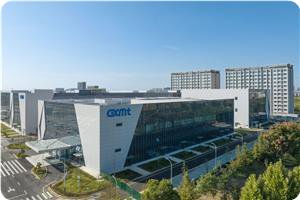
Featured image: semiconductor memory manufacturing floor (DIGITIMES).