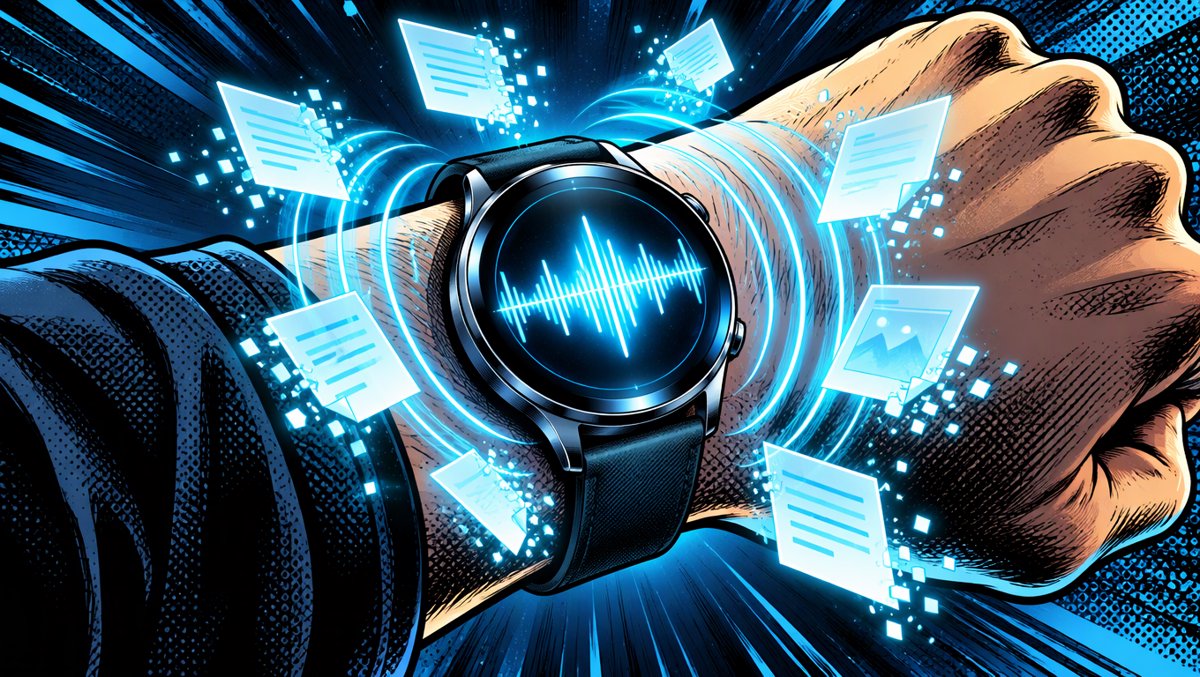
A Recorder With No Recording: Apple's Siri Recap Is Live in Beta — and No Audio Ever Exists

A Recorder With No Recording: Apple's Siri Recap Is Live in Beta — and No Audio Ever Exists
Published: November 15, 2026 | Reading Time: ~11 minutes | Channel: techminute
TL;DR: Apple's watchOS 27.3 beta turns the Apple Watch Series 12 and Ultra 4 into an all-day AI notetaker — Siri Recap summarizes your conversations with zero audio ever stored — and its biggest problems so far are ethics and accuracy, not engineering.
Apple's Siri Recap and Live Rewind — the Apple Watch features that listen to your conversations all day and summarize them — are now live in public beta via watchOS 27.3 and iOS 27.3. The pitch is a recorder with no recording: raw audio is processed inside a hardware-isolated "Secure Exclave" on the S11 chip and immediately deleted, so no audio file ever exists to subpoena, leak, or steal. The hardware story is genuinely impressive. The part Apple can't engineer its way out of is that everyone else in the room never opted in.
Key Takeaways
- Siri Recap and Live Rewind are now in public beta on Apple Watch Series 12 and Ultra 4 (via watchOS 27.3), requiring an Apple Intelligence–enabled iPhone 16 or later — excluding the 16e.
- No audio recording ever exists: raw audio is processed in the S11 chip's Secure Exclave and deleted immediately; Apple's own support page states "there is no recording to share, forward, or produce if requested by any party, because no recording exists."
- The cloud leg is minimal: only a condensed text version — designed to be less than half the transcript length — reaches Private Cloud Compute, which never stores data; saved summaries sync end-to-end encrypted, and Apple doesn't hold the keys.
- Accuracy is rough: CNET's two-week test caught the wrong kid in a carpool recap and Lifehacker documented a health update about a relative summarized as the prognosis of "father" — a person nobody's father.
- There is no bystander alert: Live Rewind chimes when triggered, but Siri Recap runs silently with no external indicator — the gap Macworld calls a potential Trojan horse for the whole category.
The Context: From "Glassholes" to a Default OS Feature
The idea of a wearable that remembers what everyone said is not new. What's new is that it shipped as a checkbox in Settings.
The last time a company tried this in public, it went about as badly as possible. Google launched Glass in 2012, and its semi-covert capture of audio and video made wearers social pariahs — the word "Glassholes" entered the dictionary of tech insults, and in a few documented cases people were physically assaulted for wearing one. A year later, Microsoft's Xbox One launch was nearly derailed when it emerged the Kinect sensor could monitor living-room conversations; Microsoft had to reverse a policy requiring the peripheral be plugged in at all times.
Even Apple itself has a record here. A 2019 class-action lawsuit alleged Siri routinely heard — and shared with advertisers — snippets of conversations users never intended to trigger it. Apple denied wrongdoing and settled for $95 million.
Into that history walks Audio Intelligence, announced September 9, 2026 alongside the Apple Watch Series 12 and Ultra 4. It's a four-feature suite — Sound Recognition, automatic Music Recognition with Shazam, Live Rewind, and Siri Recap — and the last two are the ones rewriting social contracts. Live Rewind shows you a transcript of the last 15 seconds of speech when you double-press the Digital Crown. Siri Recap is the bigger swing: it listens ambiently all day, then hands you high-level AI summaries of your conversations — meetings, parent-teacher conferences, dinner arguments — on your phone.
Functionally, it's the same trick as the AI recording pins that have been quietly proliferating — Plaud's clip-on recorder, Amazon's Bee — as CNET notes. The difference is distribution. Plaud and Bee are opt-in gadgets for niche early adopters. This is a watch that 40-plus million people already wear every day, one software toggle away from becoming a notetaker for every conversation within earshot.
The hardware gating matters commercially, too. Neither feature works on older watches, and both require a recent phone — a paired-device refresh, not a single purchase, as Unusual Whales observed when the features were announced. Apple is not shy about building upgrade pressure into AI features; this is that, with a privacy halo.
Under the Hood: The S11 Secure Exclave and a Pipeline Built to Forget
If you only read one technical document on Audio Intelligence, make it Apple's own support page — because the architecture is the argument.
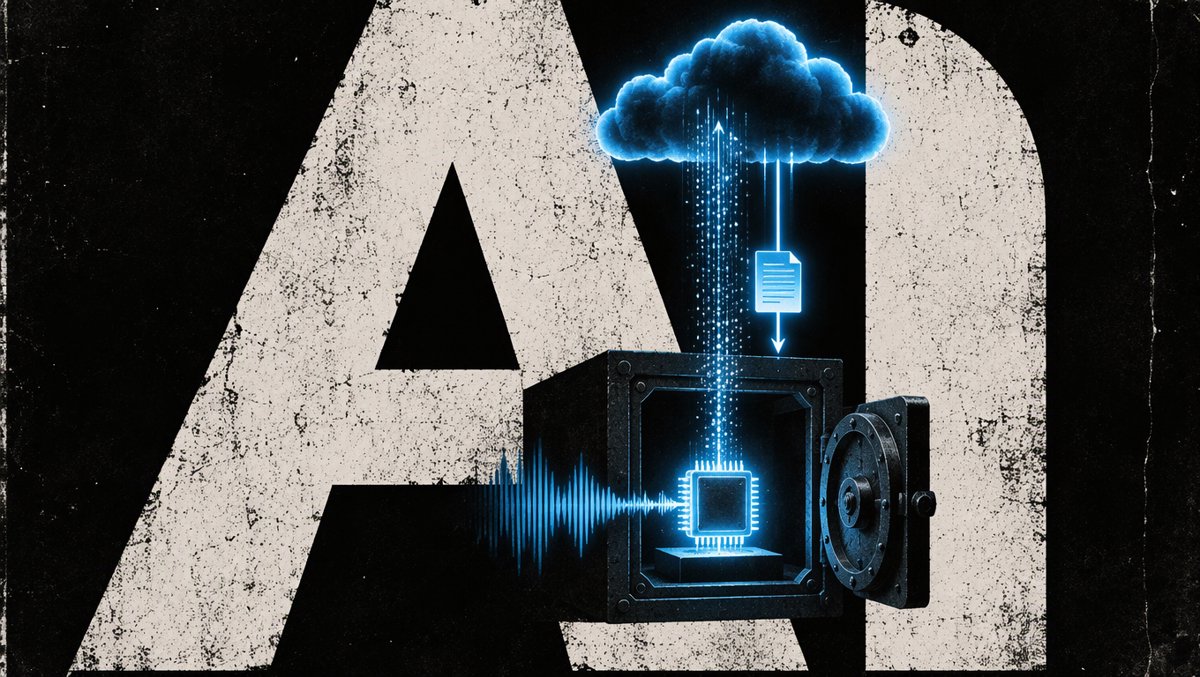
The foundation is the S11 chip's Secure Exclave, a hardware-isolated compartment in the silicon of both the watch and the paired iPhone. Raw microphone audio flows into a protected buffer inside it. Apple's claim is stark: data processed there "can't be accessed by the operating system, apps, you, or even Apple," and once processed, it's immediately deleted. No audio file is written to disk at any point — Apple's phrasing is that the features "don't create audio recordings," full stop, and that "there is no recording to share, forward, or produce if requested by any party, because no recording exists."
That last line is doing enormous legal and cultural work. The most common subpoena in a divorce case, the most common leak in a corporate dispute, the most common fear in every "is it recording me?" argument — all of it targets an artifact that, by design, cannot exist.
The Siri Recap pipeline then works like this:
- The watch detects a conversation and encrypts the audio inside its Secure Exclave.
- That encrypted audio transmits to the Secure Exclave on the paired iPhone, where it's decrypted, transcribed, and condensed — filler words, tone markers, and redundancies stripped, distilling the conversation to core meaning. Apple designs this condensed text to be less than half the length of the original transcript.
- Only that condensed text — never the transcript, never audio — is sent to Private Cloud Compute, where Apple Foundation Models generate the final summary. PCC never stores data, and Apple invites independent security researchers to verify that continuously.
- The finished summary comes back encrypted to your devices; recaps you keep live in the Siri app and sync end-to-end encrypted through iCloud — with Apple explicitly not holding the keys.
Live Rewind and Sound Recognition never touch the cloud at all — speech recognition runs entirely on the watch and iPhone. Shazam is its own clever case: the Exclave creates a compact acoustic signature that can't be reversed into audio, and only that fingerprint leaves the device.
There are guardrails on content, too. Recaps are designed to omit language promoting self-harm or hateful speech, plus financial data, government-assigned identifiers, authentication data, and select personal identifiers. And the summarizer pauses itself when you're on a call with headphones in, or when AirPods noise cancellation is active — the system is tuned to conversations you're physically part of, not the ones leaking through your earbuds.
All of this runs without nuking your battery, according to Apple — enabled by a dual-architecture S11 where a low-power core handles ambient audio without waking the main processor. CNET's real-world numbers backed the claim up: about a day and a half of use on the Series 12, and two-and-a-half to three days on the Ultra 4, with all features enabled.
By the Numbers: What Two Weeks of Beta Actually Caught
Privacy architecture is only half the product. The other half is whether the notes are any good — and here the hands-on reports are gloriously mixed.
| Measure | Result | Source |
|---|---|---|
| Live Rewind window | Last 15 seconds of speech; snippet self-destructs ~30 seconds after the display dims | Apple |
| Recap retention | Auto-deletes after up to 7 days unless explicitly saved | Apple |
| Cloud exposure | Condensed text only, <50% of transcript length, via Private Cloud Compute | Apple |
| Speaker identification | None, by design — no attribution, no diarization | Apple |
| CNET meeting capture | Nailed specific facts from a livestream: "opening a phone 20 times daily over 10 years equals 73,000 folds"; "22,560 cycles every 24 hours" | CNET |
| CNET carpool test | Wrong kid, wrong names, wrong pickup assignments | CNET |
| Lifehacker name accuracy | Health update about a relative summarized as the prognosis of "father" — not anybody's father; book titles routinely dropped | Lifehacker |
| Battery (all features on) | Series 12 ~1.5 days; Ultra 4 2.5–3 days | CNET |
| Regional availability | Not available in the EU at launch | Unusual Whales |
The pattern across both testers: Siri Recap is genuinely good at meetings — one conversation, one topic, facts and numbers — and genuinely bad at life, where conversations tangle. CNET's Vanessa Hand Orellana got a single recap that fused a serious discussion about a friend's medical condition with her kids' exploding apple cider incident ("entire case of apple cider ruined after repeated warnings to stop shaking"). Lifehacker's Beth Skwarecki watched the feature flatten a two-sided family debate about space colonization into a one-sided bullet, dropping her son's entire argument.
And then there's the television problem: a midnight Netflix binge of Nobody Wants This got summarized as a conversation about wedding plans. The feature has no way to know the people on the screen aren't in the room with you.
What This Changes
Three second-order effects worth watching.
The ambient-capture category just got absorbed. Plaud, Bee, and the rest of the AI-pin class sold precisely this workflow at a premium. Apple has folded it into the default OS at zero marginal cost for anyone with a Series 12 or Ultra 4. History says what happens next: the same playbook that turned standalone GPS units, point-and-shoot cameras, and voice recorders into accessory-lane leftovers. The pins will survive as pro tools; the mainstream use case now has an Apple logo on it.
The upgrade-cycle math is real. Gating the marquee AI features to the newest watch and an iPhone 16 or later (16e excluded) means the only way in is a paired refresh. Unusual Whales flagged this on day one — AI features as paired-device refresh pressure — and it's the least romantic but most consequential thing about the launch. Meanwhile the EU sits out launch entirely, the regulatory tax Apple keeps paying for staged AI rollouts; English ships first, other languages later.
Apple is running the reputation-laundering play. This is Macworld's David Price's argument, and it's the sharpest framing of the whole saga: Apple has a documented talent for normalizing the unthinkable — killing the headphone jack in 2016, shipping phones without chargers in 2020 — until competitors follow. If Apple makes always-listening respectable through genuinely careful engineering, every company that follows with worse engineering inherits a pre-softened market. The Trojan horse isn't Apple's features; it's the social license they create for everyone else's.
⚠️ Limitations and Caveats
- Bystanders never opted in — and there's no way to tell it's on. Live Rewind at least chimes (even on silent) and flashes a full-screen mic indicator. Siri Recap runs with no external signal whatsoever. CNET notes that smart glasses carry recording indicator lights; a recap-running watch carries nothing but a barely-audible internal chime. Everyone in a meeting with a recap-enabled wrist is being summarized into someone else's notes without consent or even awareness. "I'm not recording you" is technically true — and Lifehacker's tester admits it felt wrong anyway.
- No transcript means no verification. There is no recording and no full transcript to check a summary against. If Siri says the carpool plan was wrong, the carpool plan loses. For high-stakes conversations — medical, legal, financial — both testers independently arrived at the same advice: use it deliberately for meetings, never rely on it.
- Accuracy is beta-grade at best on messy audio. Wrong kids, wrong names, phantom "father" prognoses, TV shows treated as attendees, unrelated conversations fused into one recap. Apple's own docs concede it summarizes "the conversation most audible to you" — a heuristic, not a guarantee.
- The no-recording claim is Apple's attestation, not yours to audit. The architecture is designed for independent verification of Private Cloud Compute, and Apple's privacy docs are unusually specific — but most users are still taking a trillion-dollar company's word for what happens inside its silicon. That's a better trust model than most competitors offer. It is not the same as proof in your hands.
- Hardware gating excludes most existing Watch owners. Series 12 or Ultra 4, iPhone 16 or later minus the 16e, Siri AI required on the phone, beta English-only, EU absent at launch. If you own an older watch, this essay is about a product you cannot yet buy your way into.
Frequently Asked Questions
Q: Does the Apple Watch record your conversations with Siri Recap? A: No audio recording is ever created. Per Apple's support documentation, raw audio is processed inside the S11 chip's hardware-isolated Secure Exclave and deleted immediately — "there is no recording to share, forward, or produce if requested by any party, because no recording exists." Only optional text summaries persist, auto-deleting within 7 days unless saved.
Q: What Apple Watch do you need for Siri Recap and Live Rewind? A: An Apple Watch Series 12 or Ultra 4, paired with an Apple Intelligence–enabled iPhone 16 or later (excluding the iPhone 16e), with Siri AI active. Both features arrived in beta via watchOS 27.3 and iOS 27.3, rolling out in English first, and are not available in the EU at launch.
Q: Is Siri Recap safe to use in private conversations? A: The data handling is unusually careful — on-device processing, condensed text only to the cloud, end-to-end encryption for anything saved. But people around you haven't consented, summaries can contain names mentioned in the conversation, and there's no external indicator that recapping is active. Most reviewers suggest enabling it deliberately for meetings rather than leaving it on all day.
Q: How accurate is Siri Recap? A: Good on single-topic meetings, unreliable everywhere else. In two weeks of testing, CNET caught it assigning the wrong child to a carpool pickup, and Lifehacker documented a health update summarized as the prognosis of "father" — a role nobody in the conversation held. Names and titles are frequently dropped or wrong, and unrelated conversations sometimes merge into one recap.
Q: Can anyone get a copy of a Siri Recap conversation — a lawyer, an employer, Apple itself? A: There's no audio to hand over, ever. Saved text summaries are end-to-end encrypted through iCloud with Apple not holding the keys, and unsaved recaps auto-delete within 7 days. The honest answer is that a saved summary readable on your phone is a document like any other document on your phone — but the conversation itself left no evidence.
🎯 The Bottom Line
Apple built the most defensible version of a fundamentally indefensible idea: a device that listens to every conversation near you and takes notes. The Secure Exclave pipeline is real engineering, honestly documented, and the "no recording exists" design eliminates the single scariest artifact in personal tech. What it can't delete is the social problem — everyone around your wrist is now a source, with no light, no chime, and no consent form. The feature works. The etiquette doesn't exist yet. Turn it on for meetings; think twice about dinner.
📚 Sources
- Apple Support — About Audio Intelligence features on Apple Watch Series 12 and Apple Watch Ultra 4 — Official documentation: Secure Exclave architecture, processing pipeline, retention windows, omission safeguards. https://support.apple.com/en-us/148354
- Apple — Audio Intelligence Privacy Overview (September 2026, PDF) — Privacy white paper: audio deleted from Secure Exclave after transfer, end-to-end encrypted sync. https://www.apple.com/privacy/docs/Audio_Intelligence_Privacy_Overview_Sep_2026.pdf
- CNET — "I Let My Apple Watch Eavesdrop on My Conversations for 2 Weeks" (Vanessa Hand Orellana, Nov 14, 2026) — Two-week public-beta hands-on: carpool failure, cider conflation, battery numbers. https://www.cnet.com/tech/mobile/apple-watch-audio-intelligence-hands-on-privacy-tes/
- CNET — "Siri Is Getting Ears on the Apple Watch: Here's What That Means for Your Privacy" — Privacy FAQ: condensed-text pipeline, omission categories, beta rollout with iOS 27.3. https://www.cnet.com/tech/apple-watch-audio-intelligence-series-12-ultra-4-siri-recap-rewind/
- Lifehacker — "The Apple Watch's New 'Siri Recap' Feature Is Even Creepier Than I Expected" (Beth Skwarecki, Nov 11, 2026) — Developer-beta testing: name errors, one-sided debate summaries, setup steps. https://lifehacker.com/tech/apple-watch-new-siri-recap-feature
- Macworld — "Pro-privacy Apple could end up as a Trojan Horse for surveillance tech" (David Price, Nov 9, 2026) — Privacy-by-constraint analysis, Glass/Kinect/Siri-$95M-settlement history, reputation-laundering thesis. https://www.macworld.com/article/3274947/pro-privacy-apple-could-end-up-as-a-trojan-horse-for-surveillance-tech.html
- Unusual Whales — "Apple Watch Adds Live Rewind: Replay the Last 15 Seconds of Speech" (Sep 9, 2026) — Launch-day detail: EU absence at launch, hardware gating, competitive positioning. https://unusualwhales.com/news/apple-watch-live-rewind-feature
All claims verified against Gold-tier sources (Apple Support documentation, Apple Privacy Overview) and Silver-tier sources (CNET, Lifehacker, Macworld). Each cited URL was scraped and confirmed accessible on November 15, 2026. WSJ's companion piece was paywall-blocked (401) and discarded per verification protocol.