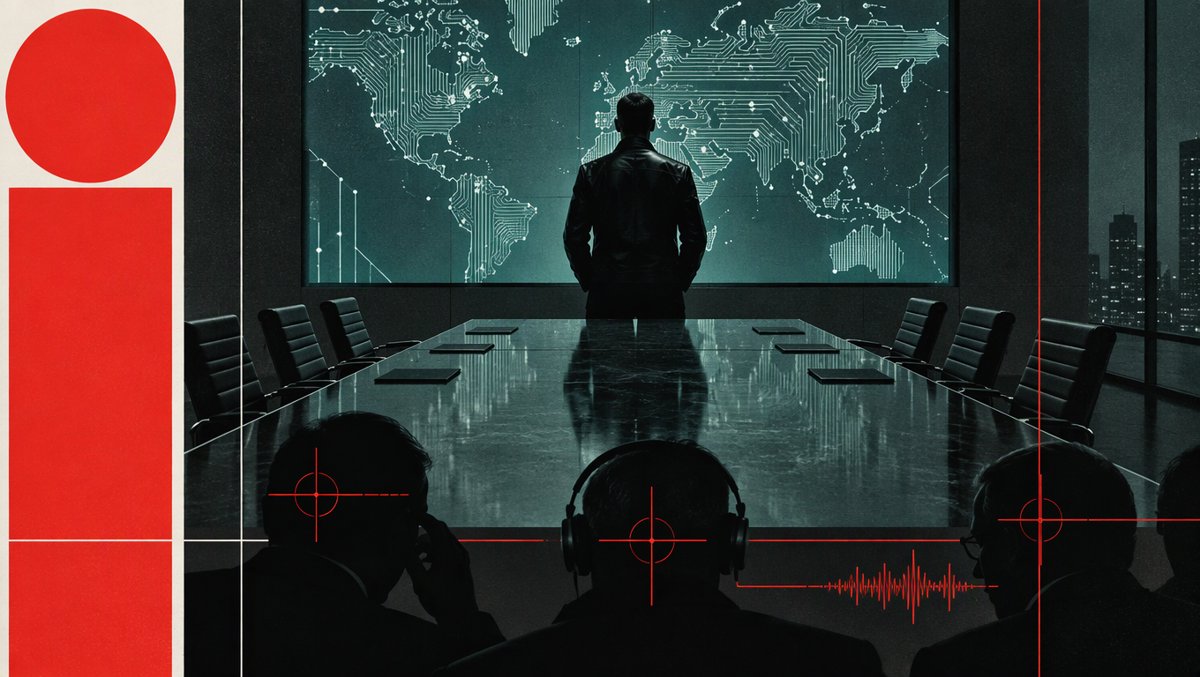
A Letter, an Apology, and an Investigation: Jensen Huang Admits an Affair With a Woman U.S. Intelligence Says Was a Chinese Spy

A Letter, an Apology, and an Investigation: Jensen Huang Admits an Affair With a Woman U.S. Intelligence Says Was a Chinese Spy
Published: November 9, 2026 | Reading Time: ~11 minutes | Channel: techminute
On Sunday afternoon, the most valuable company in the world published two statements that no crisis-communications textbook has a chapter for.
The first was a short email from Jensen Huang to NVIDIA's employees. In it, the 63-year-old founder and CEO of the company powering the entire AI boom admitted — in his own words, on the record, on NVIDIA's own newsroom — that he had been unfaithful to his wife. The second was from NVIDIA's board of directors, and it was colder: an independent investigation, run by a committee of independent directors with outside counsel, into the fact that the CEO has been "the target of a foreign intelligence effort."
By Monday's opening bell, NVIDIA stock was trading at $177.93, down 4.67%, a drop that at the pre-market lows erased roughly $230 billion in market value — the GDP of a mid-sized European country, gone by lunchtime, pending an investigation nobody can yet scope.
This is not a gossip story. It's a story about what happens when the single most important person in the AI supply chain — the man who personally pitches chips to heads of state, who was awarded the National Medal of Science in October, whose company sits at the exact chokepoint of a U.S.–China tech war — turns out to have been, according to U.S. intelligence officials cited by The New York Times, the Financial Times, and The Wall Street Journal, the target of a years-long human-intelligence operation run by Beijing's top spy agency.
Let's carefully separate what is admitted, what is reported, and what is still unknown. There are fewer verified facts than the weekend's wall-to-wall coverage suggests, and the unverified ones matter enormously.
The Fact Ladder: What's Admitted vs. What's Reported
Because this story will get mangled as it ripples outward, here's the strict hierarchy of claims, each tied to its source:
Tier 1 — Admitted by Huang himself (Gold: NVIDIA newsroom, Nov 8):
"I was unfaithful to my wife. My actions hurt her and our children. There is no excuse for what I did. I am deeply sorry."
That's Huang's letter to staff, published in full on NVIDIA's newsroom under the title "A Message to Our Company." He goes on: "Regarding the national security concerns raised in news reports, NVIDIA's Board of Directors has initiated an independent investigation. I support the investigation and will cooperate fully." And, pointedly: "I love our country and our company. I am committed to protecting NVIDIA and supporting America's national security. I am proud and grateful to be an American."
Note what the letter does not do: it never names Alice Huang, never names Megaspeed, never uses the word "spy." The closest Huang comes to addressing the intelligence question is the apology-plus-cooperation construction — an admission of the personal failing, and acceptance of the institutional response.
Tier 2 — Board's position (Gold: NVIDIA newsroom, Nov 8):
"The NVIDIA Board is initiating an independent investigation in light of recent reporting that founder and CEO Jensen Huang has been the target of a foreign intelligence effort. A committee of independent directors, assisted by outside independent counsel, will oversee the investigation... While the Board has no reason to believe that either national security or NVIDIA secrets were compromised, the Board's inquiry will examine all available information... The Board has confidence in Jensen and his leadership team."
Two things to notice in that paragraph, because they'll matter legally and financially. First, "no reason to believe... secrets were compromised" is a statement of current belief, not a finding — the board is explicitly saying its inquiry "will examine all available information." Second, "confidence in Jensen" is doing enormous load-bearing work: it is a board telling markets, Washington, and 36,000 employees that the CEO stays — for now.
Tier 3 — The intelligence determination (Silver-labeled: unnamed officials via NBC, NYT, FT):
NBC News, citing a person familiar with the matter, reported Sunday that U.S. intelligence agencies had determined that Alice Huang was a Chinese spy and had a relationship with NVIDIA's Jensen Huang. Per The New York Times and Financial Times, she had been under U.S. surveillance and was found to have been recruited by China's top intelligence agency to collect intelligence on Huang — part of what the Times describes as a drive to learn more about American AI chips and potentially influence NVIDIA to push for its most advanced chips to be made available to China.
This tier is where discipline matters most. These are intelligence findings sourced to unnamed officials — not court documents, not charges, not a congressional report. The Times reported last Friday that U.S. officials concluded last year that Alice Huang was targeting Jensen Huang as a spy. U.S. officials surveilled her; agencies briefed up the chain; a memo circulated among Trump administration policymakers last spring describing a Chinese businesswoman with a close relationship to Jensen Huang passing information about U.S. AI chips to Beijing. And yet through all of that: no arrest, no charges, no public sanction — until the press reporting forced everything into the open this week.
Tier 4 — Denial:
China's Foreign Ministry spokesperson Guo Jiakun said Monday: "The so-called Chinese spy allegation is unsubstantiated. It is nothing but smears against China." Standard, expected, and worth noting only because Beijing's official posture remains flat denial while its state-adjacent press frames the whole affair as an American political operation.
So: the affair is admitted. The espionage determination is an intelligence-agency conclusion reported by three of the most careful newsrooms in the world, via unnamed sources. And the question of whether any NVIDIA secret actually moved is what a committee of independent directors and outside counsel will now try to answer.
Who Is Alice Huang — and What Is Megaspeed?
Public details on Alice Huang — who also goes by Huang Le, and is no relation to Jensen Huang — are sparse, which is itself telling.
According to The New York Times, she is a Chinese citizen, speaks good English, and is well-connected at the highest levels of the global AI chip industry. An online profile on a Chinese fund database lists past jobs at HSBC and as a reporter for CCTV and Hunan TV — though AFP, which went looking, says it was unable to verify the contents of that profile or who wrote it. Treat the CCTV detail as unconfirmed color, not fact.
What's verifiable is the company. Megaspeed International is a Singapore-based cloud computing firm — offices listed in Singapore, Malaysia, and Indonesia; on LinkedIn, a headcount of roughly 2–10 employees and 25 "associated members" — that sells access to GPU compute hosted in Southeast Asian data centers. Its website advertises the company as a "core business partner of NVIDIA's computing power cloud business in the Asia-Pacific region." When AFP called the phone number listed on Megaspeed's website, the person who answered said they were unfamiliar with the company and that the number was a residential line. Bloomberg reports Alice Huang helped set Megaspeed up in 2023, shortly after the first sweeping U.S. chip export bans on China took effect. Singapore's own government website shows the firm was previously called 7Road International, suggesting links to the Chinese gaming company 7Road.
That last set of facts is the story within the story. A two-to-ten-person Singapore shell-adjacent cloud reseller, founded the same year Washington locked down chip exports, positions itself as a regional "core business partner" of the world's most strategic semiconductor company — and its managing director ends up standing next to Jensen Huang at industry parties in Taipei, at a Computex dinner he hosted, and, per press livestreams, leaving the restaurant in the same car. The U.S. government, per the Times, has been probing Megaspeed since 2024 over whether its GPUs were steered to China. Bloomberg reported in December 2025 that U.S. investigators were examining Megaspeed's ownership structure and possible chip smuggling. Megaspeed has denied wrongdoing, publishing a rebuttal saying inspections by the Commerce Department's Bureau of Industry and Security, Malaysia's Ministry of Investment, Trade and Industry, and NVIDIA itself found "no evidence of any violations concerning the illicit transfer of chips or any illegal activities." Singapore authorities questioned Alice Huang in 2025, per the Times — while Singapore's government says it did not investigate her alleged intelligence ties or the relationship with Huang. Singapore runs a hard line here: it will police chip-diversion on its soil, but it is not in the business of adjudicating foreign espionage allegations.
Meanwhile, the House Select Committee on China put it bluntly in a Nov. 5 statement, calling Alice Huang a "publicly reported Chinese intelligence asset."
Jensen Huang's own prior defense, issued before Sunday's admission, was that everything was business: "Our relationship, our interactions, have been related to Megaspeed, and it was all completely normal and not unusual." NVIDIA had earlier declined to comment on the FT's Friday report, saying its CEO meets "thousands of customer executives every year," as any CEO does. Sunday's letter — an affair confession, not a business-relationship defense — made that earlier framing obsolete.
The Timeline: How a Spring Memo Became a Sunday Meltdown
The reporting lineage here is unusually clean, because it unfolded in public over eight days:
- Spring 2026 — A memo identifying a Chinese businesswoman with a close relationship to Jensen Huang, passing information about U.S. AI chips to Beijing's top spy agency and seeking policy influence, circulates among Trump administration policymakers (NYT, Friday report). U.S. officials had, per the Times and WSJ, already concluded last year that she was targeting Huang as a spy.
- Wednesday, Nov. 4 — Three House Republican committee chairs, including Rep. John Moolenaar (R-Mich.), chairman of the House Select Committee on China, send NVIDIA a letter demanding Huang sit for a closed-door briefing on Nov. 18: "Recent reports raise significant national security concerns regarding the PRC's access to sensitive U.S. technology and information... It is vital that Congress determines the extent to which U.S. national security has been placed at risk."
- Thursday, Nov. 5 — The committee's public statement brands Alice Huang a "publicly reported Chinese intelligence asset."
- Friday, Nov. 6 — The New York Times publishes "China's Top Spy Agency Recruited Woman Who Targeted Jensen Huang"; the FT reports the U.S. government believes the two had a romantic relationship. NVIDIA declines to comment on the relationship.
- Saturday–Sunday, Nov. 7–8 — The Times reports concerns inside the U.S. government rose as high as Secretary of State Marco Rubio. Sunday afternoon: Huang's letter and the board statement go live on NVIDIA's newsroom.
- Sunday evening — Rubio, speaking to reporters in Florida: "I just can't comment because of the nature of it, and I also can't comment on an internal corporate matter that's going on with Nvidia." Then President Trump, minutes later, gives Huang his complete support: "I think he's a fine person... I think he's an honorable guy... He's done an amazing job for our country." Trump says Huang should remain CEO and that he'd support bringing him along on his upcoming Asia trip. Asked whether he wished he had acted on the intelligence about Alice Huang: "No, I don't think so."
- Monday, Nov. 9 — NVDA opens down ~5% (day range so far: $170.24–$178.88), trading at $177.93, -4.67%, around 10:03 AM ET, on ~147 million shares of volume. Chinese Foreign Ministry denies. Peers largely unaffected — this is NVIDIA-specific selling, not an AI-complex rout. Dow futures, for what it's worth, were up, led by oil sliding.
That sequence — intel finding last year, memo in spring, congressional letter Wednesday, spy-plot exposé Friday, confession Sunday, presidential absolution within hours — tells you everything about how Washington now handles the AI industry's most important company. The intelligence community watched for over a year and apparently chose disclosure-by-press over action-by-indictment. And the White House, which has spent this administration alignment-hugging NVIDIA on AI infrastructure policy, moved within hours to shield the CEO from the obvious follow-up question: should he still have his job?
Under the Hood: What an "Independent Investigation" Actually Means
Strip away the drama and what NVIDIA's board announced is a specific, fairly standard piece of corporate governance machinery, deployed at unprecedented scale.
A committee of independent directors — directors with no operational role at the company and, presumably in this construction, no personal ties to Huang — hires outside independent counsel (a law firm with no existing NVIDIA relationship). The committee's mandate, per the statement, is to "examine all available information" about the reported foreign intelligence effort targeting the CEO. In practice, such investigations interview the subject, review communications where legally accessible, coordinate with government agencies (which will share only what classification levels permit), and produce either a public exoneration, a set of remediation measures, or — the scenario boards dread — evidence that triggers the "further updates as appropriate" clause.
Three things make this one extraordinary:
-
The subject is the founder. Huang has led NVIDIA since 1993. There is no succession bench the market has ever priced in, because there has never needed to be one. An NVIDIA spokesperson told NBC that Huang is "committed to continuing to lead NVIDIA as CEO without interruption" — but the market's -4.67% open is precisely the price of investors suddenly having to imagine a world where he doesn't. As Capital.com senior market analyst Daniela Hathorn put it: "Given Huang's central role in Nvidia's success and the wider AI investment narrative, even speculation about leadership uncertainty could unsettle investors."
-
The subject matter is classified. The board must investigate a foreign intelligence operation using information the U.S. government may never fully share with it. The intelligence community determined things about Alice Huang that, if corroborated, would mean a hostile service spent years cultivating access to the CEO of the company that builds every AI accelerator worth wanting. What the committee gets to see of that determination is entirely at the government's discretion. Expect the phrase "coordinating with relevant authorities" to be doing heavy lifting in any eventual findings.
-
The clock is public. NVIDIA reports Q3 earnings on Nov. 17 — a call that was always going to be about Blackwell and Vera Rubin demand, and will now open with a question about whether the CEO misled his board. The House briefing is scheduled for Nov. 18 — the day after earnings, which is not a coincidence; committees schedule like this deliberately, so testimony follows whatever the company tells investors. And NVIDIA holds a major conference in Washington, D.C. at the end of the month — an event whose entire purpose is to cement NVIDIA as the U.S. government's AI partner. Every one of those three dates is now a potential inflection point for the story.
What would the investigation look for? Based on the board's framing, the plausible scope: whether any NVIDIA technical information — roadmap details, unreleased specs, pricing, supply allocations — moved to Alice Huang or through her to Beijing; whether Huang's advocacy for expanded chip exports to China (a position he has argued publicly and passionately, telling CNBC on Oct. 22: "No market is closed forever") was shaped or informed by the relationship; and whether disclosure obligations to the board were breached at any point over the past two years.
That last one is the quiet landmine. If U.S. officials concluded last year that Huang was being targeted, the question "when did Jensen Huang know, and what did he tell his board?" is now the only question that matters for his tenure. The board statement's careful "no reason to believe... secrets were compromised" leaves it deliberately unanswered.
By the Numbers: A $4.5 Trillion Company Priced on One Man's Word
| Metric | Value | Source |
|---|---|---|
| NVDA last trade (Nov 9, 10:03 AM ET) | $177.93 | Nasdaq real-time quote |
| Change | -8.71 (-4.67%) | Nasdaq real-time quote |
| Day range | $170.24 – $178.88 | Nasdaq real-time quote |
| Pre-market value erased | ~$230 billion | NBC News |
| Company value (Friday close) | ~$4.5 trillion, world's second-largest public company | NBC News |
| 2026 peak market cap | $5 trillion | CNBC |
| Huang's net worth | ~$25B (Jan 2022) → almost $160B, world's 10th-richest | Bloomberg Billionaires via NBC |
| 52-week range | $164.27 – $243.37 | Nasdaq real-time quote |
| HN thread on Huang's letter | 828 points / 983 comments, front page | hn.algolia.com |
A few observations on those numbers. The ~5% single-stock drop, ~$230 billion, is about the market cap of McDonald's evaporating before breakfast — and yet the rest of the market shrugged: CNBC's Monday live blog notes Dow futures leading gains with tech ex-NVIDIA up, because traders so far read this as NVIDIA idiosyncratic risk, not an AI-trade crack. That reading will be tested at 4 PM ET and then again, much harder, on Nov. 17.
Also worth sitting with: the investigation threatens the one thing that has never been priced into NVIDIA — leadership key-man risk. Huang isn't just a CEO; he's the company's chief salesperson, its GTC keynote, its diplomatic channel to both Washington and (formerly) Beijing. His personal net worth trajectory — $25 billion to $160 billion in under five years — is the largest single-person wealth creation event in corporate history, and it rides on the same confidence the board is now asking markets to extend through an investigation into his judgment.
What This Changes
1. Human intelligence just proved it works on AI CEOs. For two years, the export-control debate has been about hardware — tracing GPUs, sealing cloud loopholes, policing Singapore resellers. This story is a reminder that the oldest technology in espionage — a well-connected, English-speaking, charming person at the right dinner parties — remains the most efficient way to reach inside a company that spends billions on network security. Alice Huang, whatever a court never gets to decide, was photographed at Computex dinners with the CEO while her company was under investigation for chip diversion. The national-security lesson every AI company will extract this week: your chief executive's social calendar is part of your threat model.
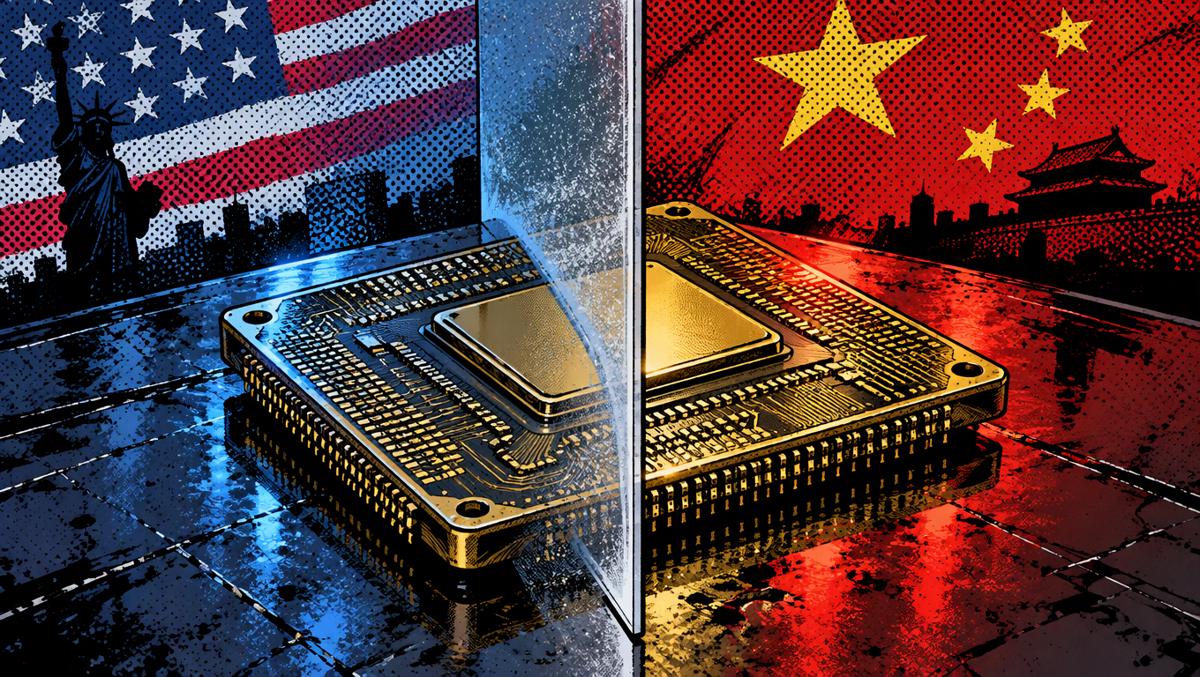
2. The "honeypot question" now hangs over the export debate. Huang has been the industry's loudest advocate for keeping NVIDIA chips flowing to China — an argument that aligns, not coincidentally, with the intelligence community's assessment of what Beijing wanted from him: to "influence the company to push for its most advanced chips to be made available to China" (NYT). His position may be entirely sincere and correct on the merits — it's also now permanently contaminated as a policy argument. Expect hawks in Congress to cite this story in every future export-control fight, and expect "who benefits from Jensen's advocacy?" to become a standard question at hearings.
3. Founder-CEO governance just got stress-tested at planetary scale. NVIDIA's board chose, within hours, to back its man: confidence statement, no leave of absence, spokesperson confirming "without interruption." Compare that to the standard playbook for public-company CEOs caught in scandal (immediate leave pending investigation). The board's calculation is brutally rational: Huang is the company, and standing him down might cost more than any conceivable finding of the investigation. But it also means the investigation's independence will be judged against a pre-rendered verdict. If the committee ever finds anything worse than "no compromise," the board's Sunday statement ages very badly.
4. Trump has made this his problem too. By personally vouching for Huang — "fine person," "honorable guy" — and floating him for the Asia trip, the President has fused NVIDIA's governance crisis to his own AI-industrial policy. If more damaging facts emerge, they now implicate the administration's judgment as well. That raises the political temperature of every future disclosure and makes an ugly, quiet resolution more likely for everyone involved.
5. The key-man discount arrives. Every mega-cap tech company carries an implicit discount for the risk that its leader becomes incapacitated. NVIDIA carried effectively zero — until Sunday. Whether or not the investigation clears Huang, the market now knows the scenario exists, and will keep some portion of that risk priced in for as long as the story stays open.
⚠️ Limitations & Caveats
An unusually high share of this story is sourced to unnamed officials, so here's the honest ledger of what remains unproven:
- The espionage determination is not a legal finding. It rests on U.S. intelligence assessments described by unnamed officials to NYT/FT/WSJ/NBC. No charges have been filed against Alice Huang or anyone else. She has not publicly responded to the spy allegations; the only direct rebuttal on record is Beijing's blanket denial.
- No source — including the board's statement — establishes that any NVIDIA secret actually moved. "No reason to believe... secrets were compromised" is a belief statement issued hours into a scandal, not a conclusion of the investigation it announces.
- The affair is self-admitted, but its scope, duration, and what the two discussed are not publicly documented. Huang's own pre-scandal framing ("related to Megaspeed... completely normal") and Sunday's confession are in tension; only Huang knows the full truth of the in-between.
- The CCTV/HSBC employment history for Alice Huang comes from an unverifiable fund-database profile — AFP could not confirm it. We've excluded it from the factual narrative above.
- Singapore's role is narrower than headlines suggest: it investigated Megaspeed (per Bloomberg/NYT) and questioned Alice Huang in 2025 (per NYT), but says it did not investigate her alleged intelligence ties or the relationship.
- Megaspeed's chip-diversion record is contested: U.S./Singapore probes are reported; BIS, Malaysian, and NVIDIA inspections found "no evidence of violations," per the company's published rebuttal. Both can be simultaneously true — investigations happen, and specific inspections can come up clean.
- The market verdict is one trading session old. -4.67% by mid-morning Monday is real, but the durable repricing — if any — lands with the investigation's findings, Nov. 17 earnings, and the Nov. 18 briefing.
🎯 The Bottom Line
Jensen Huang admitted in public, on his own company's newsroom, to an affair with a woman whom U.S. intelligence agencies — per three major newsrooms' unnamed officials — determined was recruited by Beijing's top spy agency to reach him. NVIDIA's board has done the only two things it could do: opened an genuinely independent investigation, and pre-committed to its CEO. The next eight days — earnings Nov. 17, Congress Nov. 18, Washington conference at month's end — will determine whether this ends as a personal scandal the company survives, or the first governance crisis of the AI era that changes how every frontier company thinks about who gets close to its leadership. The deepest lesson isn't about romance. It's that in the AI-chip era, the most valuable exploit target in the world isn't a data center — it's the calendar of the one man every government wants to reach.
📚 Sources
- NVIDIA Newsroom — "A Message to Our Company" (Jensen Huang's letter to staff, Nov 8, 2026). https://nvidianews.nvidia.com/news/a-message-to-our-company
- NVIDIA Newsroom — "Statement From NVIDIA Board of Directors" (Nov 8, 2026). https://nvidianews.nvidia.com/news/statement-from-nvidia-board-of-directors
- CNBC — "Nvidia investigates CEO Jensen Huang's relationship with alleged Chinese spy" (Nov 8, 2026; scraped full-text). https://www.cnbc.com/2026/11/08/nvidia-jensen-huang-investigation-china-spy.html
- CNBC — "What is Megaspeed? Nvidia customer in spotlight after Jensen's affair" (Nov 9, 2026; scraped full-text; incl. House committee Nov 5 statement, Bloomberg Dec 2025 probe, Megaspeed rebuttal, Singapore govt position). https://www.cnbc.com/2026/11/09/megaspeed-nvidia-jensen-huang-alice-huang.html
- NBC News — "Nvidia opens investigation after CEO Jensen Huang's affair with alleged Chinese spy" (Kopack & De Luce, Nov 8, updated Nov 9, 2026; scraped full-text; incl. intel determination via person familiar, Rubio and Trump quotes, Hathorn note, net-worth and market-cap figures). https://www.nbcnews.com/tech/tech-news/nvidia-ceo-jensen-huang-investigation-rcna608148
- RTE/AFP — "Who is the executive accused of spying on Nvidia CEO?" (Nov 9, 2026; scraped full-text; incl. Huang Le alias, fund-database profile flagged unverified, Taipei photo timeline, 7Road International detail, Megaspeed headcount). https://www.rte.ie/news/2026/1109/1598472-alice-huang-nvidia/
- The New York Times — "China's Top Spy Agency Recruited Woman Who Targeted Jensen Huang" (Nov 6, 2026; paywalled — credited as original reporting, facts used only where corroborated by scraped sources above). https://www.nytimes.com/2026/11/06/us/politics/chinese-spy-agency-nvidia-jensen-huang.html
- The New York Times — "Nvidia Opens Investigation Into Jensen Huang's Relationship With Chinese Spy" (Nov 8, 2026; paywalled — credited). https://www.nytimes.com/2026/11/08/technology/nvidia-investigation-jensen-huang-china.html
- Financial Times — "Alleged Chinese spy linked to Nvidia chief pitched AI chips deals to investors" (Nov 9, 2026; paywalled — credited as original reporting alongside NYT). https://www.ft.com/content/5d8c1e1d-6ce0-4eb4-9f5c-722fa5c4841d
- Hacker News front page — "Nvidia CEO Jensen Huang's letter to staff about affair" (story 50418016; 828 points / 983 comments; community reaction, labeled community-sourced). https://news.ycombinator.com/item?id=50418016
- Nasdaq real-time quote via RapidAPI — NVDA $177.93, -4.67%, Nov 9, 2026 10:03 AM ET, day range $170.24–$178.88, 52-wk range $164.27–$243.37 (market data, not a URL).
All claims verified against Gold-tier sources (NVIDIA's own newsroom statements) and Silver-tier sources (CNBC, NBC News, AFP/RTE), each scraped and confirmed accessible on Nov 9, 2026. NYT and FT original reporting is credited with URLs but is paywalled; facts attributed to them are used only where independently corroborated by scraped sources. Claims sourced to unnamed intelligence officials are labeled as such throughout. Market data is real-time as of Nov 9, 2026 10:03 AM ET. Last verified: November 9, 2026.