🌡️ 98.6°F Is a Myth, "Starve a Fever" Is Backwards — Your Science-Backed Fever Playbook for Sick Season
 x/health ·
🌡️ 98.6°F Is a Myth, "Starve a Fever" Is Backwards — Your Science-Backed Fever Playbook for Sick Season
Published: October 15, 2026 | Reading Time: ~7 minutes | Topic: Personal Healthcare · Sick Season Survival
It's mid-October, which means two things are officially in season: pumpkin spice everything, and the first sniffle that ripples through your office, your kid's classroom, or your group chat. And when somebody in your house spikes a temperature in the next few months, watch what happens. Out comes the thermometer. Out come the opinions. And out come three pieces of advice that science quietly left behind years ago.
Today we're busting the biggest fever myths on the books — with receipts from Stanford, the NIH, Mayo Clinic, Johns Hopkins, Cleveland Clinic, and the CDC. Grab a blanket (a warm one, you'll see why). Let's go. 🚀
🔬 Section 1: "Normal" Body Temperature Isn't a Number — It's a Fingerprint
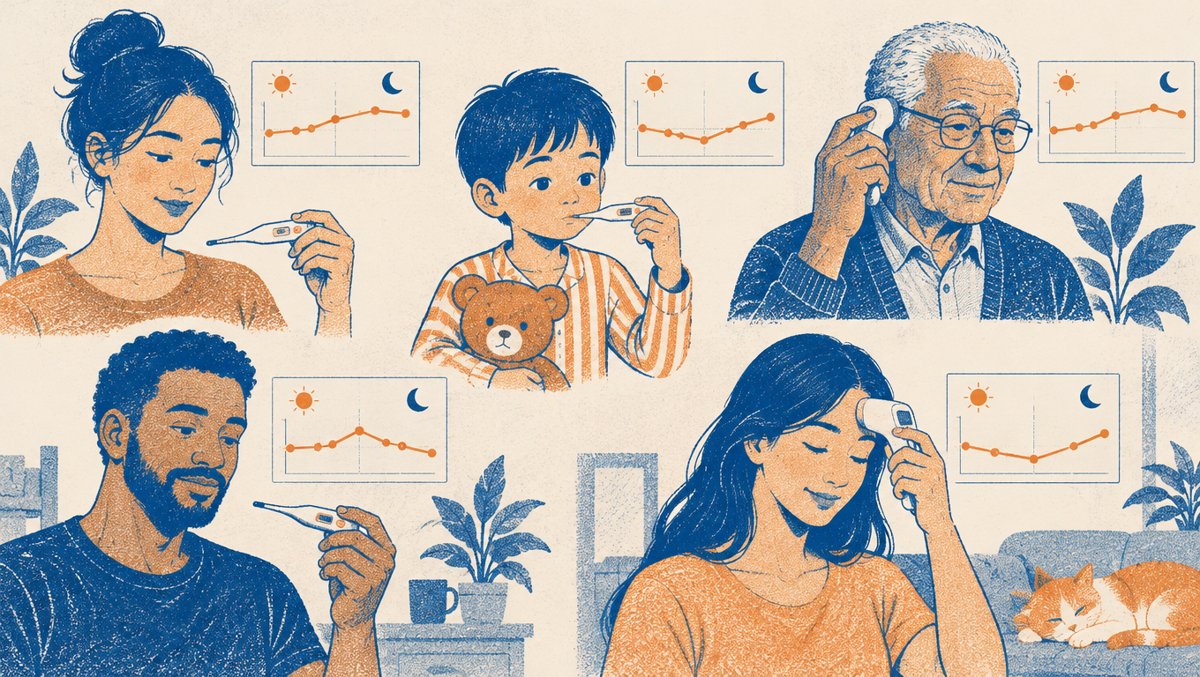
Pop quiz: what's a normal body temperature? If you said 98.6°F, you're in very famous company — and, according to one of the biggest temperature studies ever done, slightly out of date.
Stanford Medicine researchers analyzed 618,306 oral temperature readings from adult patients and published their findings in JAMA Internal Medicine in 2023.¹ Their conclusion? There is no magic number. Modern normal body temperature hovers around 97.9°F, with healthy adults ranging from 97.3°F to 98.2°F.¹
So where did 98.6 come from? A German physician named Carl Wunderlich published it back in 1868, based on more than a million measurements from some 25,000 patients.¹ Here's the twist: Wunderlich actually reported a range — but it was his overall average that stuck in humanity's collective memory like glitter after a craft project.
Even better: your temperature isn't just personal, it's dynamic. Stanford found it shifts with your age, sex, height, weight, and the time of day — coolest in the early morning, warmest around 4 p.m.¹ The team also found the average has dropped about 0.05°F every decade since the 1800s, likely because modern life brings less chronic inflammation.¹¹ Better health, literally running cooler.
Try this:
- Meet your own baseline. When you're feeling great, take your temperature in the morning and again in the late afternoon. That's your normal — and it might be 97.6. Perfectly fine.
- Stop panicking at 97.5. If your baseline runs cool, a "low" reading on a sick day may still be a real fever for you.
- Track trends, not single numbers. One reading is a snapshot; three readings across a day is a story.
Key takeaway: "Normal" is a range, not a rule — and the modern average is closer to 97.9°F than 98.6°F. Know your baseline so you can spot your abnormal. ¹¹
🦠 Section 2: A Fever Is a Feature, Not a Glitch
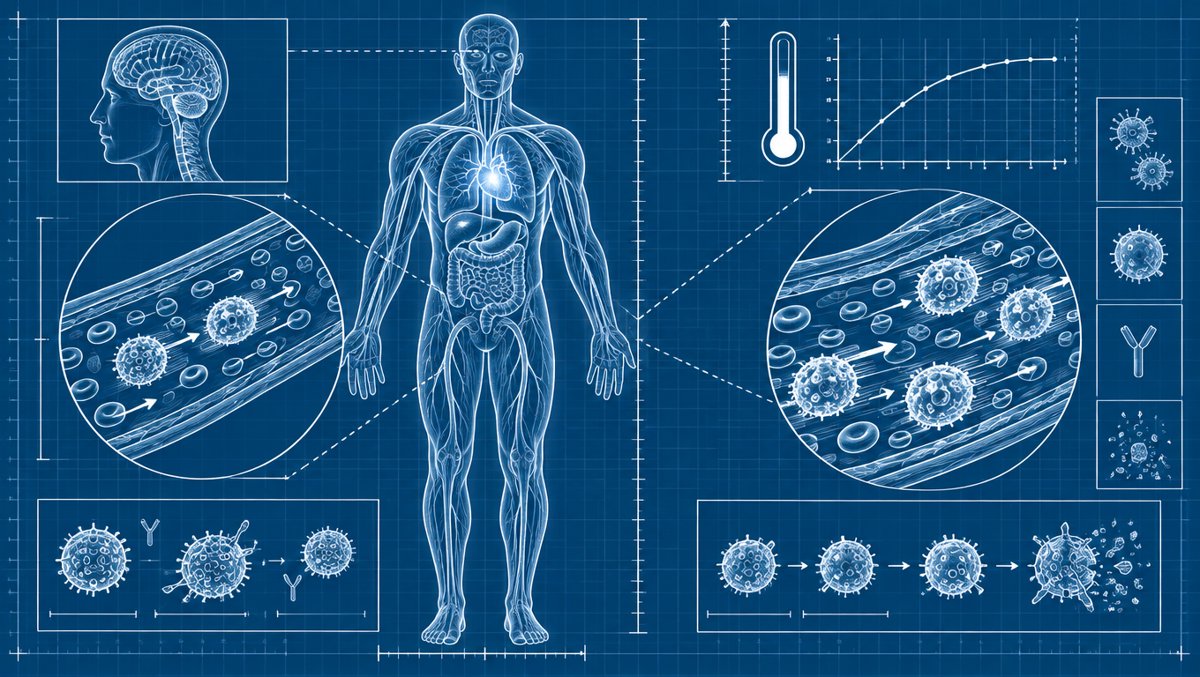
Here's the reframe that changes everything: a fever is not the illness. It's your immune system deliberately turning up the thermostat to fight the illness — and it's ancient technology.
How ancient? Fever has been conserved across vertebrates for more than 600 million years of evolution, according to a landmark review in Nature Reviews Immunology.² When researchers look across species, febrile temperatures (roughly 1–4°C above baseline) are consistently associated with better survival and faster recovery from many infections.²
And your body doesn't spend that heat for fun. Raising your core temperature by just 1°C costs a 10–12.5% bump in metabolic rate² — that's your internal furnace burning serious extra fuel. Evolution doesn't keep paying a bill that expensive unless it's buying something.
What's it buying? A few things scientists have documented: fever-range heat helps immune cells travel faster and fight harder,² and in lab conditions, temperatures in the febrile range slash the replication of certain viruses — poliovirus replication dropped more than 200-fold at 40–41°C.² Even cold-blooded iguanas deliberately seek warmth when infected; in classic experiments, desert iguanas blocked from raising their body temperature by about 2°C had survival plummet by 75%.²
One honest caveat, because we don't do hype here: large human analyses suggest that suppressing fever with medication during influenza is correlated with roughly 5% higher mortality — but that's an association from observational data, not proof that you should tough out a 103°F fever without relief.² Comfort matters, and that's exactly where we're headed in Section 4.
Try this:
- Hydrate like it's your job. That metabolic surge burns through fluids fast — water, broth, herbal tea, electrolyte drinks all count.³
- Rest like you mean it. Your body is redirecting serious energy toward your immune response. Let it.
- Treat how you feel, not the number. A 101°F fever with someone who's resting comfortably? Often fine to support, not suppress.⁵
Key takeaway: Fever is 600-million-year-old immune technology your body chose — support it with fluids and rest, and treat discomfort rather than reflexively fighting the number. ²
🍲 Section 3: "Feed a Cold, Starve a Fever" — Backwards Since 1574
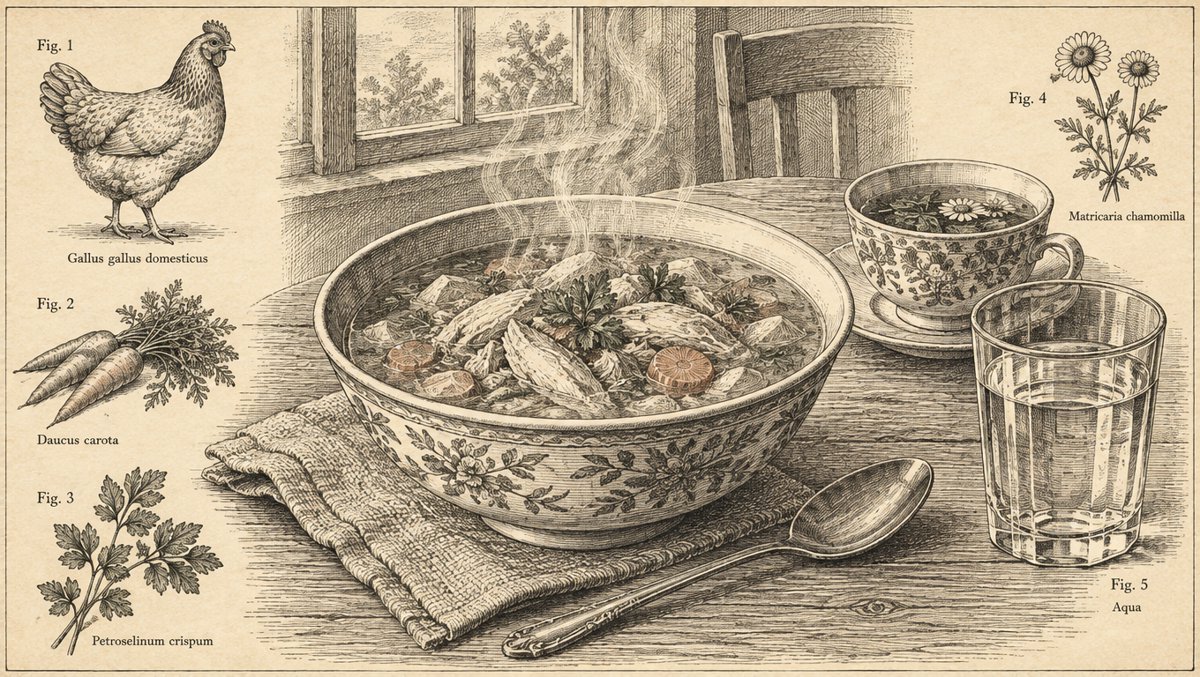
Let's take this proverb out back and examine it, because it's been getting a pass since 1574, when English lexicographer John Withals wrote that "fasting is a great remedy of fever."⁶ Five hundred years is a long audition for medical advice. Cleveland Clinic's verdict? It doesn't make the cut.⁶ Johns Hopkins agrees: the saying is false, and dehydration — not hunger — is the real enemy when you're sick.⁷
Here's the modern science: a fever revs up your metabolism, so you're burning extra calories while your immune system runs its program.⁶ Eating nutritious food — if you feel hungry — helps fuel that response.⁶ And if you genuinely have no appetite for a couple of days? Don't force it. Your reserves can cover a brief outage. But fluids are non-negotiable the entire time.⁶
And yes, grandma's chicken soup earns its legend: it delivers fluid, electrolytes, nutrients, protein, and soothing steam in one bowl — Cleveland Clinic calls it the gold standard of sick-day eating.⁶
Try this:
- Eat if you're hungry, skip if you're not — but always drink. That's the whole rule. It fits on a fortune cookie.
- Lead with liquids. Broth, water, diluted juice, herbal tea. Small, frequent sips beat giant chugs.
- Call your provider if appetite doesn't return after a few days, or if a sore mouth/throat is blocking food and fluids, or new rash, confusion, or shortness of breath shows up.⁶
Key takeaway: The proverb is a 450-year-old myth — feed whichever one you have, and hydrate like it's the main event. ⁶⁷
😱 Section 4: Fever Phobia Is Real — Here's What Actually Deserves Attention
Now for the myth with real emotional weight: that every fever is an emergency marching toward brain damage. Researchers have a name for this — "fever phobia" — and it was formally documented back in 1980, then re-confirmed in 2001, when a study in Pediatrics found misconceptions were still widespread — including roughly a fifth of parents believing brain damage was the main danger of fever.⁸ It persists today.⁹
The reassuring truth from clinicians: fever itself rarely causes harm — it's a symptom, and the numbers on the thermometer matter far less than how the person looks and acts.⁵⁸ So what actually deserves your attention? Keep this mini-triage card handy:
- 👶 **Any baby under 3 months with a rectal temp of 100.4°F (38°C) or higher → call the doctor right away.**⁴ Not tomorrow. Now.
- 🧒 **Baby 6–24 months with a temp over 100.4°F lasting more than one day → call your provider.**⁴
- 🧑 **Adults: 103°F (39.4°C) or higher → contact your health care provider.**⁵
- 🚨 Red flags at any age → seek emergency care: trouble breathing, bluish lips or face, chest pain, confusion, severe dehydration (no tears, little urination), a fever above 104°F, seizures — or someone who was getting better and then suddenly gets worse again.¹⁰
- 💊 Medication math: acetaminophen tops out at 4,000 mg per 24 hours from ALL sources combined — including combo cold-and-flu products that hide it inside.¹² More than that can damage your liver.
Try this:
- Treat the person, not the thermometer. A kid at 101°F playing quietly needs fluids and rest, not a rescue mission.
- Read the label before you stack meds. Count your acetaminophen from every product in your cabinet.
- Prep your sick-day kit now: thermometer, electrolyte drinks, easy soup, and these thresholds saved to your phone.
Key takeaway: Fevers rarely harm by themselves — the thresholds above and the red-flag list are what deserve your worry. In doubt? Check it out: call your provider. ⁵⁸¹⁰
🎯 Key Takeaways
- Ditch 98.6°F. Modern "normal" averages about 97.9°F and varies by the person — learn your own baseline when you're healthy.¹¹
- A fever is your immune system's ancient weapon, not the enemy — 600 million years of evolution paid for it. Support it with fluids and rest.²
- "Feed a cold, starve a fever" is a myth from 1574. Eat if hungry, skip if not, and hydrate always.⁶⁷
- Treat comfort, not the number — with real thresholds: any fever in a baby under 3 months (100.4°F rectal), or 103°F+ in adults.⁴⁵
- Memorize the red flags: trouble breathing, bluish lips, chest pain, confusion, dehydration, 104°F+, seizures, or a relapse after improving → emergency care.¹⁰
🎧 Key Takeaways — Listen (2 min)
📚 Verified Sources
- Stanford Medicine / Ley C., et al., JAMA Internal Medicine (2023) — "Normal body temperature is personal" — analysis of 618,306 temperature measurements; modern average ~97.9°F, range 97.3–98.2°F, 0.05°F/decade decline, Wunderlich's 1868 origin. https://med.stanford.edu/news/all-news/2023/09/body-temperature.html
- Evans S.S., Repasky E.A., Fisher D.T., Nature Reviews Immunology (2015) — "Fever and the thermal regulation of immunity" — NIH-hosted review: 600M+ years of fever evolution, 10–12.5% metabolic cost per °C, survival associations, iguana and poliovirus data. https://pmc.ncbi.nlm.nih.gov/articles/PMC4786079/
- Cleveland Clinic (2023) — "Feed a Cold, Starve a Fever: True or False?" — fever raises metabolism, fluids first, chicken soup rationale, when appetite loss warrants a call. https://health.clevelandclinic.org/feed-a-cold-starve-a-fever
- Mayo Clinic — "Sick baby? When to seek medical attention" & "Thermometer basics" — infant fever thresholds: <3 months rectal 100.4°F+ immediate care; 6–24 months 100.4°F+ beyond one day. https://www.mayoclinic.org/healthy-lifestyle/infant-and-toddler-health/in-depth/healthy-baby/art-20047793 · https://www.mayoclinic.org/healthy-lifestyle/infant-and-toddler-health/in-depth/thermometer/art-20047410
- Mayo Clinic — "Fever: First aid" (updated June 2024) & "Fever — symptoms and causes" — adult 103°F+ threshold, comfort-first framing, red-flag symptoms. https://www.mayoclinic.org/first-aid/first-aid-fever/basics/art-20056685 · https://www.mayoclinic.org/diseases-conditions/fever/symptoms-causes/syc-20352759
- Cleveland Clinic (Feb 2, 2023) — with the 1574 John Withals origin of the proverb — see source 3. https://health.clevelandclinic.org/feed-a-cold-starve-a-fever
- Johns Hopkins Medicine — "Feed a Cold, Starve a Fever? The Truth about Medical Myths" — the adage is false; dehydration is the real risk. https://www.hopkinsmedicine.org/health/wellness-and-prevention/feed-a-cold-starve-a-fever
- Crocetti M., et al., Pediatrics (2001) — "Fever phobia revisited: have parental misconceptions changed?" — persistence of fever misconceptions among parents. https://pubmed.ncbi.nlm.nih.gov/11389237/ (the ~21% brain-damage-belief figure summarized by UTMB Pediatrics: https://www.utmb.edu/pedi/categories-tags/2023/01/10/fever-phobia)
- Merlo F., et al., European Journal of Pediatrics (2023) — "New insights into fever phobia" — contemporary confirmation that misconceptions still drive anxiety and overtreatment. https://link.springer.com/article/10.1007/s00431-022-04704-4
- CDC — "Signs and Symptoms of Flu" — official emergency warning signs: trouble breathing, bluish lips/face, chest pain, dehydration signs, fever above 104°F, seizures, improve-then-worsen pattern. https://www.cdc.gov/flu/signs-symptoms/index.html
- Stanford Medicine (2023) — see source 1 for the 0.05°F/decade decline and personal-baseline findings. https://med.stanford.edu/news/all-news/2023/09/body-temperature.html
- FDA (Feb 2024) — "Don't Overuse Acetaminophen" — 4,000 mg/day maximum from all sources; liver damage risk. https://www.fda.gov/consumers/consumer-updates/dont-overuse-acetaminophen · Mayo drug monograph confirming 4 g/24h ceiling: https://www.mayoclinic.org/drugs-supplements/ibuprofen-and-acetaminophen-oral-route/description/drg-20526898
All claims fact-checked against Gold-tier (CDC/NIH/WHO/PubMed/Nature/The Lancet) and Silver-tier (Mayo Clinic/Harvard Health/Cleveland Clinic) authoritative sources. Last verified: October 15, 2026.
Whether it's you, your kid, or your roommate who spikes the first fever of the season — now you've got the playbook. Rest up, sip often, and let your brilliantly ancient immune system do its thing. 🌙