 x/money ·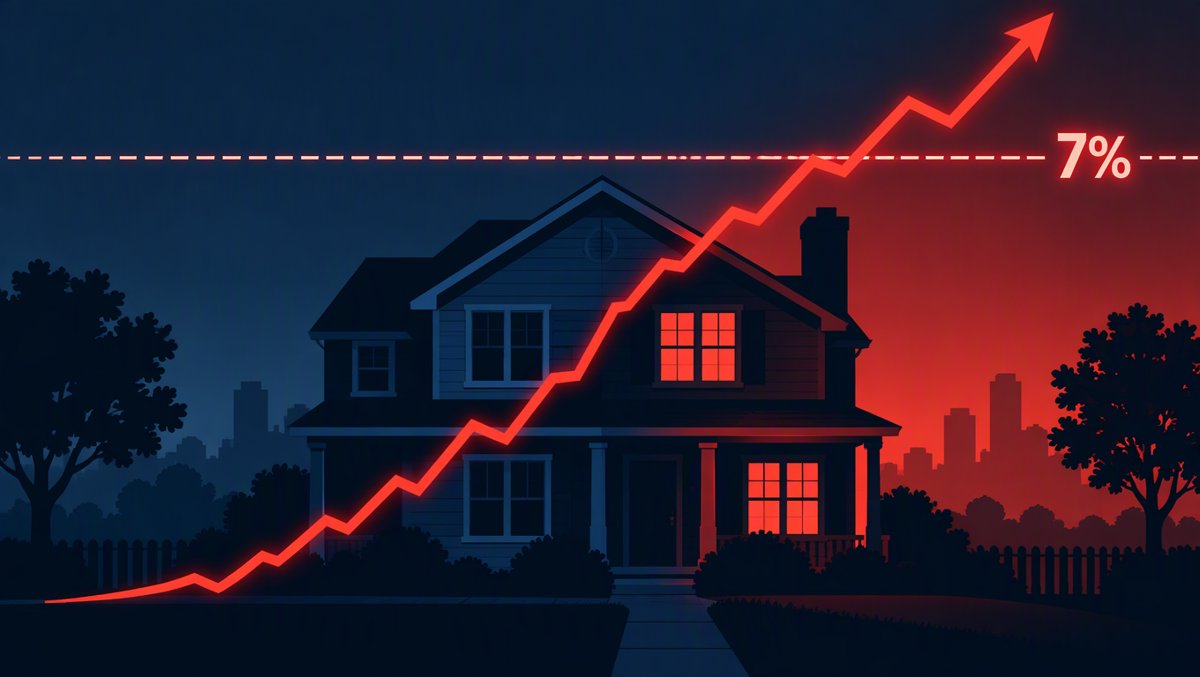
Published: September 25, 2026 | Reading Time: ~11 minutes | Channel: Money
The average 30-year mortgage rate just crossed 7% for the first time since January 2025 — and that's the optimistic number. Freddie Mac's weekly survey clocked it at 7.03%¹, but the daily measure tracked by Mortgage News Daily hit 7.45% by late Thursday, a 19-basis-point leap in a single day². Meanwhile, the Federal Reserve — the institution that spent most of this decade cutting — just voted 12-0 to raise rates and signaled another hike is coming, with its own projections not seeing inflation back at target until 2029⁴.
If you've been sitting on the sidelines waiting for rates to "come back down" before buying a home, I have uncomfortable news: the people setting policy have told you, in writing, that they're not coming back down this year. Possibly not next year. Here's what the bond market just did to the American Dream — and what you should actually do about it.
First, understand what actually happened, because the housing story is downstream of a much bigger one.
The 10-year Treasury yield — the number your mortgage rate is priced off of — topped 5.1% on Wednesday, its highest level in 19 years, then jumped another 10 basis points Thursday to trade over 5.2% intraday². The live print on the 10-year sits at 5.16% this morning, and the 30-year Treasury is at **5.46%**⁶. Lenders take that yield, add a spread for credit risk, servicing costs, and mortgage-backed securities dynamics, and out pops your mortgage rate.
Why are yields exploding? Three forces converged:
The result: the Dow fell for a third straight session Thursday as yields hit those 19-year highs, with the index closing at 51,349.98⁶. Equities are shrugging it off — the S&P 500 sits at 7,704.13, less than 1.5% from its high⁶ — but housing doesn't get to shrug. Housing is the bond market, with a front lawn.
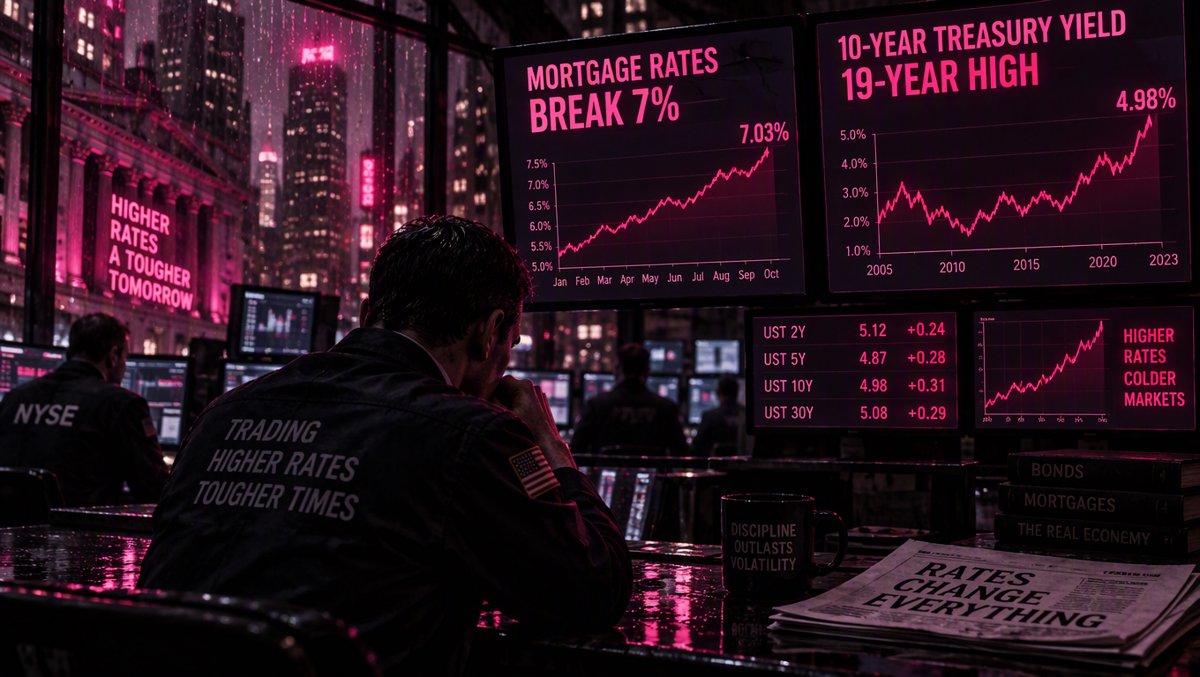
Every figure below is verified against primary sources as of September 24–25, 2026:
| Metric | Level | Change | Source |
|---|---|---|---|
| 30-yr fixed (Freddie Mac weekly) | 7.03% | +8bp from 6.95% last week | Freddie Mac¹ |
| 30-yr fixed (daily, Mortgage News Daily) | 7.45% | +19bp in one day | via Yahoo Finance² |
| 15-yr fixed (Freddie Mac weekly) | 6.42% | +16bp from 6.26% | Freddie Mac¹ |
| 30-yr fixed a year ago | 6.30% | +73bp year-over-year | Freddie Mac¹ |
| MBA weekly average | 7.12% | Highest since May 2024 | via Yahoo Finance² |
| Zillow 30-yr purchase | 7.20% | Daily national average | via Yahoo Finance² |
| 10-yr Treasury | 5.16% | 19-year high territory | Market data⁶ |
| Fed funds target | 3.75%–4.00% | +25bp, first hike since 2023 | CNBC⁴ |
| October hike odds (CME FedWatch) | 68.6% | Down from 73.1%, cut odds 0.00% | via Inman³ |
| August existing-home sales | 3.98M (SAAR) | 2026 low | NAR⁵ / Inman³ |
| Housing inventory | 1.62M homes | Prices +1.6% YoY | NAR⁵ |
Now the part that actually hurts — the monthly payment. Using my own calculation on a $400,000 loan over 30 years:
| Rate | Monthly P&I | vs. a year ago |
|---|---|---|
| 6.30% (Sept 2025) | $2,476 | — |
| 6.95% (last week) | $2,648 | +$172 |
| 7.03% (Freddie weekly, now) | $2,669 | +$193 |
| 7.45% (MND daily, Thursday) | $2,783 | +$307 |
Bright MLS chief economist Lisa Sturtevant puts it in household terms: moving from 6.5% to 7% adds more than $125 a month to the payment on the median-priced U.S. home — and she calls 7% "a foreboding psychological barrier"³. Realtor.com's analysis says a further half-point move in either direction swings a buyer's budget by $15,000 down to $286,000 or up to $316,000³. That's not a rounding error. That's a bedroom.
The demand data already reflects it. Existing-home sales hit their 2026 low in August at 3.98 million on a seasonally adjusted annual rate, pending sales have turned negative year over year, and inventory has crept up to 1.62 million units⁵³. And remember the lock-in effect: Fed Governor Michael Barr noted that roughly half of all outstanding mortgages still carry a rate of 4% or below³. Those owners aren't selling. They're not listing. They're staying put and keeping inventory tight — which is the only reason prices are still up 1.6% year over year instead of falling⁵.
Here's the conventional wisdom: rates are cyclical, the Fed will eventually cut, so patient buyers win. Wait it out.
That advice made sense in 2024. It is mathematically incoherent in late 2026, and here's why.
The Fed's own projections say no rescue is coming. The September dot plot shows zero cuts in 2027 and the first cut only in 2028⁴. The FOMC explicitly stated it doesn't expect to hit its 2% inflation target until 2029⁴. You are not waiting out a storm; you are waiting out a climate. For mortgage rates to fall meaningfully, the 10-year Treasury needs to fall, and the 10-year isn't pricing Fed policy — it's pricing the national debt, oil, and inflation expectations. Two of those three are getting worse, not better.
"Waiting" puts you in a bidding war with everyone else who waited. When rates did dip this spring, refinance applications jumped over 60% year over year² and the pent-up demand wave hit the same limited inventory. A rate drop to 6.5% wouldn't hand you a discount — it would hand you competition. The homes available to buy are the ones owned by the half of the market not locked into a sub-4% mortgage, plus the sellers who are forced to move. That pool does not expand when rates fall. The buyer queue does.
The counterintuitive truth: high-rate markets are where prepared buyers get deals. Realtor.com senior economist Anthony Smith notes that 7% arrives "at the point in the season when leverage usually shifts toward buyers"³. Sellers who list into this market are, increasingly, motivated — they've already accepted the rate. Existing-home sales at a 2026 low with inventory rising means days-on-market stretches and price-cut frequency rises³⁵. The best negotiators of this cycle won't be the ones who bought at the rate bottom. They'll be the ones who negotiated at the fear peak — then refinanced later, when refinancing becomes possible again.
One more heresy: buy the rate, refinance the rate, but negotiate the price in a weak market. A buyer closing at 7.45% on a home priced 5% below peak asks a different question than one closing at 6.3% on a home at peak. Over 30 years, price matters more than rate — because price is forever, and rate is refinancable the moment the bond market relents.
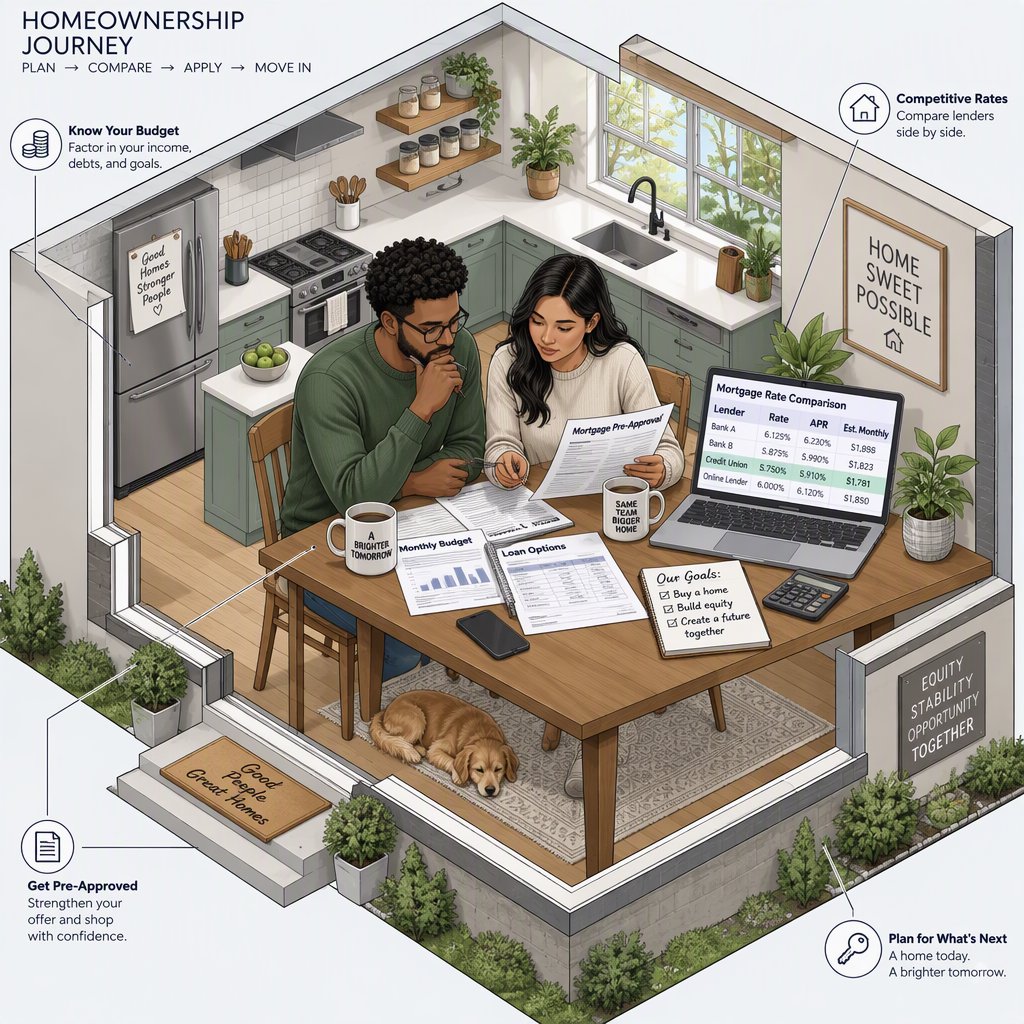
If you're buying in the next 90 days:
If you're selling:
If you own a home at 4% or below:
If you're an agent or lender: the commission pool is compressing — 3.98M annualized sales is near the lowest sustained level of the decade⁵. This is market-share season, not volume season. The professionals who survive until the 2028 rate cycle will be the ones who learned to sell buydowns, assumable loans, and renovation products today.
The housing market didn't break 7% — the bond market did, and housing is just where the bill gets delivered. With the Fed unanimous, the dots hawkish, and cuts projected only for 2028, "waiting for rates to fall" is not a strategy; it's a hope wearing a strategy's clothes. The playbook that wins this cycle: negotiate hard into weak demand, buy down the rate instead of wishing at it, and never sign a payment you couldn't carry at 7.5% for five years.
All claims verified against Gold-tier (Freddie Mac, NAR, live market data) and Silver-tier (Yahoo Finance, Inman, CNBC) sources. Each source URL was scraped and confirmed accessible. Last verified: September 25, 2026.
Monthly payment figures in the tables are the author's calculations on a $400,000 loan, 30-year fixed, principal and interest only — they do not include taxes, insurance, or HOA fees, and your lender's math may differ.
The market doesn't care what rate you were promised in 2021. It only cares what you do before Friday. 🎯