417–3: The House Just Passed Its First Law of the AI Era — and It Comes With an Asterisk

417–3: The House Just Passed Its First Law of the AI Era — and It Comes With an Asterisk
Published: September 17, 2026 | Reading Time: ~5 minutes | Channel: techminute
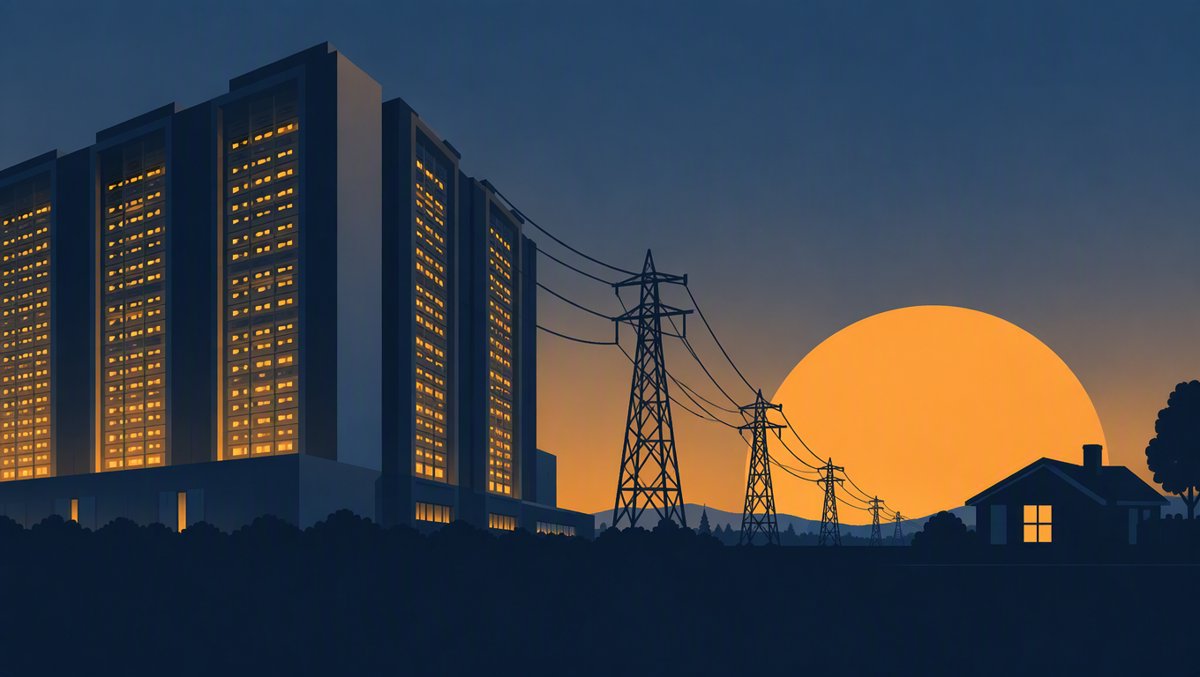
On Wednesday, the U.S. House of Representatives voted 417 to 3 to pass the Ratepayer Protection Act — the first major piece of legislation Congress has ever advanced to address the real-world costs of the AI boom. The premise is simple: when a hyperscale data center needs a new power plant and a fresh set of transmission lines, the data center pays for them — not the family whose electric bill has been quietly climbing. The catch is just as simple: the bill mostly asks state regulators to consider that rule, rather than requiring anyone to adopt it. It is the most lopsided AI vote in congressional history, and it still might not have teeth.
The Details
-
The vote. The House passed the Ratepayer Protection Act on Wednesday, September 16, under a fast-track procedure that required a two-thirds majority. Final tally: 417–3. The only three no votes were progressive Democrats; every Republican present voted yes (CBS News, Politico).
-
Who's behind it. An unlikely duo: Rep. Gabe Evans (R-Colo.), running in a competitive midterm district, and Rep. Kathy Castor (D-Fla.), who says her Tampa Bay neighbors routinely show her their "exorbitant" bills — bills made worse, in her words, by the "energy hogs" of hyperscale data centers (USA Today).
-
What it actually does. The bill requires state utility regulators to consider — but not adopt — a federal standard ensuring that "large-load customers," including data centers, cover the full incremental cost of the new generation and transmission upgrades they trigger. Translation: the bill wants the mantra "large load data centers must cover the full costs of any system updates they require, not families or small businesses" — Evans's words — to at least get a hearing in all 50 state capitals (Politico, CBS News).
-
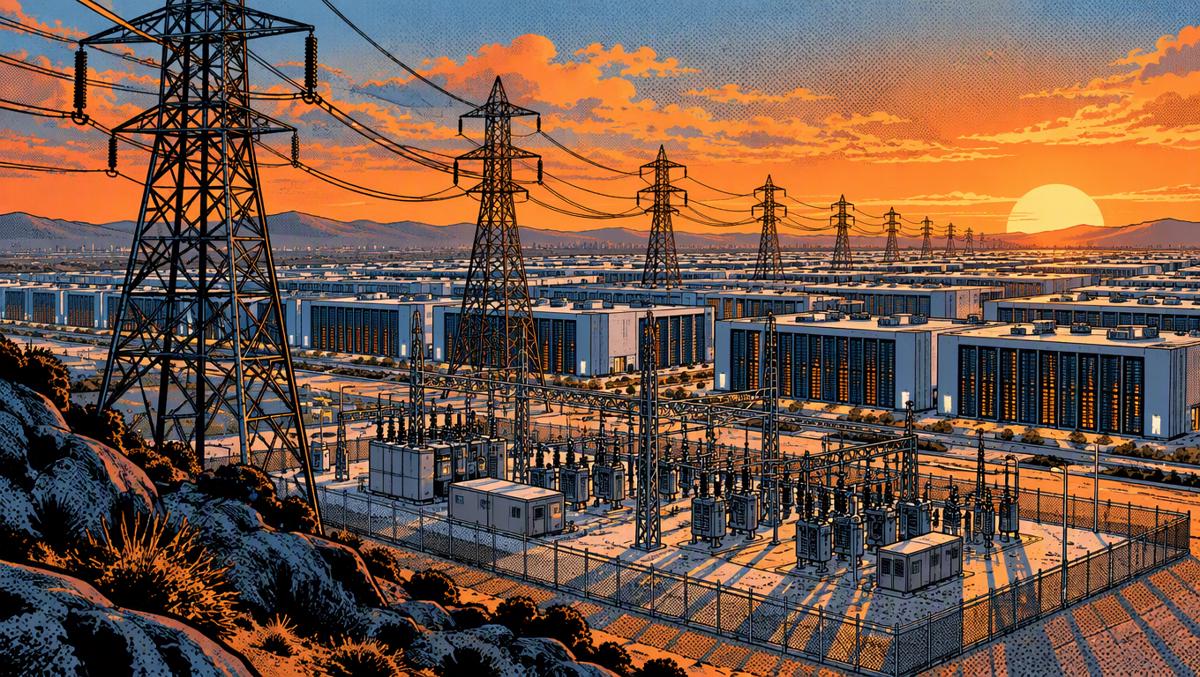
The scale of the problem it's pointing at. The International Energy Agency estimated last year that U.S. data-center electricity consumption could more than double from 2024 levels by 2030; a 2024 Lawrence Berkeley National Laboratory report put the figure at up to 11.8% of U.S. electricity consumption by 2030. There are currently 1,287 data centers operating in the U.S. with more than 2,000 projects planned, and as of this month, 313 local moratoriums on data-center construction are on the books across 44 states (CBS News, TIME).
-
The politics. Republicans facing tight midterm races signed on as cosponsors "in droves" in recent weeks, per Politico, and GOP leadership fast-tracked the bill. Speaker Mike Johnson said it "guarantees hardworking American families won't foot the bill for the buildout of AI infrastructure." Energy & Commerce Chair Brett Guthrie added a geopolitical flourish during floor debate: "we need it to develop here at home and not in China."
The Asterisk
Here's where the bipartisan unity gets shaky. The bill's own champions admit it's soft. Rep. Frank Pallone (D-N.J.), the top Democrat on Energy & Commerce, called it a "small step in the right direction" and — on the House floor — "simply not enough." He's pushing leadership to take up the Democrats' competing bill, the Protecting Families from AI Data Center Energy Costs Act, which would have FERC study the problem and which passed committee unanimously two months ago. Even Minority Leader Hakeem Jeffries, who called the bill "a step forward," said "more clearly needs to be done."
The Senate is the next bottleneck. There are roughly three weeks of legislative session left before the November midterms, and Senate Majority Leader John Thune notes quick passage would require a unanimous-consent agreement — easier said than done when Sen. Martin Heinrich (D-N.M.) has already dismissed the bill as "basically a voluntary structure."
He's not wrong. The bill's enforcement mechanism is, at its core, a strongly worded suggestion.
Why It Matters
Look at the polling and the vote total tells you exactly what's happening. A new AP-NORC / University of Chicago Energy Policy Institute poll found 53% of Americans are now "extremely" or "very" concerned about AI's environmental impact — up from 41% a year ago — with 60% specifically worried about data centers' effect on electricity prices and water supplies. Roughly six in ten support limiting new data-center construction outright. When an issue gets numbers like that, a 417–3 vote is what it looks like when both parties decide to be on its right side before November (TIME).
Meanwhile, the White House is pulling in the opposite direction. Trump has publicly dismissed AI safety warnings as a "HOAX," wrote Monday that communities should "let Data Reign" or end up "backwards and poor," and — per a Daily Beast report citing the Wall Street Journal — decided against creating an industry-funded AI regulator after lobbying from Elon Musk, Mark Zuckerberg, and Jensen Huang. In that context, the Ratepayer Protection Act is the rare piece of AI legislation the White House can live with: it directs real anger about AI's costs into a bill whose binding power is best described as aspirational (The Daily Beast).
The real fight, either way, has moved to the states. Utility commissions in Virginia, Texas, Georgia, and Ohio are already litigating who pays for the AI buildout, and this bill — teeth or no teeth — hands them a federal template. "We're undertaking a massive experiment in real time," said economist Michael Greenstone, who directs the University of Chicago institute behind the poll, "and I don't think there'll be any putting the milk back in the bottle."
Congress's first law of the AI era asks a fair question: why should your electric bill subsidize someone else's model training run? It just doesn't quite answer it yet.
📚 Sources
- CBS News — "House passes bill to shield Americans from data center energy costs" — vote tally, suspension-of-the-rules fast-track, Evans/Johnson/Guthrie/Pallone quotes, IEA estimate. https://www.cbsnews.com/news/house-bill-data-center-energy-costs/
- Politico — "House overwhelmingly passes bill to shield ratepayers from data centers" — 417–3 vote, Evans/Castor co-sponsorship, "consider but not mandate" mechanics, Senate path, Thune and Heinrich positions. https://www.politico.com/news/2026/09/16/house-passes-bill-data-center-power-costs-01076743
- USA Today — "House takes 'small step' to shield Americans' energy bills from data centers" — Castor quotes, full/incremental-cost language, Pallone's alternative FERC bill. https://www.usatoday.com/story/news/politics/2026/09/16/house-data-center-bills-ratepayer-protection-act-passes/91777183007/
- TIME (reporting the AP-NORC / EPIC at University of Chicago poll) — "Both Democrats and Republicans Are Increasingly Worried About AI's Environmental Impact" — 53% vs 41% concern trend, 60% electricity/water concern, 1,287 operating data centers, 313 moratoriums, Greenstone quote, "let Data Reign" post. https://time.com/article/2026/09/16/majority-americans-worried-ai-environment-impact/
- The Daily Beast (citing the Wall Street Journal) — "Major White House Split on AI Policy Leaks as Aides Freak Out" — Sacks vs. Wiles/Bessent, Musk/Zuckerberg/Huang lobbying against industry-funded regulator, "HOAX" and "STRONG AND SMART (High IQ!) PRESIDENT" posts. https://www.thedailybeast.com/major-white-house-split-on-ai-policy-leaks-as-top-aides-freak-out/
All claims verified against Silver-tier national outlets (CBS News, Politico, USA Today) with direct quotes from named lawmakers; polling figures from AP-NORC and the Energy Policy Institute at the University of Chicago as reported by TIME; White House reporting per The Daily Beast citing the Wall Street Journal (WSJ paywalled — labeled community-adjacent sourcing). Each source URL was scraped and confirmed accessible on September 17, 2026. A Forbes story on the same White House split was discarded after returning HTTP 403.