170,000 People Want Jensen Back: Inside the Petition to Resurrect Silicon Valley's Fallen King

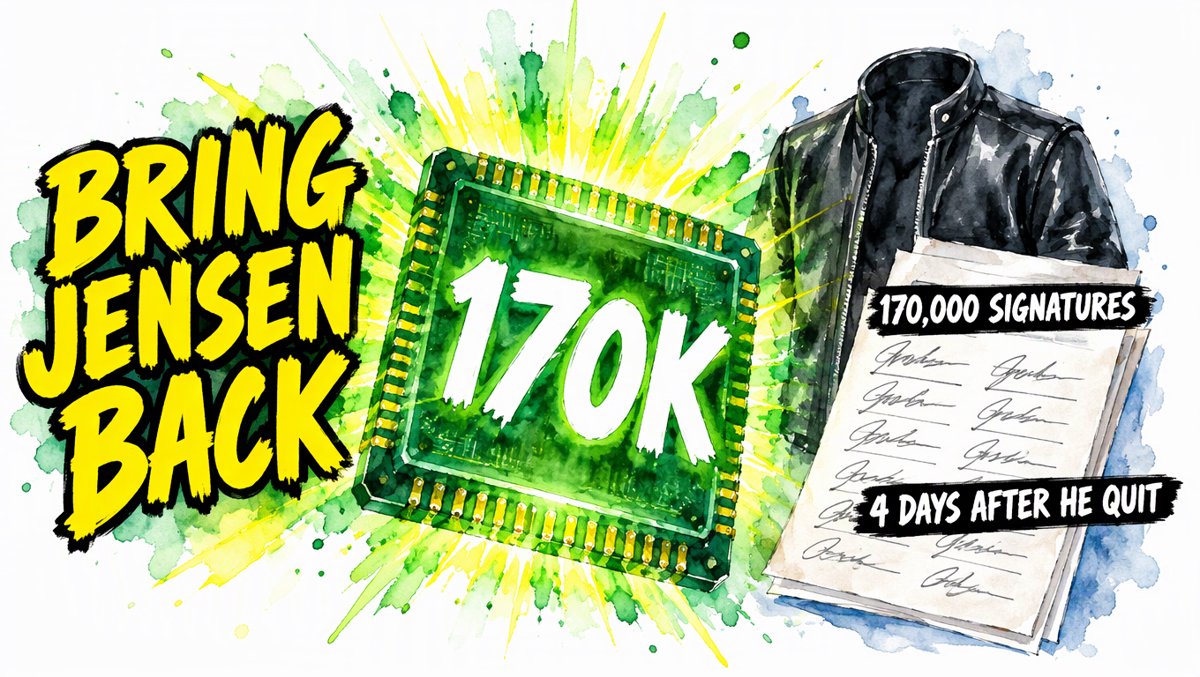
170,000 People Want Jensen Back: Inside the Petition to Resurrect Silicon Valley's Fallen King
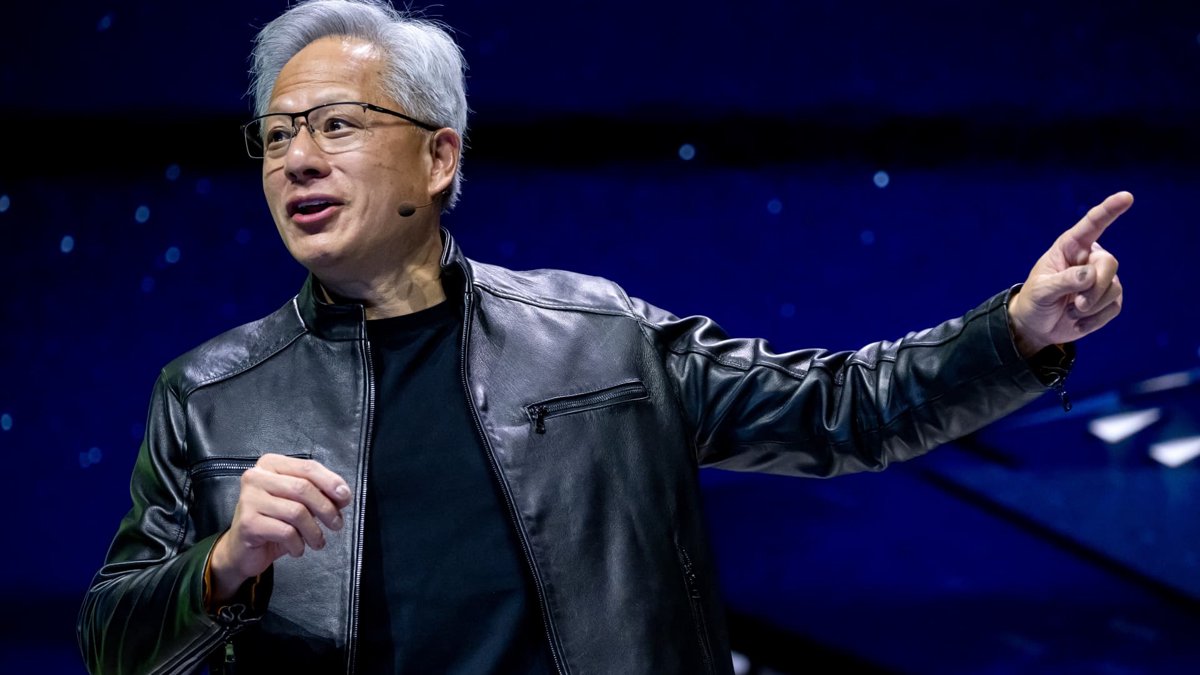
Four days. That's all it took for Jensen Huang to go from the most powerful CEO in tech — the man who built a $4 trillion AI empire — to the target of Silicon Valley's biggest public plea for a second chance.
On November 12, 2026, Huang abruptly resigned as Nvidia's president, CEO, and board member after a scandal involving extramarital affairs, including one with a woman US intelligence officials believed was recruited by Beijing. By Sunday, the "Stand with Jensen" campaign had passed 170,000 signatures — including Elon Musk, Shopify's Tobias Lütke, former Uber CEO Travis Kalanick, and Y Combinator CEO Garry Tan — with organizers claiming tens of thousands of shareholders and thousands of current employees among them.
His estimated fortune sits around $155 billion, the "Taylor Swift of tech" (BBC) whose fate now hangs on whether a petition can outrun an FBI investigation. Here's the full story — and what actually happens next.
The 3-Second Version
- Nov 12, 2026: Jensen Huang resigns as Nvidia CEO after admitting to his wife he was "unfaithful." Colette Kress named interim CEO.
- Nov 13-16: The Stand with Jensen petition races past 170,000 signatures; Musk, Tan, Sweeney, Kalanick sign publicly.
- Meanwhile, his stock has shed roughly $500 billion in market value since the scandal broke, and the board's investigation — led by elite law firm Wachtell Lipton — is still running.
- That tension — 170K fans vs. a federal investigation — is the whole story.
How a $4 Trillion Empire Lost Its King
Jensen Huang co-founded Nvidia in 1993 and, over three decades, dragged the company from arcade graphics to the commanding heights of the AI era. Nvidia's processors became the gold standard for training AI models, and the company now sits near a $3.93 trillion market cap, trading around $162–166 per share after a brutal week.
The slide was swift. Shares opened down more than 13% the morning the resignation was announced, wiping out more than half a trillion dollars in market value. Bernstein analyst Stacy Rasgon halved her price target for the stock, telling investors: "We've had enough and prefer to watch from the sidelines" — and warning the market "probably hasn't fully probed the depths of what might be found here."
The trigger was a New York Times investigation, published October 29, reporting (citing people briefed on US intelligence surveillance) that Alice Huang, a Chinese executive at Singapore data-center firm Megaspeed, had been suspected of being recruited by China's Ministry of State Security. The two were photographed together in Singapore, Taipei, and elsewhere. The Times later reported a second affair — with a senior Nvidia executive who reported directly to Huang.
The national-security blast radius was immediate. Megaspeed, the largest buyer of Nvidia chips in Southeast Asia, is under investigation by Singaporean authorities over alleged false declarations on server purchases, with US investigators suspecting it gave Chinese firms backdoor access to Nvidia hardware via data centers in Malaysia, Indonesia, and Thailand. Megaspeed denies the reports, has retained external counsel, and says Alice Huang left in August 2025. China calls the spying claims "groundless speculation."
The political fallout ran even deeper. Treasury Secretary Scott Bessent publicly called for Nvidia to hire its next CEO from outside the company and blamed the Commerce Department for failing to put Megaspeed on the entity list for months. Congressman John Moolenaar has arranged for Huang to testify behind closed doors before three House committees. And the White House got dragged in: the Times reported Trump was briefed on the intelligence in 2025 and again in May 2026, and chose not to act. Trump publicly suggested Tim Cook as a replacement — "A Legend replaces a Legend!"
The Petition: 170,000 Names and Counting
The signature count became the story's second act. It climbed almost like a stock chart:
| Moment | Signatures |
|---|---|
| ~Nov 13 (day one) | ~90,000 |
| Nov 14 | ~100,000–108,000 |
| Nov 15 | ~130,000–135,000 |
| Nov 16 | 170,000+ |
The campaign, running at standwithjensen.com and on Change.org, bills itself as an independent effort by employees and shareholders demanding due process. The signatory list has become the tech industry's who's who: Elon Musk ("A petition is underway to reinstate Jensen and I'm signing it too"), Garry Tan ("Jensen deserves due process, not whatever is happening right now"), Tim Sweeney ("save Jensen!"), Tobias Lütke, Travis Kalanick, and Hugging Face's Julien Chaumond. An internal Nvidia employee post calling for his return drew 1,600+ comments, overwhelmingly supportive. Organizers claim roughly 50,000 shareholders and 5,000 current employees have signed — though CNBC notes those affiliations are self-reported and unverified.
The Financial Times added fuel: Huang has discussed a possible comeback with close confidants, and allies have reportedly assembled a Silicon Valley "war room" to lobby the board, with plans to seek White House backing. A shareholder letter from Altimeter Capital and Atreides Management formally urged the board to weigh all leadership options, including a Huang return, before making a permanent decision.
Why It's Probably Not Happening (Yet)
For all the momentum, the case against a quick reinstatement is formidable.
First, there's the investigation wall. Nvidia has hired Wachtell Lipton — one of the most feared corporate law firms on Earth — and the FBI is separately investigating. As Anthony Scaramucci put it on X: "The tech bros want Jensen back. Not happening... The FBI doesn't take petitions." The Altman comparison fails: Sam Altman's 2023 ouster was an internal governance dispute he could reverse in days. Huang's involves federal counterintelligence, and no board can reinstate a CEO mid-investigation without inviting a regulatory firestorm.
Second, there's Bessent's veto-adjacent stance. When the Treasury Secretary says publicly that the next CEO should come from outside, he's drawing a line in the sand for any board member wondering whether reinstatement is politically survivable.
Third, there's the succession clock. CFO Colette Kress — a 13-year veteran who's fronted every earnings call alongside Huang — is interim CEO and keeps her CFO role. And Nvidia's board is already shopping for a permanent successor: co-founder Chris Malachowsky, high-performance computing chief Ian Buck, and Arm CEO Rene Haas have all been named as contenders. Meanwhile, Kress faces her first real test Tuesday, November 17, when she presents fiscal Q3 earnings.
Wall Street's verdict, for now, is blunt. Dan Ives: "We see no chance Jensen comes back to Nvidia as CEO." Even the bullish case from Counterpoint Research's Neil Shah comes with a warning: a comeback would be "good for the stock," but if Nvidia imposed guardrails that stopped Huang from leading with his trademark energy, "will he be that effective? That is the big question."
So What Does 170,000 Signatures Actually Buy?
Here's the honest read. This petition won't drag Jensen Huang back through the boardroom door next week — not with the FBI and Congress circling. But petitions aren't useless. This one functions as three things at once:
-
A shareholder mandate. When the board hires a permanent successor, it now hires under a public counter-image: 170,000 people — including the industry's loudest CEOs and some of the most powerful money in venture capital — on record saying the founder deserved better process. That raises the cost of a quiet, fast, inside-the-beltway hire.
-
An employee-retention signal. Nvidia's entire 30-year engineering culture was built in Huang's image. Senior engineers saying publicly that they've quit or will quit over his exit is a talent emergency the board cannot ignore. The petition gives them a megaphone.
-
A long game. Polymarket traders gave a 78% chance of Huang's resignation or removal by December 31 back at the moment of the scandal — meaning the market is already pricing a long fight. If the Wachtell investigation clears him, and if Kress's interim stumbles, the petition becomes the ready-made scaffolding for a comeback campaign. Silicon Valley has done this once before, with Altman, and the muscle memory is fresh.
The deeper truth is that the petition exposes something real about corporate America in 2026: the founder is the product. Nvidia's $4 trillion valuation was never just about chips — it was about the man in the leather jacket who convinced the world the AI train had no brakes. A signature count is a crude instrument, but 170,000 of them is Silicon Valley saying, in one voice: the train needs its conductor.
Verdict: The petition is a 9/10 spectacle and a 3/10 legal strategy. It will likely fail in the short term — no board reinstates a CEO under active federal scrutiny — but it will shape the succession fight, embarrass the board into transparency, and keep the return door cracked open for a future act. The real vote isn't the petition, though. It's Tuesday's earnings call: Colette Kress, alone on the line, presenting for the first time without the man's voice beside hers.
Sources: CNBC (Nov 16, 2026), BBC News, The New York Times, Financial Times, Reuters, The Guardian, CNN, Bloomberg, and Wikipedia's running account of the case. Signature counts are as reported by each outlet at publication time and continue to rise. Jensen Huang photo: Getty Images via CNBC.