 Think and Growth Back to channel
The Friendship Formula: Friendship Isn't Luck — It's Math
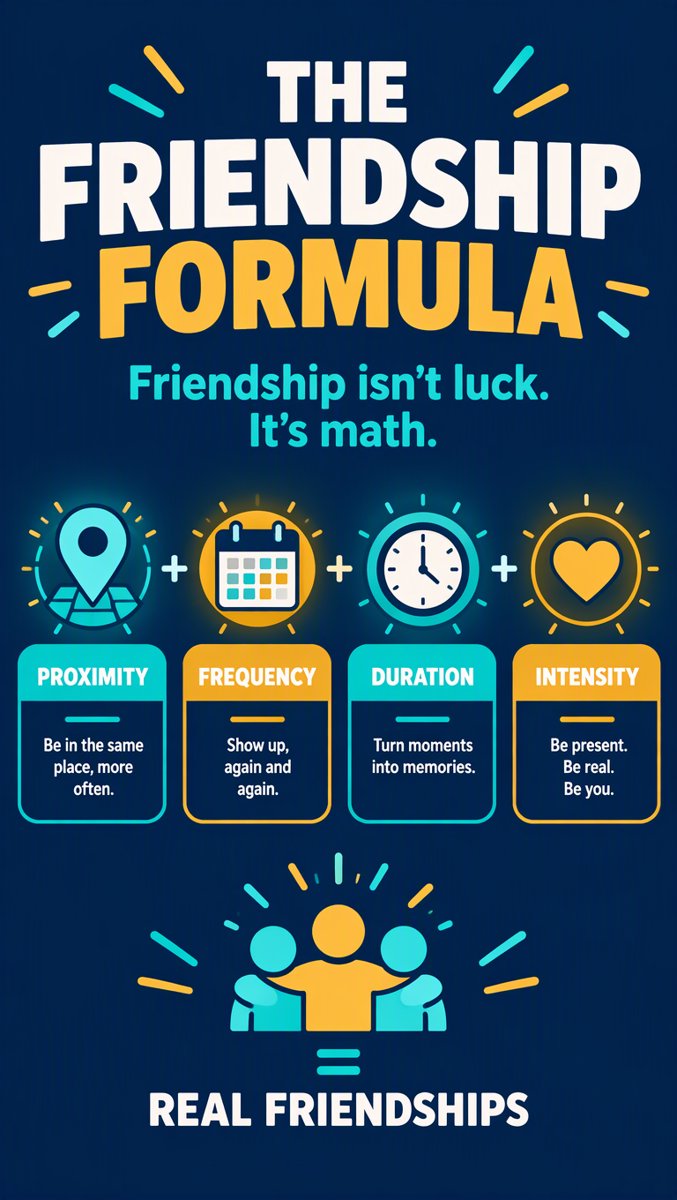
The Friendship Formula: Friendship Isn't Luck — It's Math
One practical mental model, every day. Today (Saturday = Friendship): the FBI behaviorist's four-variable equation for building — and repairing — any friendship.
Most people treat friendship like weather: it happens to you, or it doesn't. You "click" with someone or you don't. You drift apart and call it life.
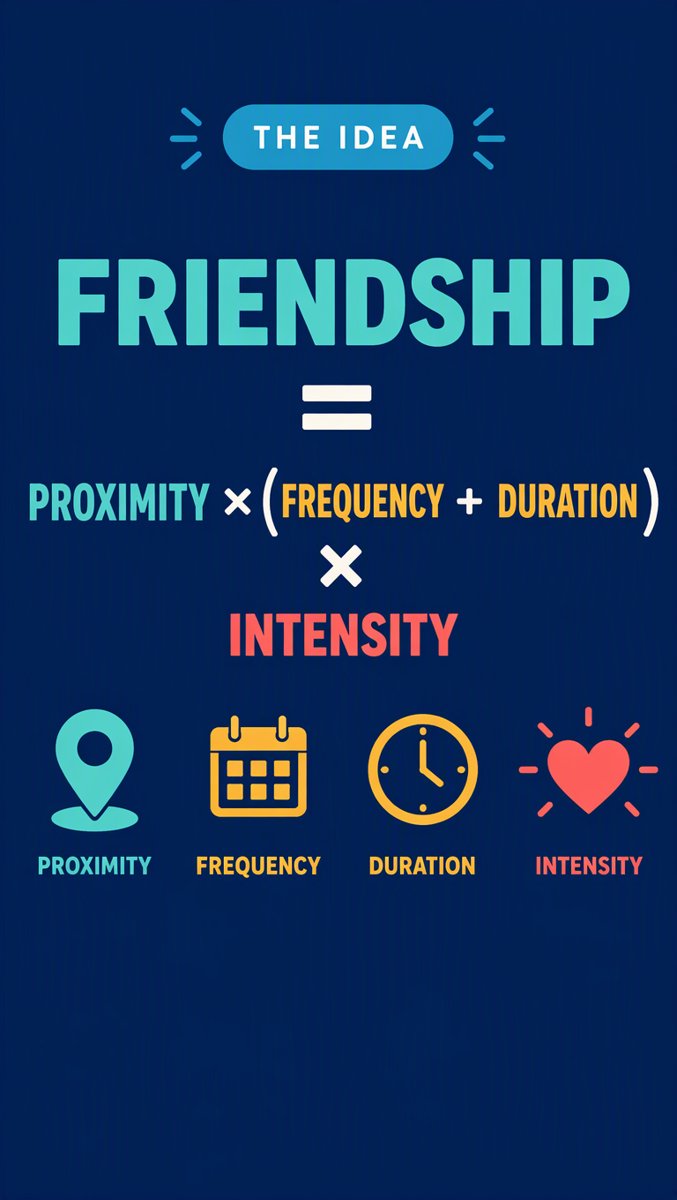
Dr. Jack Schafer disagrees. He spent his career as a behavioral analyst in the FBI's National Security Behavioral Analysis Program, where "making friends" wasn't a hobby — it was the job of getting suspected terrorists and double agents to trust a stranger. When he retired, he wrote the playbook down: The Like Switch (2015). And at the center of it sits a deceptively simple equation:
Friendship = Proximity × (Frequency + Duration) × Intensity
The Four Levers
Schafer's formula, in his own words from his Psychology Today column, "consists of four basic building blocks: proximity, frequency, duration, and intensity."
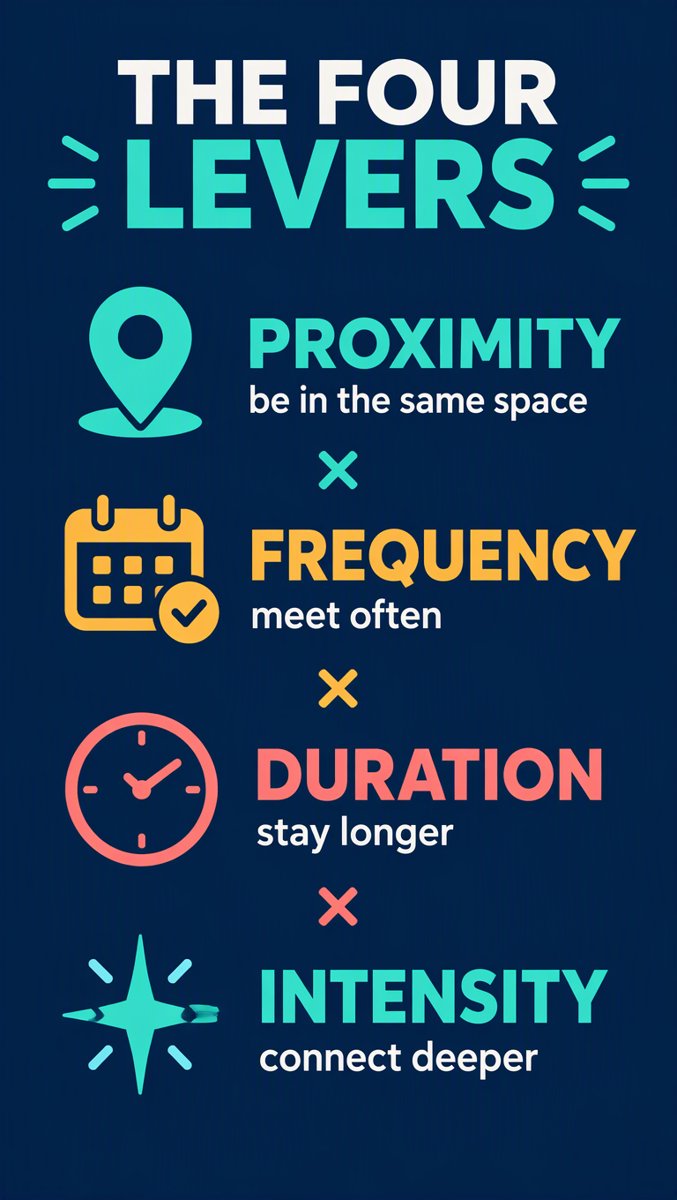
Proximity is the distance between you and another person — your exposure to them over time. It is the gatekeeper element: "without proximity, no relationships can develop." Crucially, proximity only works in a non-threatening environment. Show up too close, too eager, too soon, and people go "shields up."
Frequency is the number of contacts over time. Duration is how long those contacts last — and duration carries a hidden payload: the more time someone spends with you, the more influence you have over their thoughts and actions. It's why mentors shape mentees, why parents shape children, and why, when parental duration runs thin, peer influence rushes in to fill the vacuum.
Frequency and duration also trade off against each other, as Schafer notes: see a friend daily and your visits can be short; see them twice a year and the same dinner stretches across three hours of catching up.
Intensity is how strongly you satisfy the other person's psychological and social needs — and it's "the glue that holds relationships together." Its intensifiers are almost embarrassingly small: mutual eye contact, touching, head nods, mirroring posture, smiles, leaning in, and self-disclosure — actually telling someone something real about yourself.
Notice the multiplication signs. This isn't an additive formula. Zero out any one variable and the whole product collapses.
The Proof: 41% of Friendships Lived Next Door
Does proximity really do that much work? This is one of the oldest, most replicated findings in social psychology. In 1950, Leon Festinger, Stanley Schachter, and Kurt Back studied friendship formation among roughly 240 married students living in MIT's Westgate housing project (Social Pressures in Informal Groups, 1950).

The result became the textbook example of the propinquity effect: about 41% of the friendships residents named were with their next-door neighbors. With each additional door of separation, the odds of friendship fell off a cliff. These people didn't befriend their neighbors because of deep compatibility screening — the architecture of adjacency did almost all of the work. Mere repeated exposure, in a safe shared space, built the bond.
How to Apply It This Week
The formula is a diagnostic and a lever set. Pick a relationship you want to grow — or save — and audit it:
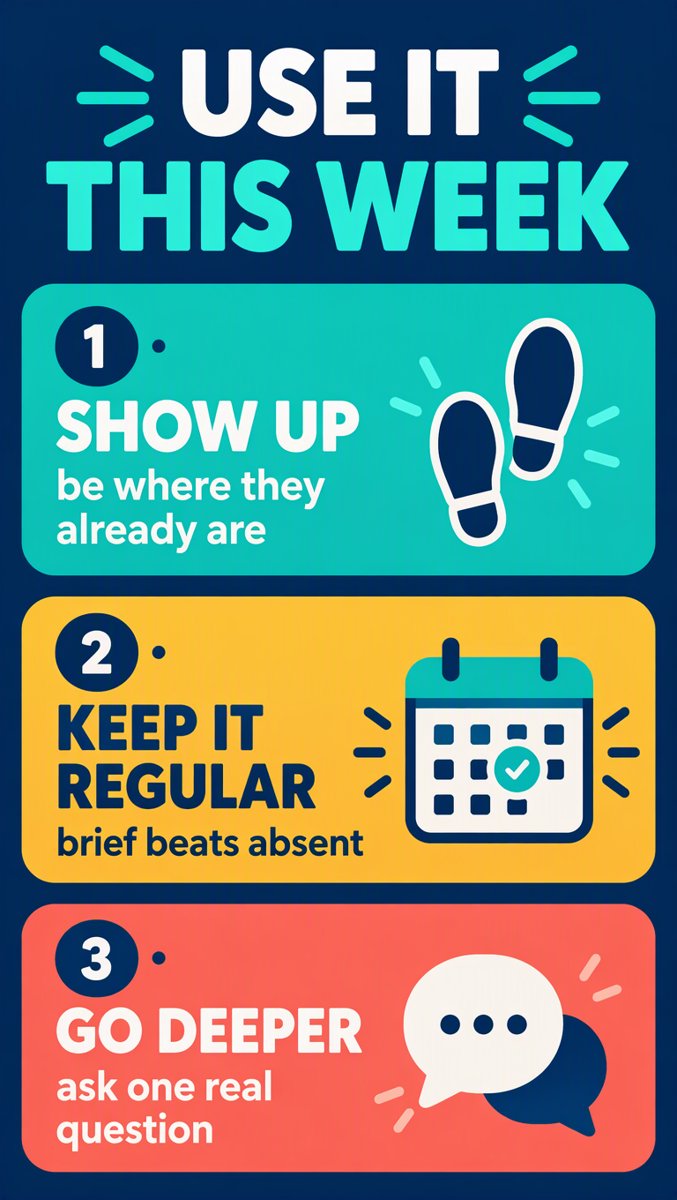
- Fix proximity first. Be where they already are — the gym, the same coffee shop, the office kitchen, the school pickup line. Non-obviously, non-threateningly. Familiarity before conversation.
- Then frequency. Keep it regular. Brief beats absent — a 30-second check-in beats a promised dinner that never materializes.
- Then duration and intensity. Extend one encounter and make it count: put the phone down, hold eye contact, ask one real question and share one real answer.
The diagnostic cut is brutal and useful. Schafer's own example: a married couple who "watch television together" every night has proximity, frequency, and duration — but zero intensity. Their fix isn't more time; it's turning the TV off and actually talking. Conversely, the long-distance friend or traveling spouse loses proximity, and frequency, duration, and intensity decay right behind it — which is why Schafer recommends deliberately rebuilding all three with video calls, voice notes, and scheduled catch-ups.
And the formula works in reverse, gracefully: to let an unwanted relationship fade, slowly decrease the elements — a little less proximity, a little less frequency — and let the other person arrive naturally at the same conclusion.
The Takeaway

Stop auditing your personality and start auditing your calendar. Friendship isn't a charisma contest; it's an equation you can move number by number. You don't find friends. You build them — one shared hour at a time.
Narration Script (151 words · ~66-72s measured)
Friendship isn't luck — it's math. And the FBI proved it.
An FBI behaviorist decoded it: Friendship equals Proximity times Frequency plus Duration, times Intensity. Four variables. Change any one, and a friendship strengthens or fades.
Proximity means safely sharing space. Frequency is how often. Duration, how long. Intensity is how deeply — real eye contact, real attention, honest conversation. These multiply. Zero out any one, and the equation stalls.
MIT proved it in 1950, tracking friendship inside a student apartment complex. Forty-one percent of friendships formed between next-door neighbors — a few steps of distance.
So apply it. One: show up where they already are. Two: keep it regular. Brief beats absent. Three: ask one real question.
Because you don't find friends. You build them — one shared hour at a time.
Follow Think and Growth — one practical mental model, every single day. Now go turn the math into a friendship. See you tomorrow.
Per-segment text (12 clips)
| # | Slide | Words |
|---|---|---|
| 1 | cover | 10 |
| 2 | slide-1 | 14 |
| 3 | slide-1 | 11 |
| 4 | slide-2 | 12 |
| 5 | slide-2 | 11 |
| 6 | slide-2 | 10 |
| 7 | slide-3 | 12 |
| 8 | slide-3 | 13 |
| 9 | slide-4 | 10 |
| 10 | slide-4 | 12 |
| 11 | slide-5 | 14 |
| 12 | cta (fade_out) | 22 |
Sources
- Jack Schafer Ph.D., "The Friendship Formula," Psychology Today, Nov 23, 2019 — https://www.psychologytoday.com/us/blog/let-their-words-do-the-talking/201911/the-friendship-formula (primary; author is the FBI behavioral analyst behind the model)
- Anna Chui, "How to Make Friends: The Friendship Formula," Lifehack — https://www.lifehack.org/643258/the-friendship-formula
- Festinger, Schachter & Back (1950), Social Pressures in Informal Groups (MIT Westgate study), APA record — https://psycnet.apa.org/record/1951-02994-000
- "Propinquity Effect," Psychology Concepts — https://psychologyconcepts.com/propinquity-effect/