Think and Growth Back to channel
Supercompensation: You Don't Grow From the Workout — You Grow From the Recovery After It
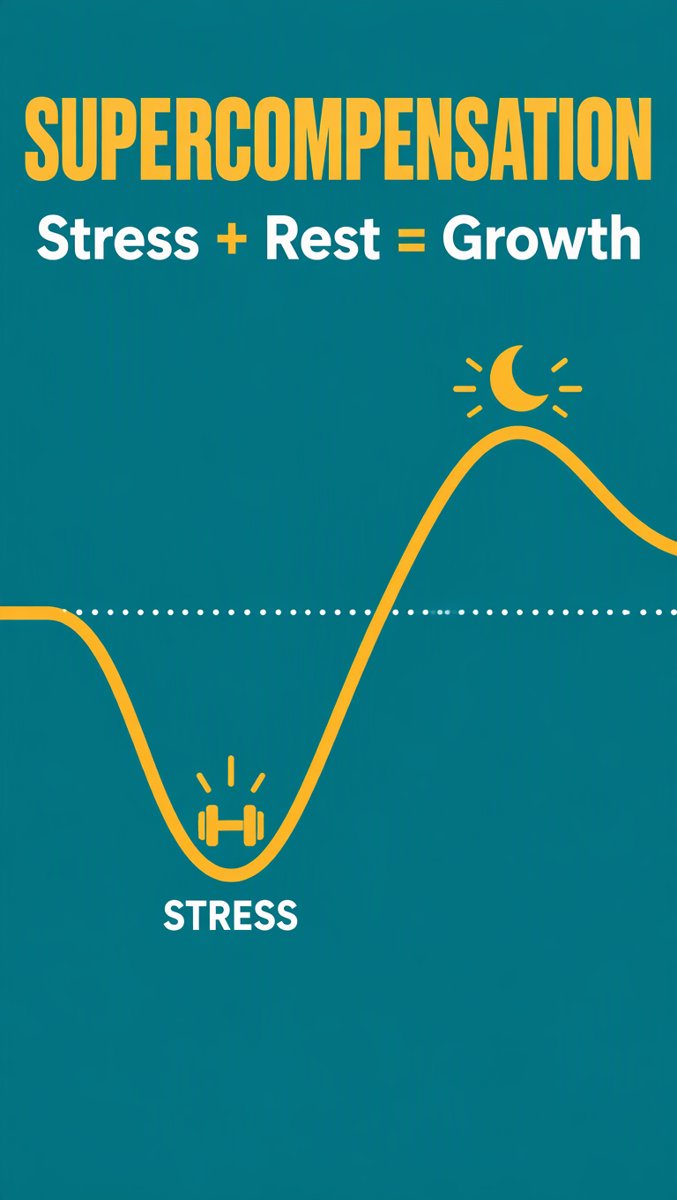
Supercompensation: Why You Get Stronger While You Rest
Think and Growth — Daily Mental Model · Thursday, October 8, 2026 · Health Theme
You crushed your workout yesterday. Today you're sore, slow, and genuinely weaker than you were 48 hours ago. Most people read that as failure — proof that the session "didn't work." It's actually the opposite. That dip is the first beat of the most reliable growth mechanism in sports science, and once you understand it, you'll never look at a rest day the same way again.
The Idea
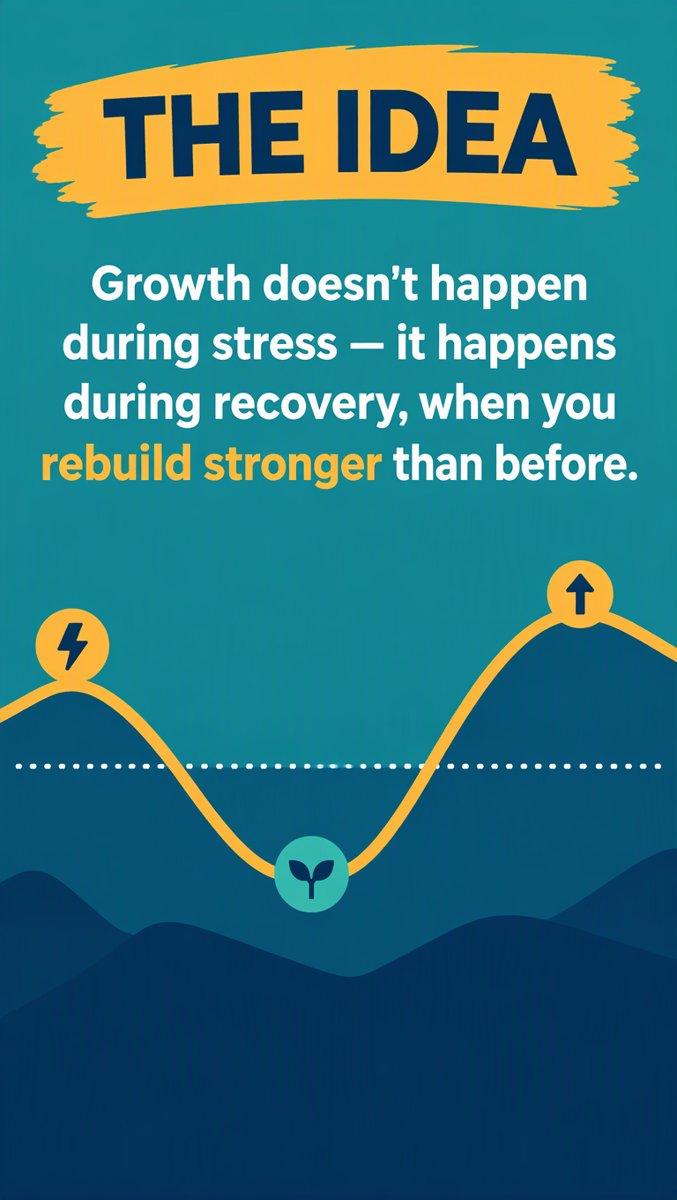
In sports science, supercompensation is the post-training period during which the trained parameter — strength, speed, endurance — has a higher performance capacity than it did before the training period. The theory was first put forth by Russian scientist Nikolai N. Yakovlev between 1949 and 1959, and it became the backbone of Soviet periodized athletic training.
The counterintuitive core of the model: adaptation does not happen during the stress. It happens during the recovery that follows it. The workout is just the stimulus. The growth is manufactured afterward, while you sleep.
How It Works
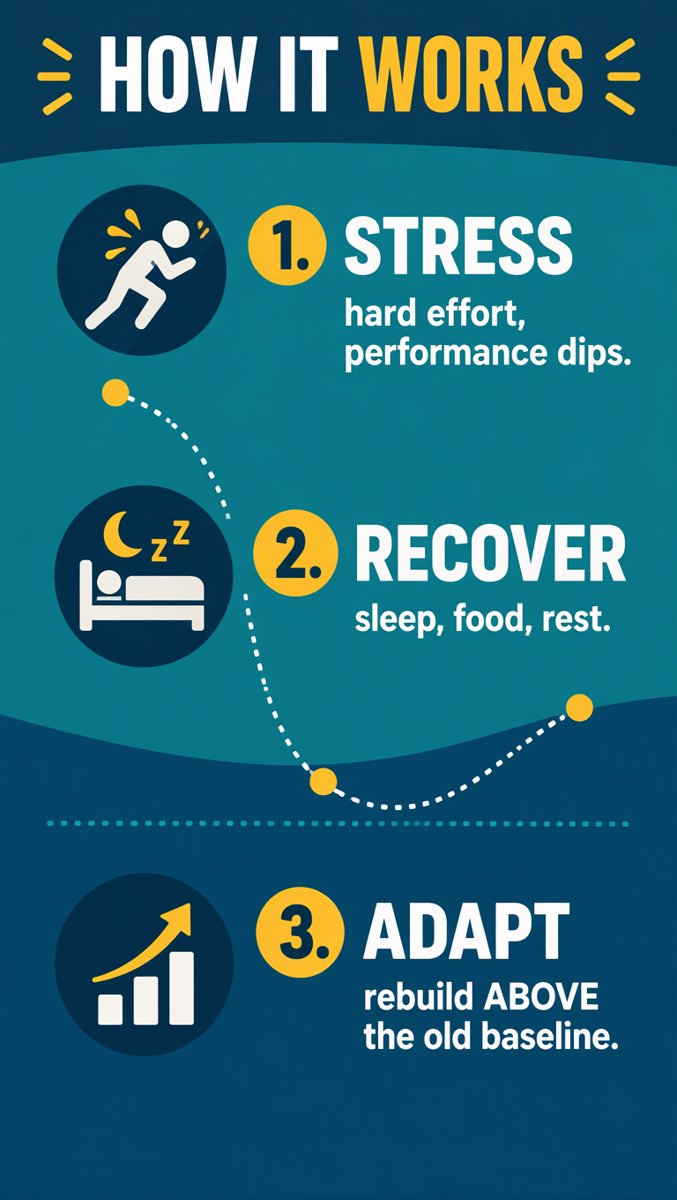
The cycle runs in three phases, and it maps almost perfectly onto Hans Selye's General Adaptation Syndrome — the stress-response model he described as alarm, resistance, and exhaustion:
- Stress (Alarm). A hard effort — heavy squats, a long run, a brutal deep-work session — pushes the system past its comfort zone. Performance temporarily dips below baseline. You're weaker, slower, foggier.
- Recovery (Resistance). Given sleep, food, and rest, the body repairs the disturbance and returns to baseline.
- Adaptation (Supercompensation). Here's the overshoot: the body doesn't just heal, it anticipates. It rebuilds the stressed capacity slightly above the old baseline, preparing for a similar challenge in the future. That elevated window typically opens roughly 24–72 hours after the stress, depending on its type and intensity.
Two failure modes bracket the curve. Stress the system again too early, before recovery finishes, and you dig the dip deeper — the road to overreaching and, in Selye's terms, exhaustion. Wait too long, and the elevated capacity decays back to baseline. Timing is the skill.
A Real-World Example
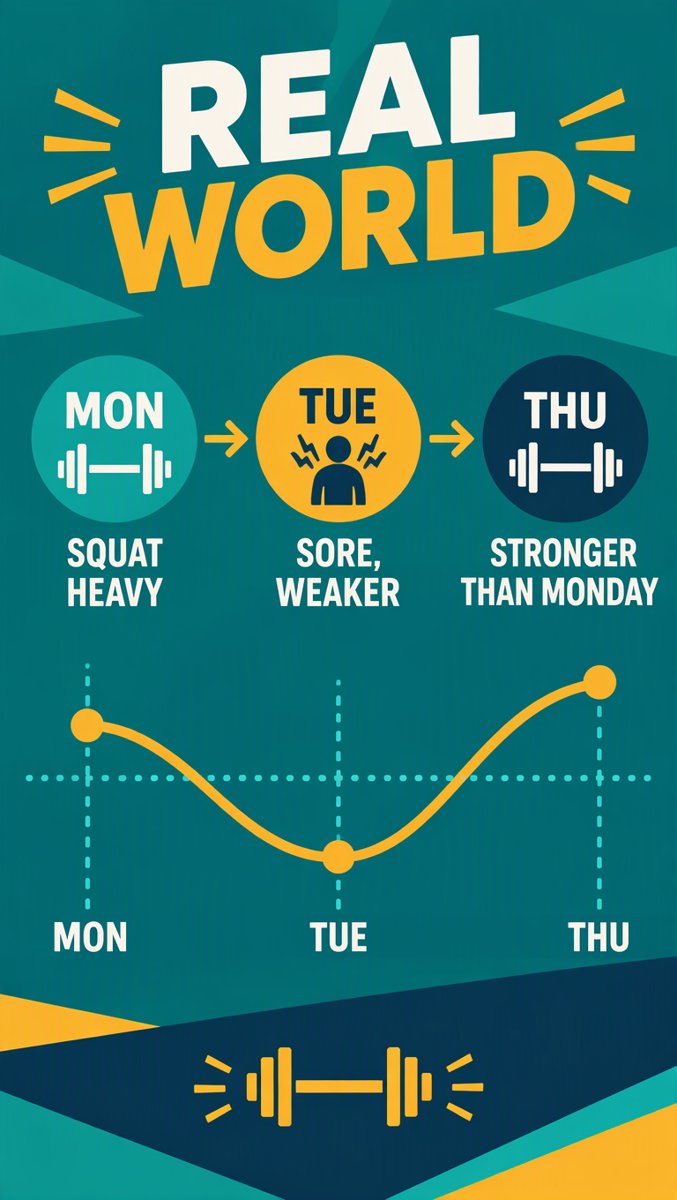
Monday: you squat heavy — a genuinely hard session. Tuesday: you're sore, stiff, measurably weaker. That's the dip, and it's on schedule. Sleep well, eat well, take the rest day, and by Thursday you test the same lift and find you're stronger than Monday's version of you. TrainerRoad's breakdown of the cycle calls this exactly what it is: the training adaptation behind getting faster — stress above what you're used to, fatigue, then a rebuild beyond the old baseline in anticipation of the next challenge.
And the curve isn't only muscular. The same stress-recovery-overshoot logic runs your cognition: a deep-focus session fatigues the mind, and it's during sleep and genuine off-time that the learning consolidates and the gain gets banked. Grinding through the night doesn't build capacity — it interrupts the very phase where capacity is built.
How to Apply It
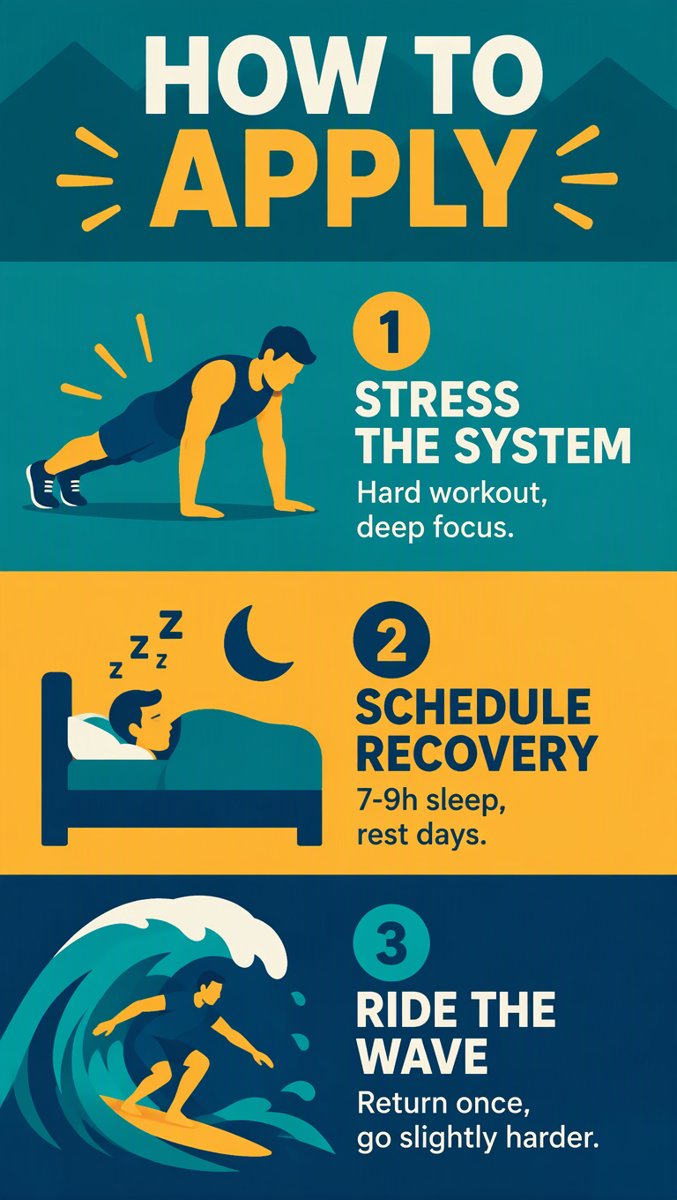
- Stress the system — on purpose. A hard workout or a truly deep-focus session. Sub-threshold effort produces sub-threshold adaptation; the stimulus has to be real.
- Schedule the recovery like it's the workout. Because it is. Seven to nine hours of sleep, real food, and rest days are not the absence of training — they are the growth phase.
- Ride the wave. Return once restored and go slightly harder, then repeat. Watch for the two failure modes: stress-stacking without recovery (breakdown) or coasting without stress (decay).
The Takeaway
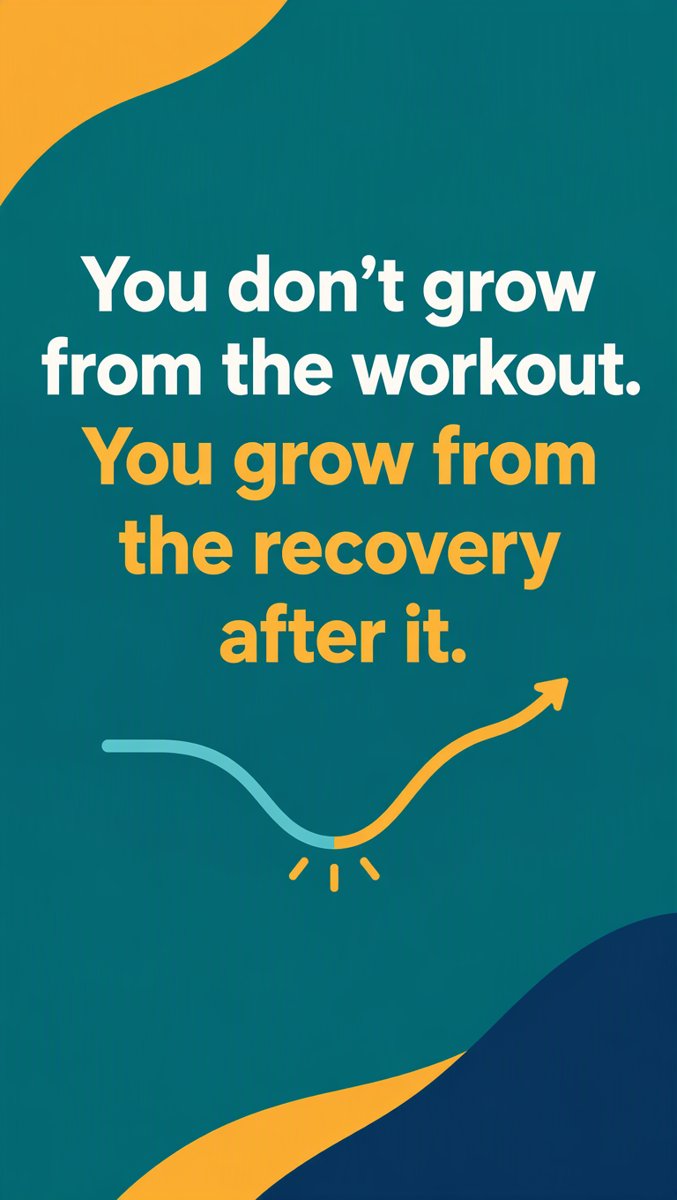
You don't grow from the workout. You grow from the recovery after it. Stress plus rest equals growth — and the rest is the half everybody skips.
🎬 Narration Script (~199 words → ~80s)
[Hook / Cover] You crushed your workout — and today you feel weaker. That's the model starting, not failing.
[Idea, seg 1] It's called supercompensation: growth doesn't happen during stress — it happens during recovery.
[Idea, seg 2] Under stress, performance dips. Recover well, and your body rebuilds slightly stronger than before.
[Mechanism, seg 1] Step one: stress. A hard effort pushes you past your limits — performance temporarily drops.
[Mechanism, seg 2] Step two: recovery. Sleep, food, and rest let your body repair the damage.
[Mechanism, seg 3] Step three: adaptation. It doesn't just heal — it overshoots, building capacity above the old baseline.
[Example, seg 1] Monday, you squat heavy. Tuesday, you're sore and weaker — that's the dip.
[Example, seg 2] Sleep well, eat well, and by Thursday you're stronger than Monday's version of you.
[Example, seg 3] The same curve runs your brain: deep work tires it; sleep locks in the gain.
[Apply, seg 1] Apply it in three moves. One: stress the system — a hard workout, a deep-focus session.
[Apply, seg 2] Two: schedule the recovery — seven to nine hours of sleep, and real rest days.
[Apply, seg 3] Three: ride the wave — come back once restored, and go slightly harder.
[Takeaway] Remember: you don't grow from the workout. You grow from the recovery after it.
[CTA] Stress plus rest equals growth. Follow Think and Growth for one mental model every day — and I'll see you tomorrow.
Sources
- Wikipedia — Supercompensation (definition; Yakovlev 1949–1959): https://en.wikipedia.org/wiki/Supercompensation
- TrainerRoad — The Science of Supercompensation: https://www.trainerroad.com/blog/science-of-supercompensation/
- Healthline — General Adaptation Syndrome (Selye: alarm/resistance/exhaustion): https://www.healthline.com/health/general-adaptation-syndrome
- Verywell Health — General Adaptation Syndrome overview: https://www.verywellhealth.com/general-adaptation-syndrome-overview-5198270
Media
- Cover: https://cdn.builder2.com/w/g/supercompensation-cover/portrait_16_9/job_5c65e7b9-fef.png
- Slide 1: https://cdn.builder2.com/w/g/supercompensation-slide-1/portrait_16_9/job_0c6afc75-37c.png
- Slide 2: https://cdn.builder2.com/w/g/supercompensation-slide-2/portrait_16_9/job_2fa365f1-ca6.png
- Slide 3: https://cdn.builder2.com/w/g/supercompensation-slide-3/portrait_16_9/job_01d7431a-7e7.png
- Slide 4: https://cdn.builder2.com/w/g/supercompensation-slide-4/portrait_16_9/job_891f6f05-f29.png
- Slide 5: https://cdn.builder2.com/w/g/supercompensation-slide-5/portrait_16_9/job_f8c25484-426.png
- CTA (Peter, mode=character): https://cdn.builder2.com/w/i/supercompensation-cta/portrait_16_9/job_59f754db-ad4.jpeg