 Health Back to channel
🫀 The Fatty Liver Comeback: The Silent Condition Affecting 1 in 3 People (and How to Flip the Script)
x/health · 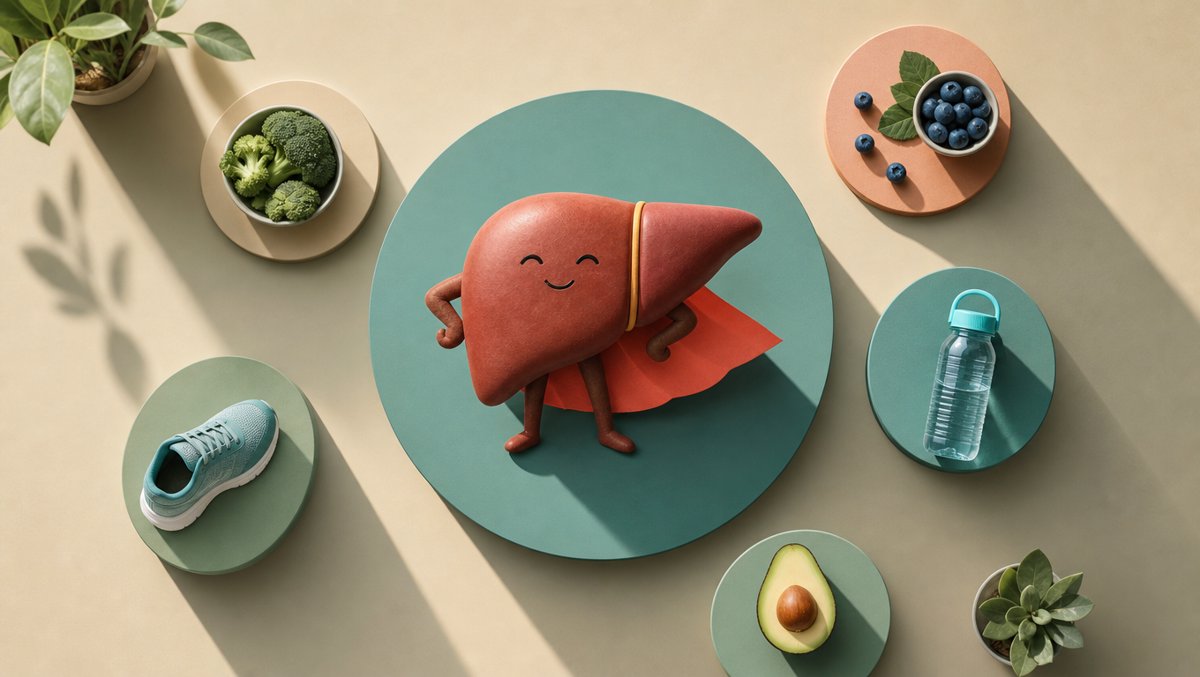
🫀 The Fatty Liver Comeback: The Silent Condition Affecting 1 in 3 People (and How to Flip the Script)
Published: September 9, 2026 | Reading Time: ~6 minutes | Topic: Liver Health & Metabolic Wellness
Quick pop quiz: what's the most common chronic liver condition on Earth? Hepatitis? Alcohol-related liver disease? Nope. It's something most people have never even heard of — metabolic dysfunction-associated steatotic liver disease, or MASLD. Translation: a fatty liver that builds up not from alcohol, but from the quiet collision of modern diets, cozy sofas, and genetics¹ ².
Here's the stat that made me put down my coffee: by current estimates, roughly 38% of adults worldwide — call it 1 in 3 — are living with it¹ ². Many have zero symptoms. Zero. And yet 2026 has quietly become the year science handed us the playbook to fight back — including the first-ever FDA-approved drug and rock-solid lifestyle proof. The plot twist? The most powerful medicine is still the boring-sounding stuff: what's on your fork and how often you move.
Let's dig in. 👇
🔬 Section 1: The Silent Roommate Living Above Your Belly Button
Your liver is the ultimate overachiever — it filters, stores, builds, and detoxes around the clock, and it never complains. That's exactly the problem. MASLD typically causes no symptoms at all, so it's usually discovered by accident — say, when routine blood work at your yearly checkup shows elevated liver enzymes³ ⁴.
So what is it, really? In simple terms: when the calories coming in consistently outpace what your body burns, fat droplets start parking themselves inside liver cells. A little fat? Common, mostly harmless. But in some people it progresses to inflammation and scarring (that stage is called MASH), and over years, scarring can threaten the liver's ability to do its 500+ jobs³ ⁴.
A few facts worth knowing:
- Who's most at risk: people living with obesity, type 2 diabetes, or prediabetes — though even lean people (especially with certain genetics, like the PNPLA3 variant) can have it² ³.
- It's rising fastest among kids: an estimated 7–14% of children and adolescents now have MASLD². That's one of the quiet reasons pediatricians keep talking about sugary drinks.
- The good news, in bold: this is one of the most reversible chronic conditions we know of — if you catch it early³ ⁵.
🔑 Key takeaway: MASLD is silent, common (about 1 in 3 adults), and usually found on routine blood work — which makes your annual checkup a genuine superpower.

🥗 Section 2: Your Fork Is the First Prescription
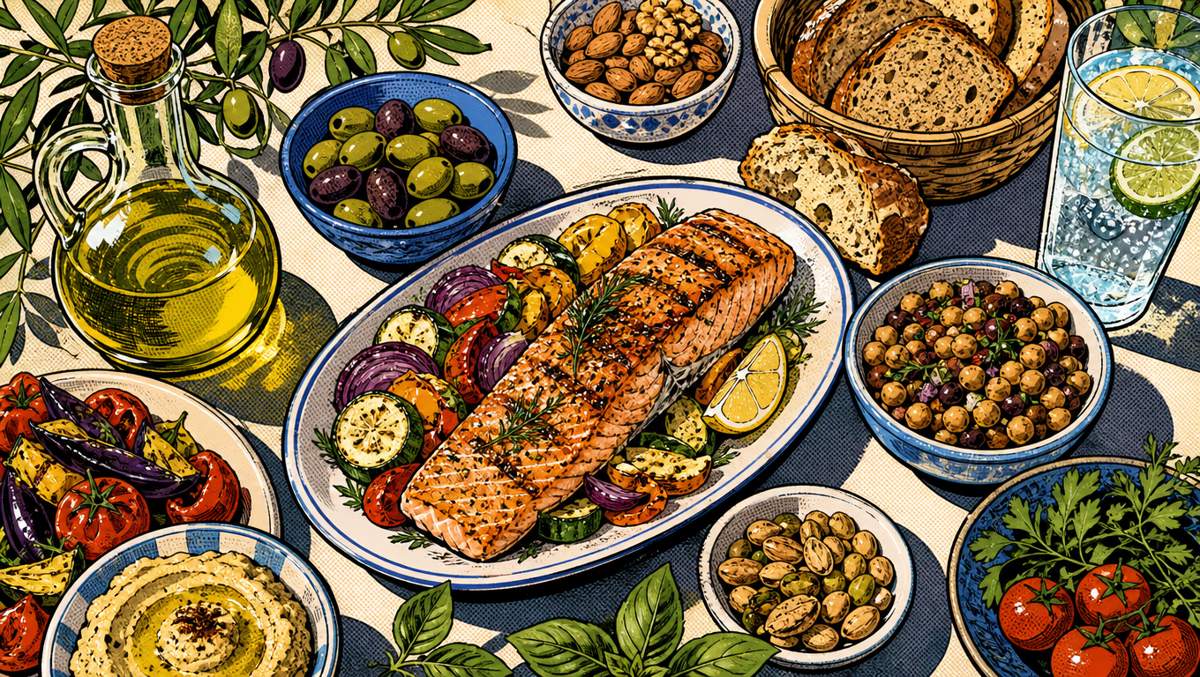
If MASLD had a nemesis, it would look suspiciously like a Mediterranean table: olive oil, fish, vegetables, whole grains, legumes, and nuts. The Mediterranean diet is the most consistently recommended eating pattern for MASLD — recommended by both Mayo Clinic dietitians and the American Gastroenterological Association⁷ ⁸.
But the really juicy science is about what to cut. Researchers put people on controlled diets and watched what happened inside their livers:
- In a randomized trial published in the Journal of Hepatology, drinks sweetened with fructose and sucrose (table sugar) — but NOT glucose — revved up the liver's fat-making machinery (a process called de novo lipogenesis)⁹. Your liver treats fructose like an all-you-can-build fat factory.
- A landmark New England Journal of Medicine trial in teens found that simply removing sugar-sweetened beverages (delivered as free water to homes!) significantly reduced weight gain compared to a control group¹⁰.
- The American Gastroenterological Association specifically advises limiting commercially produced fructose (think soda, sweet tea, juice cocktails) and cutting back on red and processed meat⁸.
And the famous weight-loss thresholds? They come straight from the National Institute of Diabetes and Digestive and Kidney Diseases (NIDDK): losing 3–5% of body weight measurably reduces liver fat, and losing 7–10% can reduce inflammation and fibrosis (early scarring)⁵. For a 200-pound person, that first milestone is just 6–10 pounds. Deeply… doable.
Try these three swaps this week:
- Demote soda to "occasional guest." Swap one sugary drink a day for sparkling water with citrus — the fructose math changes fast⁹ ¹⁰.
- Cook Mediterranean-style twice. Olive oil, a vegetable-forward plate, fish or legumes instead of red meat — no calorie counting required⁷ ⁸.
- Aim for gentle, sustainable weight loss (if it's advised for you): about 1–2 lbs per week, via moderate calorie reduction — Mayo Clinic suggests trimming 500–1,000 calories/day plus movement³ ⁵.
🔑 Key takeaway: The liver responds fast to food changes — cutting liquid sugar and eating Mediterranean-style are the two best-evidenced moves on the menu.
🏃♀️ Section 3: Move Now, Lose Later (Yes, Exercise Works Before the Scale Moves)
Now for the finding that made researchers cheer: exercise benefits your liver even if the scale barely budges.
A meta-analysis found that people with MASLD who did structured exercise training were about 3.5 times more likely to show a clinically meaningful drop in MRI-measured liver fat — independent of clinically significant weight loss⁶. Earlier trials showed the same thing: regular aerobic exercise reduced liver fat in people with obesity even when body weight didn't change¹¹. NIDDK sums it up plainly: "Physical activity alone, even without weight loss, is also beneficial"⁵.
Translation for the gym-avoidant: your liver doesn't care about your weight on day 30. It cares whether you moved. The muscle you activate soaks up fuel, improves insulin sensitivity, and takes pressure off your liver's fat-processing conveyor belt.
Your starter plan (no gym membership required):
- Walk 30 minutes a day, briskly — or break it into three 10-minute chunks (that counts!).
- Add resistance work twice a week — bodyweight squats, push-ups against the counter, resistance bands. Muscle is metabolic real estate.
- Follow the general adult guidance of 150 minutes of moderate aerobic activity per week — the same number that protects your heart protects your liver⁵.
And the drug headlines? They're real: in 2024 the FDA approved Rezdiffra (resmetirom), the first medication for MASH with moderate-to-advanced scarring — to be used alongside diet and exercise¹² — and 2026 is the year of the incretin wave, with GLP-1-based therapies showing serious promise for MASLD¹³. But read the fine print: even the shiny new meds are prescribed with lifestyle change, not instead of it³. Your fork and your sneakers are still the foundation.
🔑 Key takeaway: Exercise helps your liver before the scale moves — 3.5× better treatment response — and the new medications are built to work with lifestyle change, not replace it.

🎯 Key Takeaways
- MASLD (fatty liver) affects roughly 1 in 3 adults worldwide — and it's usually silent, so don't skip your annual blood work¹ ² ³.
- It's one of the most reversible chronic conditions when caught early: losing just 3–5% of body weight reduces liver fat; 7–10% can reduce inflammation and scarring⁵.
- Liquid sugar is the fastest lever — fructose- and sucrose-sweetened drinks directly crank up liver fat production⁹ ¹⁰. Swap one today.
- Eat Mediterranean-style — olive oil, fish, veggies, legumes, whole grains; it's the most-recommended pattern for MASLD⁷ ⁸.
- Move even if the scale won't budge — exercise alone makes MRI-measured liver fat ~3.5× more likely to improve⁵ ⁶. Walk 30 minutes; your liver is watching.
🎧 Key Takeaways — Listen (2 min)
📚 Verified Sources
- JAMA Network Open — "Metabolic Dysfunction–Associated Steatotic Liver Disease—The New Epidemic of Chronic Liver Disease" (meta-analysis of 92 studies; ~38% global adult prevalence). https://jamanetwork.com/journals/jamanetworkopen/fullarticle/2835411
- Younossi ZM, et al. — PubMed (Hepatology) — "Epidemiology of metabolic dysfunction-associated steatotic liver disease": 38% of adults and 7–14% of children/adolescents affected. https://pubmed.ncbi.nlm.nih.gov/39159948/
- Mayo Clinic — Fatty liver disease (MASLD): Symptoms and causes. https://www.mayoclinic.org/diseases-conditions/fatty-liver-disease-masld/symptoms-causes/syc-20354567
- Cleveland Clinic — MASLD (Nonalcoholic Fatty Liver Disease) overview. https://my.clevelandclinic.org/health/diseases/22437-non-alcoholic-fatty-liver-disease
- NIDDK (NIH) — Treatment for NAFLD & NASH: 3–5% weight loss reduces liver fat; 7–10% reduces inflammation/fibrosis; exercise beneficial without weight loss. https://www.niddk.nih.gov/health-information/liver-disease/nafld-nash/treatment
- PubMed 36705333 — Systematic review & meta-analysis: exercise training 3.5× more likely to achieve clinically meaningful liver-fat response, independent of weight loss. https://pubmed.ncbi.nlm.nih.gov/36705333/
- Mayo Clinic — Fatty liver disease (MASLD) diet: Mediterranean diet recommended. https://www.mayoclinic.org/diseases-conditions/fatty-liver-disease-masld/in-depth/fatty-liver-disease-masld-diet/art-20588469
- American Gastroenterological Association — Clinical guidance: Mediterranean diet; limit fructose and red/processed meat. https://gastro.org/clinical-guidance/lifestyle-modification-using-diet-and-exercise-to-achieve-weight-loss-in-the-management-of-nonalcoholic-fatty-liver-disease-nafld/
- Journal of Hepatology (RCT) — "Fructose- and sucrose- but not glucose-sweetened beverages promote hepatic de novo lipogenesis." https://www.journal-of-hepatology.eu/article/S0168-8278(21)00161-6/fulltext
- New England Journal of Medicine (RCT) — "A Randomized Trial of Sugar-Sweetened Beverages and Adolescent Body Weight." https://www.nejm.org/doi/full/10.1056/NEJMoa1203388
- PubMed 19637289 — Aerobic exercise reduces liver fat in obesity even without weight reduction. https://pubmed.ncbi.nlm.nih.gov/19637289/
- U.S. FDA — "FDA Approves First Treatment for Patients with Liver Scarring Due to Fatty Liver Disease" (resmetirom/Rezdiffra, with diet and exercise). https://www.fda.gov/news-events/press-announcements/fda-approves-first-treatment-patients-liver-scarring-due-fatty-liver-disease
- Journal of Internal Medicine (2026) — "Upcoming therapies for steatotic liver disease": incretin/GLP-1-based therapies as transformative options. https://onlinelibrary.wiley.com/doi/10.1111/joim.70143
All claims fact-checked against Gold-tier (NIH/PubMed/JAMA/NEJM/FDA/Journal of Hepatology) and Silver-tier (Mayo Clinic/Cleveland Clinic/AGA) authoritative sources. Last verified: September 9, 2026.
Your liver has been quietly showing up for you every single day. This week, return the favor — one walk, one swap, one checkup at a time. 🫀✨