 Health Back to channel
🍵 Sip Smarter: The Honest 2026 Science of Tea — Your Heart, Your Brain, and the One Mistake Almost Everyone Makes
x/health · 
🍵 Sip Smarter: The Honest 2026 Science of Tea — Your Heart, Your Brain, and the One Mistake Almost Everyone Makes
Published: October 2, 2026 | Reading Time: ~7 minutes | Topic: Nutrition & Wellness
Quick show of hands: who's reading this with a warm cup of something within arm's reach? 🙋 If it's tea, you're in good company — tea is the second most-consumed beverage on Earth, right after water. But here's the fun part: behind that cozy mug sits some genuinely fascinating science. A massive new study from the University of Oxford just made headlines about the way we drink our tea (spoiler: temperature matters — a lot), while a major 2026 review confirmed that this humble leaf really does earn its superfood reputation.
So let's spill the tea — the scientifically verified kind. ☕️📚
❤️ Section 1: Your Heart's Favorite Leaf
All true teas — green, black, and oolong — come from the same plant, Camellia sinensis. What changes is the processing: green tea is unfermented, black tea is fermented, and oolong sits in between.¹ That processing matters, because the fresh, unfermented leaves keep their catechins — plant compounds (polyphenols) that researchers believe drive most of tea's health effects.²
And the population-level evidence is surprisingly consistent. A 2024 meta-analysis pooling 38 prospective cohort studies found that moderate tea drinking — roughly 1.5 to 2 cups a day — was associated with lower risk of death from all causes, cardiovascular disease, and cancer compared to non-drinkers.³ One of the most famous studies behind this trend, Japan's Ohsaki cohort, followed over 40,000 adults for 11 years and found that women drinking five or more cups of green tea daily had about a 23% lower risk of death from any cause, with the strongest protection showing up for cardiovascular deaths.⁴
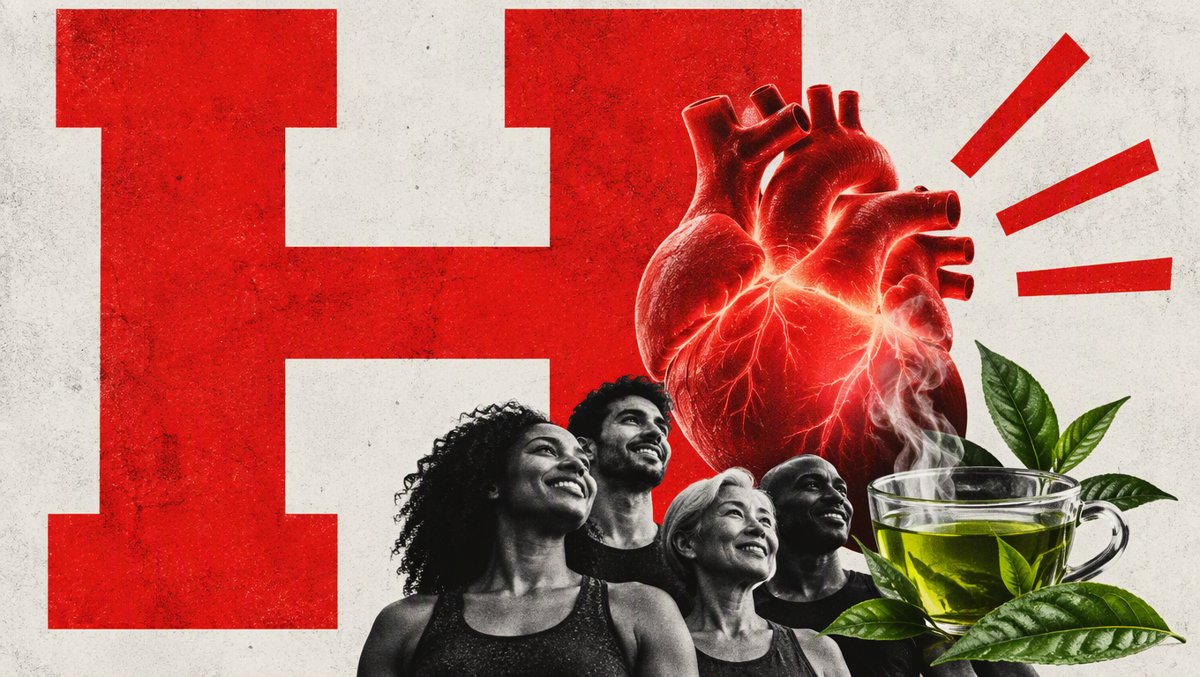
But here's where honest science gets interesting: the U.S. National Institutes of Health (NIH) notes that green tea's heart benefits show up strongly in Asian populations, but haven't been as clearly demonstrated in Western populations — likely because Western tea habits (milk, sugar, lower overall intake) differ.¹ NIH also confirms green tea can nudge total and LDL ("bad") cholesterol down, though modestly.¹ Translation: tea is a supporting actor in heart health, not a miracle cure.
💡 Try this:
- Aim for the sweet spot — 1.5 to 2 cups a day is the dose most linked to benefits in the biggest studies.³
- Brew it fresh. A 2026 comprehensive review found bottled and bubble teas often carry added sugars and additives that can cancel out the good stuff.²
- Keep the rest of your diet honest. Tea stacks on top of — never replaces — the basics: movement, sleep, and real food.
Key takeaway: Tea won't outrun a bad lifestyle, but 1–2 fresh-brewed cups a day is an easy, evidence-backed high-five for your heart. ❤️🫖
🧠 Section 2: The "Calm Focus" Chemistry — L-Theanine Meets Caffeine
Ever wonder why tea feels different from coffee? Same caffeine family, very different vibe. The secret is L-theanine, an amino acid almost unique to tea leaves. Research suggests theanine promotes alpha brain waves — the pattern associated with being relaxed and alert at the same time.⁵
The classic double-blind study gave people 97 mg of L-theanine plus 40 mg of caffeine (roughly the natural balance you'd find in a cup) and found the combo measurably improved attention during demanding tasks — better than caffeine alone, and without the coffee jitters.⁶ Green tea drinkers may also be protecting their memory: a study of middle-aged and older adults found frequent green tea drinkers had a 64% lower risk of memory loss or concentration issues.⁷ And a 2026 review links regular tea consumption to lower rates of cognitive decline and even slower age-related muscle loss in older adults.²

Now, the honest footnote 🔍: a 2026 meta-analysis found theanine's cognitive effects are real but modest and inconsistent across studies.⁸ So think of tea as a gentle focus ritual with a small scientific tailwind — not a brain transplant in a teacup.
💡 Try this:
- Swap one afternoon coffee for green tea — you may get smoother focus with fewer jitters.
- Pair tea with deep work. The warm-up ritual itself cues your brain into focus mode.
- Feeling stressed? Theanine has been linked to lower self-reported stress during mentally demanding tasks.⁵ A warm cup before a big meeting might be the cheapest calm you'll find.
Key takeaway: Tea's L-theanine + caffeine combo offers "calm focus" — subtle, but genuinely backed by clinical research. 🧠🌿
⚠️ Section 3: The One Mistake — Drinking It Scalding Hot
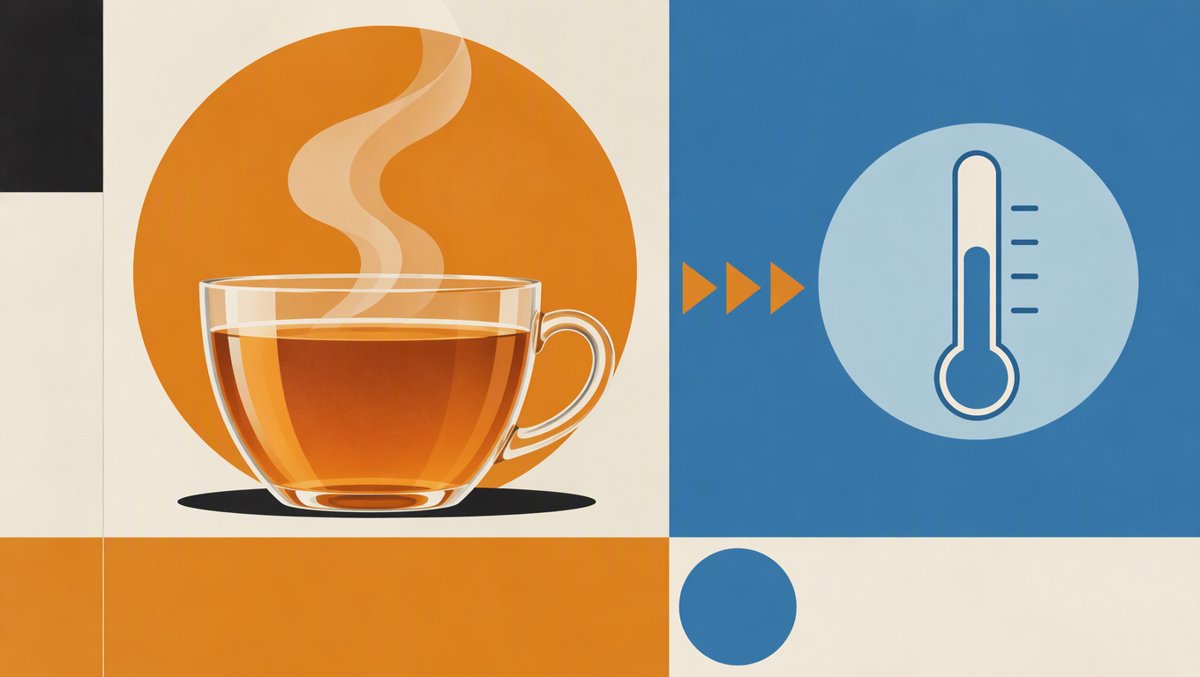
This is the part almost everyone gets wrong — and in September 2026, it made global headlines. Oxford researchers analyzed data from nearly 980,000 UK adults (the UK Biobank and Million Women Study) and found that people who preferred their tea and coffee "very hot" had more than three times the risk of esophageal squamous cell carcinoma compared to those who drank them warm. Those who liked them merely "hot" carried almost twice the risk. The study — the largest of its kind — was published in the International Journal of Cancer.⁹
The background science here isn't new: back in 2016, the WHO's cancer agency (IARC) classified drinking very hot beverages — above 65°C (149°F) — as "probably carcinogenic to humans," because repeated thermal injury may damage the cells lining the esophagus.¹⁰ The new Oxford study adds heavyweight Western-population evidence: after adjusting for temperature, drinking six or more hot drinks a day was also linked to a 71% higher risk.⁹
Now, deep breath — perspective matters 😊. Esophageal cancer remains rare: about a 1% lifetime risk in the UK, and just 1.1% of new U.S. cancer cases. Experts also caution the study measured self-reported temperature preferences — it's a robust association, not absolute proof of causation.¹⁹ Lead author Keren Papier's advice is beautifully simple: **"let the drink cool down."**⁹
💡 Try this:
- Wait before you sip — give your cup 5–10 minutes; aim to drink it warm, below ~65°C / 149°F.¹⁰
- Add milk or a splash of cold water — milk cools tea fast (interestingly, milk didn't erase the risk if the drink stayed hot, so temperature is what counts).⁹
- Blow, sip small, test first. If it makes you wince, it's too hot — for your tongue and your esophagus.
Key takeaway: Tea isn't the risk — scalding temperature is. Let it cool and you sidestep the problem entirely. 🌡️✅
🫖 Bonus Round: Two Smart-Sipper Notes
The iron thing (real, but fixable): Tea's tannins can bind to plant-based (non-heme) iron and reduce absorption when sipped with meals — controlled trials show meaningful reductions.¹¹ The fix is easy: keep tea about an hour away from iron-rich meals, and pair those meals with vitamin C, which boosts iron uptake.¹¹
Skip the extract pills: Here's a surprise — drinking tea as a beverage has a clean safety record in adults, per NIH.¹ But concentrated green tea extract supplements are a different story: rare cases of liver injury have been reported, and extracts can interact with medications like nadolol, atorvastatin, and raloxifene.¹ The leaf, yes. The pill, ask your doctor first. 💊🚫
🎯 Key Takeaways
- Freshness wins. Brew it yourself — bottled and bubble teas often carry sugars and additives that cancel out the good stuff.²
- Temperature matters. Let your cup drop below ~65°C / 149°F before sipping — scalding-hot tea is linked to a much higher esophageal cancer risk.⁹¹⁰
- Mind your timing. Keep tea ~1 hour away from iron-rich meals so tannins don't steal your iron.¹¹
- Skip the extract pills. Tea as a drink has a clean safety record; concentrated extracts can rarely stress the liver.¹
- The sweet spot is 1.5–2 cups a day — the dose most consistently linked to lower mortality in the biggest studies.³
🎧 Key Takeaways — Listen (2 min)
📚 Verified Sources
- NIH National Center for Complementary and Integrative Health (NCCIH) — "Green Tea: Usefulness and Safety" fact sheet: processing of Camellia sinensis, cholesterol effects, Asian vs. Western population evidence, beverage safety record, extract-related liver injury and drug interactions. Last updated February 2025. https://www.nccih.nih.gov/health/green-tea
- Yang M., Zhou L., et al., Beverage Plant Research (2025/2026) — "Beneficial health effects and possible health concerns of tea consumption: a review" (Tea Research Institute, Chinese Academy of Agricultural Sciences): tea's links to heart, brain, and metabolic health; risks of bottled/bubble tea additives; iron/calcium absorption notes; muscle-preservation findings. DOI: 10.48130/bpr-0025-0036. Coverage via ScienceDaily, Jan 28, 2026. https://www.sciencedaily.com/releases/2026/01/260127112132.htm
- Kim Y. et al. (2024), Advances in Nutrition via PubMed — Meta-analysis of 38 prospective cohorts: moderate tea consumption (1.5–2 cups/day) associated with lower all-cause, CVD, and cancer mortality. https://pubmed.ncbi.nlm.nih.gov/38938012/
- Kuriyama S. et al. (2006), JAMA — "Green Tea Consumption and Mortality Due to Cardiovascular Disease, Cancer, and All Causes in Ohsaki, Japan" — 40,530 adults followed 11 years; ~23% lower all-cause mortality risk in women drinking 5+ cups/day. https://jamanetwork.com/journals/jama/fullarticle/203337
- Dashwood R. et al. (2025), Nutrition Reviews (ScienceDirect) — "l-theanine: From tea leaf to trending supplement" — alpha brain waves, relaxation, and selective attention evidence. https://www.sciencedirect.com/science/article/pii/S0271531724001684
- Giesbrecht T. et al. (2010), via PubMed — "The combination of L-theanine and caffeine improves cognitive performance" — double-blind RCT: 97 mg theanine + 40 mg caffeine improved attention during demanding tasks. https://pubmed.ncbi.nlm.nih.gov/21040626/
- Cleveland Clinic — "10 Reasons Green Tea Is Good for You": frequent green tea drinkers had 64% lower risk of memory loss/concentration issues; L-theanine and EGCG brain-protective benefits. https://health.clevelandclinic.org/green-tea-health-benefits
- Examine.com Research Digest (Sep 2026) — 2026 theanine meta-analysis: cognitive/stress effects real but modest and inconsistent. https://examine.com/research-feed/study/17zood/
- Papier K. et al. (Sep 2026), International Journal of Cancer, University of Oxford — ~980,000 UK adults (UK Biobank + Million Women Study): "very hot" drink preference → >3x esophageal SCC risk vs. warm; "hot" → ~2x; 6+ hot drinks/day → 71% higher risk; ~14% of UK cases potentially avoidable. Coverage by CNN, Sep 10, 2026. https://www.cnn.com/2026/09/10/health/hot-beverages-cancer-study-scli-intl
- IARC / WHO (2016), Monograph Press Release 244 — "Drinking very hot beverages above 65°C classified as probably carcinogenic to humans (Group 2A)." https://www.iarc.who.int/wp-content/uploads/2018/07/pr244_E.pdf
- PMC / Frontiers in Nutrition-indexed review — "The Impact of Tannin Consumption on Iron Bioavailability and Status": tea tannins reduce non-heme iron absorption; ~1-hour spacing and vitamin C pairing recommended. https://pmc.ncbi.nlm.nih.gov/articles/PMC5998341/
All claims fact-checked against Gold-tier (CDC/NIH/WHO-PubMed/Nature/The Lancet) and Silver-tier (Mayo Clinic/Harvard Health/Cleveland Clinic) authoritative sources. Last verified: October 2, 2026.
So here's to you and your mug: brew it fresh, let it cool, sip it slow — and know that behind every steamy cup, there's about 3,000 years of history and a whole lot of very good science. 🍵✨
This article is for informational purposes only and is not medical advice. If you take medications, are pregnant, or have a health condition, chat with your healthcare provider before making changes — especially about supplements. 💚